

More news on this day
For many North American travelers eyeing Punta Cana as a quick escape to the tropics, this late winter has turned a straightforward beach vacation into a weather roulette, with blizzards, tornado outbreaks and missed connections combining to derail even the best-laid itineraries.
Get the latest news straight to your inbox!
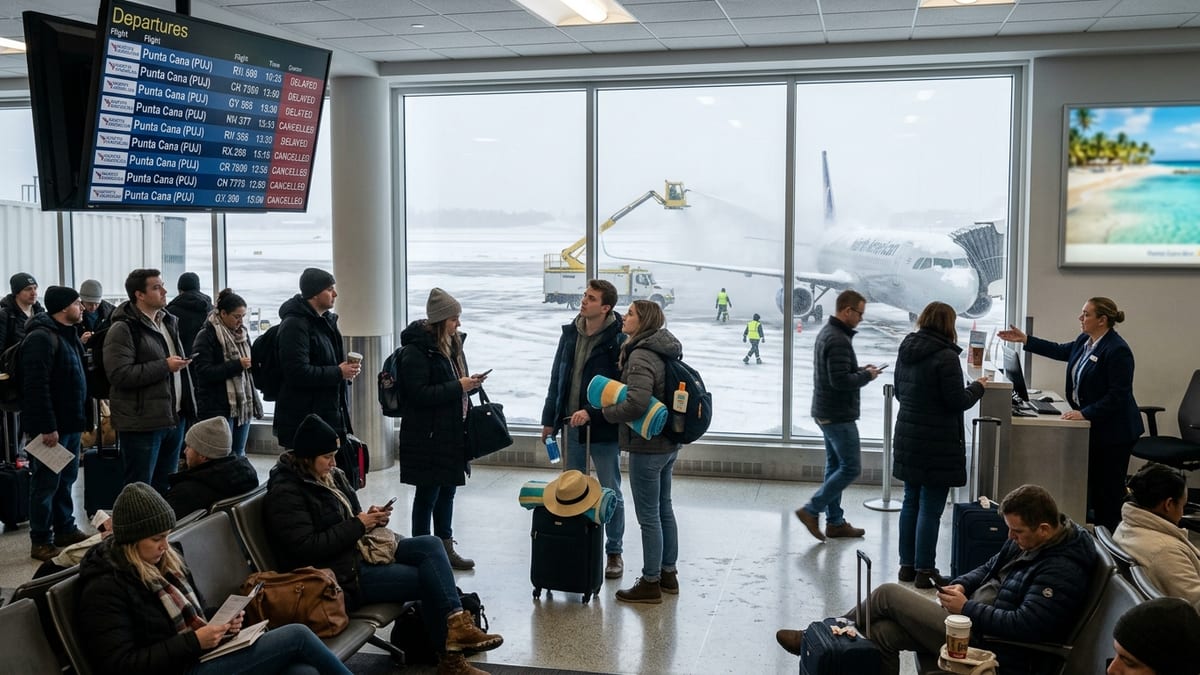
Storm Season Starts Early for Sun Seekers
Travelers heading from snowbound cities to Punta Cana typically expect delays during the heart of winter, but 2026 has delivered an unusually disruptive sequence of storms that has stretched well into March. A historic blizzard across the Northeastern United States in late February brought whiteout conditions, heavy snow totals and widespread power outages, while airlines cut thousands of flights over just a couple of days as crews and aircraft were stranded far from their scheduled routes.
Publicly available information on flight-tracking platforms showed thousands of cancellations and delays across major hubs from Chicago to New York during the height of the February blizzard. Many of those routes feed into Caribbean gateways, meaning travelers bound for the Dominican Republic were often caught up in a cascade of missed connections that began hundreds or even thousands of miles from the beach.
Even as snow tapered off in some regions, airports needed additional time to clear runways, de-ice aircraft and reposition planes, prolonging the disruption. Some carriers issued flexible travel waivers that allowed passengers to rebook without change fees, but capacity into leisure destinations remained tight, leaving many vacationers scrambling for alternative paths to Punta Cana or forced to shorten already-booked stays.
The timing has been especially frustrating for travelers using spring break or limited annual leave to escape lingering cold. Reports from travel forums and social media highlight multi-day odysseys involving unexpected overnights in hub cities, circuitous routings through secondary airports and, in some cases, complete trip cancellations when replacement seats to Punta Cana could not be found at reasonable prices.
From Whiteout to Tornado Watches in a Single Itinerary
While snow and ice have dominated headlines in northern states, travelers have also run into a second, less predictable threat on the journey south: severe thunderstorms and tornado outbreaks along key connecting corridors. Meteorological summaries for early and mid-March describe vigorous storm systems that delivered heavy snow and blizzard conditions on the cold side, while spawning damaging winds, hail and tornadoes across portions of the Lower Mississippi Valley, the Southeast and the Mid-Atlantic.
Those same systems often sweep across major airline hubs in cities such as Dallas, Atlanta and Charlotte, where lightning, low visibility and strong crosswinds can halt operations. According to published coverage by national weather and aviation outlets, tornado watches and warnings near busy airports have led to temporary ground stops, diversions and extensive delays, particularly during late afternoon and evening peak periods.
For a traveler booked on a morning departure from a snow-hit northern city and an afternoon connection through a storm-threatened southern hub, the result can be a double dose of disruption. One leg may be delayed by de-icing and crew timing rules, while the second is held or rerouted because of convective storms, leaving little margin for tight connections to limited daily flights into Punta Cana.
Accounts shared by passengers on travel discussion boards describe itineraries that began under blizzard conditions, only to run into severe thunderstorms several hours later in a different time zone. In some cases, travelers who missed their final outbound leg to the Caribbean were rebooked a day or more later, effectively losing precious vacation time despite having left home on schedule.
How Weather Chaos Turns Into a Missed Beach Flight
The chain reaction that ends with a missed flight to Punta Cana often starts well before passengers reach the airport. Winter storms can prompt highway closures, slower ground transport and longer security lines as travelers arrive in concentrated waves following breaks in the weather. Even when planes and runways are ready, crews must adhere to strict duty-time limits, and a delayed inbound aircraft can leave an outbound flight with no legal crew to operate it.
Industry analyses published after recent storms point to aircraft and crew displacement as a core driver of prolonged disruption. When a storm forces a large number of cancellations, planes may be scattered around the network, parked where the weather allowed them to land safely rather than where they are scheduled to start the next day. Rest rules then require pilots and flight attendants to pause after long duty periods, limiting how quickly the schedule can recover and constraining options for same-day rebooking to Punta Cana and other leisure routes.
For travelers on multi-leg itineraries, a missed first flight due to a blizzard or ground delay often means the rest of the ticket rebooks automatically, but only into whatever limited space remains on later departures. On oversubscribed routes to popular resorts, those replacement seats may not be available until several days later, particularly during school holidays. Publicly shared itineraries reveal some passengers piecing together their own rerouting through alternative Caribbean gateways when nonstops to Punta Cana were sold out.
In addition to timing issues, luggage can become a complicating factor. Bags checked through to Punta Cana on a disrupted itinerary may not follow the same circuitous path as their owners, especially when airlines switch carriers, routings or overnight locations at the last minute. Some travelers report arriving in the Dominican Republic only to discover that their luggage remained at an intermediate hub still working through the previous day’s backlog.
Strategies Emerging From a Turbulent Season
As the 2026 storm season plays out, travelers and travel advisers have begun sharing tactics that appear to improve the odds of making it to Punta Cana despite turbulent weather patterns. One recurring theme in publicly available advice is to favor nonstops or single-connection itineraries through hubs that are less vulnerable to blizzard conditions when possible, even if that means a longer initial drive or slightly higher fare.
Another emerging strategy involves building more slack into connections during peak storm periods. Instead of booking the shortest legal layover, some travelers are opting for longer connection times in winter and early spring, accepting an extra hour or two in a hub airport as a trade-off for a better chance of preserving the final leg to the Caribbean if delays stack up earlier in the day.
Flexible ticketing and travel insurance have also drawn increased attention. Several major airlines and package operators have introduced or expanded change-fee waivers around named storms, allowing customers bound for Punta Cana to move trips by a few days when forecasts signal major disruption. Policies vary widely, and travelers are closely examining coverage details, particularly around missed connections, additional hotel nights and nonrefundable resort stays.
In parallel, resorts and destination management companies in Punta Cana are monitoring arrival patterns closely. While operations at Punta Cana International Airport have generally remained stable compared with storm-affected North American hubs, local tourism providers are adjusting check-in procedures and transfer schedules to accommodate guests arriving hours or even a full day outside their original windows.
A Test Case for Future Climate-Linked Travel Disruptions
The recent sequence of blizzards and severe weather outbreaks has added to ongoing discussions about how a changing climate may influence travel reliability between northern source markets and tropical resort destinations. Climate scientists have cautioned that warmer oceans and shifting atmospheric patterns can contribute to more intense precipitation events and volatile temperature contrasts, both of which are ingredients in powerful winter storms and severe convective outbreaks.
While long-term attribution remains complex, the clustering of high-impact winter storms and severe weather episodes in early 2026 offers a stark illustration of how quickly a popular leisure route can be thrown into turmoil. Reports from aviation data firms show that days with large-scale weather disruption lead not only to immediate cancellations, but also to elevated delay rates for several days afterward as airlines work to restore normal operations.
For Punta Cana, which relies heavily on arrivals from North America and Europe, these patterns present both operational and strategic questions. Airlines may adjust schedules, aircraft types or seasonal frequencies based on how consistently they are able to operate during peak winter demand, while travelers may increasingly weigh weather reliability alongside price and amenities when choosing destinations.
For now, those determined to trade blizzards and tornado watches for palm trees and warm surf face a familiar but intensifying calculation. The route to Punta Cana still promises sunshine and calm water at the end, but in a season defined by powerful storms and fragile schedules, reaching that first beach chair may require more time, flexibility and patience than in years past.