

More news on this day
Thousands of U.S. travelers were left stranded on Sunday as a powerful blizzard bearing down on the Mid-Atlantic forced 280 flight cancellations and at least 85 delays at Ronald Reagan Washington National Airport, snarling weekend travel plans and rippling disruption across the nation’s already stretched air network.
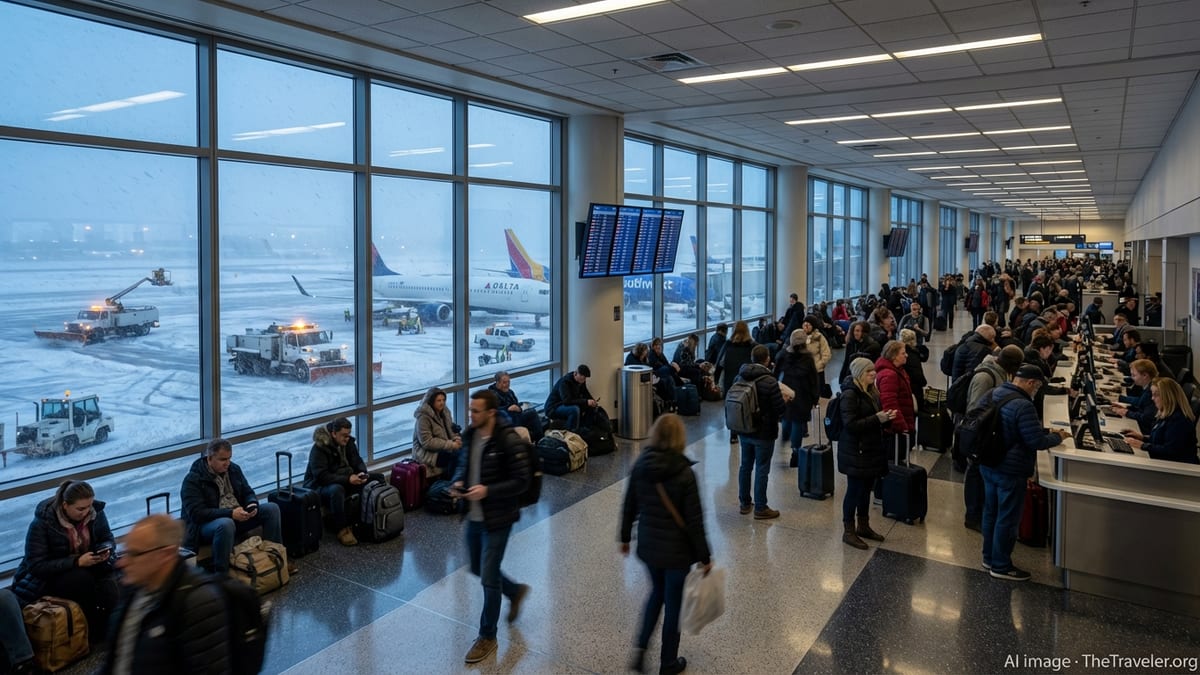
Blizzard Slams Mid-Atlantic and Paralyzes a Key Washington Hub
The latest winter storm, a fast-deepening blizzard sweeping up the East Coast, has turned Ronald Reagan Washington National Airport into one of the hardest-hit hubs in the country. Whiteout conditions, heavy snow bands and dangerous crosswinds around the Potomac corridor have made it unsafe for many takeoffs and landings, forcing airlines to ground aircraft and reshuffle operations in real time.
Meteorologists warn that the storm’s combination of intense snowfall, strong gusts and rapidly dropping visibility has created one of the most challenging operating environments for Washington-area airports in several seasons. At times, runway plowing has been unable to keep pace with accumulating snow, while ground crews battle blowing ice pellets and frigid wind chills in the single digits.
The shutdown at Reagan National is particularly disruptive because of its proximity to downtown Washington and its dense schedule of short-haul flights up and down the Eastern Seaboard. As aircraft and crews fall out of position, the cancellations and delays there are cascading into missed connections and last-minute rebookings across the wider U.S. network.
Hundreds of Flights Scrapped as Major Airlines Bear the Brunt
The 280 cancellations and at least 85 delays recorded at Reagan National by Sunday afternoon reflect a broad pullback by both major and regional carriers. Delta Air Lines, Southwest Airlines, Republic Airways and PSA Airlines are among the most heavily affected operators, trimming schedules as conditions deteriorated through the morning.
Carriers have focused first on cutting short-haul and shuttle-style services that make frequent use of Reagan National’s tightly scheduled runway capacity. Many early-morning departures to nearby cities such as New York, Boston and Philadelphia were removed from departure boards well before boarding, with aircraft reassigned to longer-haul routes in an attempt to preserve some long-distance connectivity.
Regional affiliates like Republic Airways and PSA Airlines, which operate a large share of Washington’s feeder traffic under the banners of larger legacy carriers, have been forced to suspend numerous rotations entirely. While some mainline jets remain staged at nearby airports less affected by crosswinds, the smaller regional jets that stitch together mid-sized cities and Washington are disproportionately sidelined.
Southwest Airlines, which has built a significant presence in the Washington region, has issued broad travel advisories, offering fee waivers and flexible rebooking for passengers whose plans touch the Mid-Atlantic. Delta and other legacy carriers are doing the same, urging customers to change plans early rather than risk getting stuck at the airport as conditions worsen.
Terminal Crowds Swell as Stranded Travelers Hunt for Options
Inside Reagan National’s terminals, the effect of the blizzard has been immediate and highly visible. By midday, lines at customer service counters and self-service kiosks snaked past gate areas, as travelers scrambled to secure scarce open seats on remaining flights or arrange alternative routes home.
Families returning from winter vacations, business travelers trying to reach Monday meetings and students heading back to campus all converged in a scene of anxious waiting. Some passengers, having watched their flights move from “on time” to “delayed” and then abruptly to “canceled,” rushed to airline desks only to be told that the next available seat might be days away.
With hotels near the airport filling quickly and ride-hailing drivers warning of slick roads and limited availability, many travelers resigned themselves to spending the night on terminal benches and in cramped gate areas. Airport staff distributed extra blankets to parents with young children and pointed travelers toward charging stations and quieter corners to rest, but the sheer volume of stranded passengers stretched resources thin.
Announcements over the public address system urged patience and reminded passengers that rebooking could often be completed through airline apps and websites. However, overloaded call centers and slow mobile apps added to the frustration for many, particularly older travelers less comfortable navigating digital tools.
Ripple Effects Across the U.S. Aviation Network
The problems at Reagan National extend far beyond the Washington metropolitan area. Because the airport serves as a critical spoke in the East Coast air network, flights canceled there create knock-on effects at dozens of other airports as planes and crews end up stuck in the wrong cities.
By Sunday afternoon, disruptions were being reported on routes from Atlanta and Detroit to Chicago, Dallas and Denver as aircraft scheduled to operate those legs remained grounded in Washington or diverted elsewhere. Delta and Southwest, both of which rely heavily on complex, tightly sequenced aircraft rotations, faced a growing patchwork of gaps in their national schedules.
Regional carriers like Republic Airways and PSA Airlines, which operate under codeshare agreements for larger brands, reported entire sets of flights going out of service as crew duty limits were reached and aircraft could not be repositioned in time. Flights that did depart often did so with long gate holds and deicing delays, further compressing available capacity later in the day.
Travel data firms tracking the storm’s impact warned that even after snow stops falling, the U.S. system could see lingering disruptions for several days. With so many planes and crew members out of their usual patterns, airlines may need multiple scheduling cycles to return to normal, particularly if additional weather systems follow on the heels of the current storm.
Airlines Issue Weather Waivers and Adjust Schedules
In anticipation of the blizzard’s impact, many carriers had already issued broad winter weather waivers, allowing ticketed passengers to change their plans without incurring the usual fees. Delta, Southwest, American, United and their regional partners have expanded those policies throughout the weekend, covering a wide swath of the Mid-Atlantic and Northeast.
These waivers give passengers the option to rebook travel to different days or, in some cases, different nearby airports, provided they keep the same origin and destination region. Some airlines are also permitting standby travel on earlier or later flights within a specified time window, which can help passengers seize open seats created when others preemptively cancel.
Operationally, airlines have thinned out schedules into and out of Washington ahead of time, canceling some flights several hours before departure. This “pre-cancel” strategy, now standard in major storms, is intended to reduce last-minute chaos at boarding time and allow airlines to preserve a core set of flights that they can reasonably operate given the forecast.
Still, the rapid intensification of the storm and shifting snowfall bands caught some carriers by surprise, forcing additional cancellations on top of earlier schedule cuts. For travelers, that has meant a moving target as itineraries once thought safe suddenly disappear from departure boards.
Airport Crews Battle the Elements on Runways and Ramps
While passengers crowd terminals, hundreds of airport workers are battling the storm outdoors in a race to keep at least some operations moving. Plow teams have been running almost continuously, clearing runways and taxiways only to see them quickly recover in blowing snow.
Deicing crews, clad in reflective gear and insulated gloves, work from elevated booms to spray heated glycol mixtures over aircraft wings and tail surfaces. Each deicing operation can add significant time to the departure process, particularly when temperatures and snowfall rates require a second treatment before an aircraft can safely take off.
Ground handling teams are operating with reduced staffing as some workers struggle to reach the airport on treacherous roads. Those who are on duty face a constant battle against ice build-up on jet bridges, baggage belts and service vehicles. Many tasks, from refueling to catering, take far longer in subfreezing wind chills, compounding delays even when runways are technically open.
Airport authorities have warned that safety remains the top priority. During periods when crosswinds exceed safe limits or visibility drops below the thresholds required for instrument landings, air traffic control has temporarily suspended arrivals and departures regardless of pressure to move stranded passengers.
Travelers Weigh Alternatives on Road and Rail
With air travel snarled, many stranded passengers at Reagan National are turning to other modes of transportation. Rental car counters saw a rush of customers as travelers realized that driving, despite poor road conditions, might be their only way to salvage weekend plans or reach important appointments.
Major car rental agencies reported surging demand for four-wheel-drive vehicles and larger SUVs, which are better suited to snow-covered highways. However, limited fleets and the storm’s wide footprint meant that vehicles quickly ran short, with some counters placing “sold out” signs by mid-afternoon.
Others looked to Washington’s rail links, booking last-minute seats on intercity and regional trains bound for cities along the Northeast Corridor. While rail services were themselves operating with weather-related slowdowns, they provided a more reliable alternative for some routes affected by the airport’s shutdown.
Local transportation options, including the region’s Metro system and bus services, remained vital lifelines for those who chose to find hotel rooms away from the airport or stay with friends and family in the area. Authorities urged travelers to check service updates frequently, as transit schedules shifted in response to road closures and drifting snow.
What Passengers Can Expect in the Coming Days
Forecasters expect the heaviest snow and strongest winds to ease gradually late Sunday into Monday, but the aviation fallout is likely to persist well beyond the storm’s final flakes. Airlines are already warning that schedules will be thinner than normal as they work aircraft and crews back into position.
Passengers with flights scheduled over the next several days are being advised to monitor their airline’s mobile apps and sign up for text or email alerts, as departure times may continue to shift. For those who can afford flexibility, voluntarily moving travel to later in the week may provide a smoother experience and reduce strain on the system.
Consumer advocates recommend that travelers document all communications with airlines about cancellations and delays and keep receipts for any hotels or meals purchased because of disrupted itineraries. While policies vary by carrier, many airlines provide meal vouchers and overnight accommodation in some circumstances, particularly when passengers are stranded overnight away from home.
For now, the crowded concourses and darkened departure boards at Reagan National stand as a vivid reminder of how quickly severe weather can shut down one of the country’s most important air gateways. As crews shovel snow, deice aircraft and rebuild schedules, thousands of travelers are left waiting for the moment when the runways of the nation’s capital come fully back to life.