

More news on this day
A powerful winter storm sweeping across the Northeast on February 23 has triggered severe travel disruption at Rhode Island T.F. Green International Airport, where 106 flights were cancelled and three delayed, stranding travelers from Providence and Warwick to Boston and major cities across the United States and disrupting operations at carriers including Southwest, JetBlue, Breeze Airways and other domestic airlines.
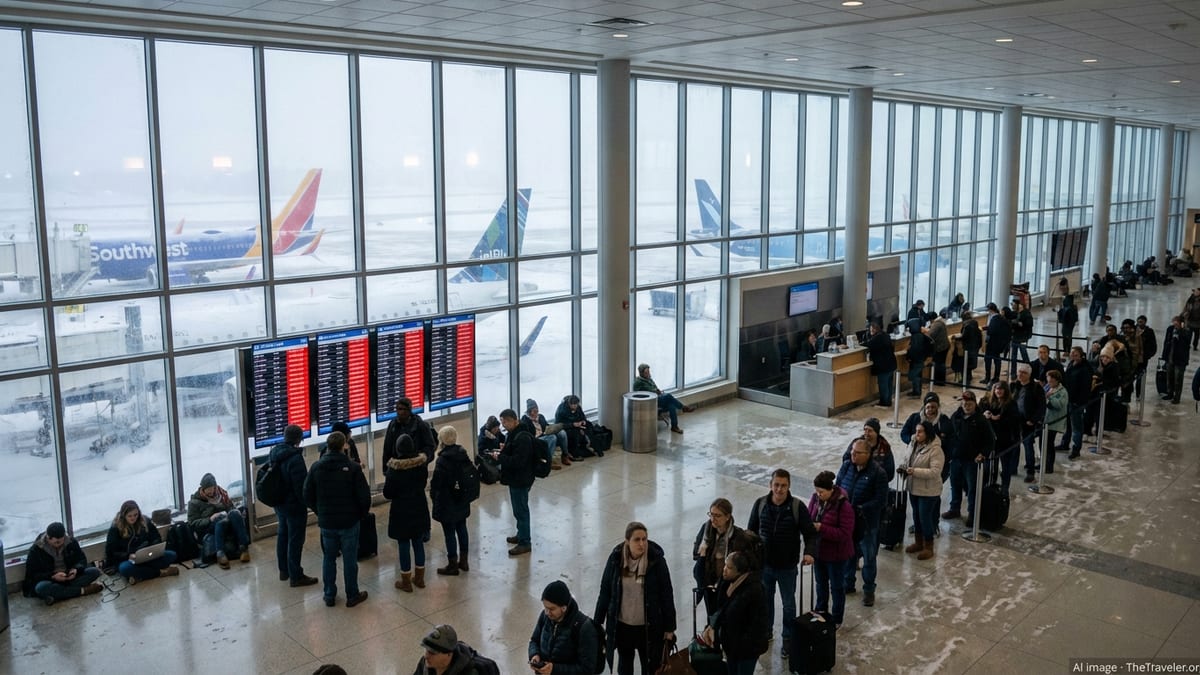
Winter Storm Paralyzes a Key New England Gateway
The shutdown at Rhode Island T.F. Green International Airport on Monday comes as a fast-deepening winter system blankets southern New England with heavy snow, blowing snow and near-zero visibility. Airport officials temporarily halted all operations after conditions deteriorated rapidly overnight, leaving aircraft unable to safely land or depart and forcing airlines to pull dozens of flights from the schedule.
Data reviewed by aviation analysts and airport monitors shows a total of 106 cancellations and three recorded delays tied to the storm-related shutdown window, an unusually high number for a regional airport that typically prides itself on smooth flows and comparatively modest congestion. The disruptions have hit both early morning and midday banks of flights, cutting off a large share of Rhode Island’s air links just as many travelers were attempting to start the workweek or return home after the weekend.
Federal Aviation Administration status notices for T.F. Green highlight heavy snow, blowing snow and freezing fog, along with strong northerly winds, as the key operational hazards driving the closure. With plows and de-icing teams struggling to keep pace with fresh accumulation and visibility dropping on the airfield, officials signaled that safety margins had narrowed to the point where a full suspension of operations was the only viable option.
The airport’s closure is currently authorized through the evening hours in universal time, with local authorities warning that the timeline for a phased restart will depend entirely on how quickly the storm lifts, how effective runway and taxiway clearance proves to be and whether wind conditions ease enough for pilots to operate within regulatory limits.
Wide-Ranging Impact Across Providence, Warwick and Greater Boston
The disruption is being felt well beyond the airport perimeter in Warwick. Thousands of travelers from Providence and surrounding Rhode Island communities saw their Monday plans upended, with early-morning departures to major hubs such as New York, Washington, Chicago and Atlanta erased from departure boards. Congestion quickly built along access roads as passengers who had not yet seen updated alerts arrived to find shuttered check-in counters and closed security lanes.
Because Rhode Island T.F. Green functions as a convenient alternative for many Boston-area travelers seeking to avoid the congestion and higher fares often associated with Logan International Airport, the shutdown also rippled into the broader New England air travel ecosystem. Some passengers attempted to salvage itineraries by rebooking out of Boston, Hartford or New Haven, adding pressure to already strained operations at those airports, where snow and high winds were also causing significant cancellations and delays.
Travel planners in the region say the storm has exposed how interdependent the Northeast’s mid-sized airports have become. When a facility like T.F. Green halts operations, nearby hubs and secondary airports must absorb rebooked travelers, aircraft swaps and diverted flights at the very moment they are managing their own weather-related constraints. That dynamic has produced overcrowded terminal spaces, longer waits at airline service desks and rising demand for last-minute bus and rail connections between New England cities.
Local tourism and business groups warned that the timing of the shutdown, coming in the middle of a workweek and at the tail end of the winter school vacation period for some districts, could dampen regional economic activity. Hotels in Providence and Warwick began fielding calls from stranded passengers seeking emergency overnight stays, while rideshare demand surged as travelers sought ground alternatives or attempted to reposition to other airports.
Southwest, JetBlue, Breeze Airways and Others Scramble to Adjust
Among the hardest-hit carriers at Rhode Island T.F. Green on Monday were Southwest Airlines, JetBlue and Breeze Airways, all of which operate important links from the airport to major U.S. cities. With the airfield closed for much of the day, these airlines were forced to cancel multiple rotations, re-time aircraft and crews, and implement flexible rebooking policies for disrupted customers.
Southwest, which connects Rhode Island with major points across its national network, pulled a series of departures to key destinations in the Mid-Atlantic, Midwest and Southeast. For many passengers, those flights represented the first leg of same-day connections onward to cities such as Dallas, Denver, Phoenix and Las Vegas, meaning a single cancellation in Warwick cascaded into missed onward connections and multi-day rebooking challenges.
JetBlue, a long-standing presence in New England, saw its own schedule buffeted by the storm as flights linking Rhode Island with New York and Florida were cancelled or held at origin. Given JetBlue’s role in funneling Rhode Island-based travelers to transcontinental and Caribbean routes via its larger hubs, the loss of those feeder services complicated rebooking efforts and raised the risk that customers would face extended delays before seats became available on later dates.
Breeze Airways, which has made T.F. Green a focus city amid its strategy of serving smaller and underserved markets, also faced a significant operational headache. The carrier’s point-to-point model, which often relies on tight aircraft utilization across a lean fleet, means that multiple cancellations at a single station can disrupt the balance of aircraft and crews days into the future. Passengers on routes connecting Rhode Island to mid-sized cities in the South and Midwest reported receiving notifications that their flights had been scrubbed outright with limited same-day alternatives available.
Major US Cities See Knock-On Disruptions From Rhode Island Grounding
While the raw numbers at T.F. Green tell a story of 106 cancellations and three delays centered on a single airport, the true footprint of the disruption stretches across the national network. Flights that would normally depart Warwick for large hubs such as New York, Boston, Washington, Philadelphia and Chicago were removed from schedules, forcing aircraft to remain parked at origin stations and crews to be reassigned or held on reserve.
At major hubs, absent arrivals from Rhode Island triggered their own chain of adjustments. Airline operations centers had to decide whether to cancel corresponding return legs, consolidate lightly booked flights or reroute aircraft to other markets less affected by the storm. Such decisions, made hour by hour as weather updates came in, translated into additional cancellations and delays in otherwise sunny destinations far from the Northeast, as equipment and crews were no longer where planners expected them to be.
Travelers booked from cities such as Orlando, Tampa, Nashville or Chicago into Rhode Island found themselves unable to depart, with some flights reclassified as “ferry” segments carrying only crew or repositioned entirely to other airports. Even passengers not originally planning to travel to or from Warwick felt the effects, as airlines adjusted nationwide connectivity to account for the storm’s wide geographic footprint and the closure of multiple airports along the I-95 corridor.
Aviation analysts note that the storm struck at a time when airlines are already operating relatively lean schedules with little slack in aircraft and crew availability. That reality amplifies the impact of a regional weather event, turning what might once have been an isolated disruption into a far-reaching operational shock that touches dozens of cities and tens of thousands of passengers.
Federal Notices and Weather Data Highlight Severity of Conditions
The scope of the disruption at T.F. Green is underscored by official notices and weather observations. Federal airspace management systems flagged the airport as closed for a substantial portion of the day, citing a formal airfield closure window tied to heavy snow and associated visibility challenges. Such notices are relatively rare and indicate conditions beyond those that can be managed by routine de-icing and plowing operations.
Surface weather observations for the Providence area on Monday morning recorded a combination of heavy snow, blowing snow and freezing fog, along with sub-freezing temperatures and strong northerly winds. Those factors present multiple overlapping risks for aviation, including slick runway surfaces, drifting snow obscuring markings, reduced braking performance and difficulty maintaining visual cues on final approach and taxi.
Airport maintenance crews deployed plows, sweepers and chemical de-icers, but the intensity of the snowfall meant that cleared surfaces quickly became covered again. With forecasts calling for continued bands of heavy snow and gusting winds into the afternoon, authorities opted for a conservative safety posture rather than attempting intermittent operations that could expose aircraft and ground teams to rapidly changing conditions.
Meteorologists have likened the broader system affecting the Northeast to a classic coastal winter storm, with a tight pressure gradient fueling strong winds and significant snowfall totals from Pennsylvania through New England. For air travel, such storms are particularly disruptive because they often strike multiple major hubs simultaneously, limiting opportunities for airlines to reroute around the affected region.
Passengers Face Long Lines, Rebooking Challenges and Limited Alternatives
For passengers caught in Monday’s travel chaos, the operational details translated into a day of uncertainty and frustration. Many arrived at T.F. Green to find their flights already cancelled, with digital signs and gate monitors updating throughout the morning as airlines aligned their schedules with the airport closure. Check-in halls that are usually orderly turned into makeshift waiting areas as travelers sought assistance at customer service counters.
Families traveling with small children and elderly passengers were particularly affected, with some facing the prospect of an unexpected overnight stay in the Providence and Warwick area. Hotels near the airport reported a surge in last-minute bookings, and some passengers described using mobile devices to secure remaining rooms while still standing in rebooking lines inside the terminal.
Airlines serving T.F. Green activated flexible rebooking policies, allowing customers to move trips to later dates without change fees, though fare differences still applied in many cases. Yet with the storm also impacting Boston, New York and other major hubs, seats on alternative flights were limited, especially for those hoping to travel within 24 to 48 hours. Some passengers opted to cancel trips altogether, shifting business meetings to virtual platforms or postponing leisure travel.
Ground transportation options offered only partial relief. While regional rail and intercity bus services remained available for certain routes, heavy snow on highways and reduced local transit schedules made same-day diversification difficult. For many travelers, the most realistic option was to wait out the storm and monitor airline messages and airport advisories for signs that operations would resume.
Regional and National Context: A System Under Strain
The crisis at Rhode Island T.F. Green unfolded against a backdrop of nationwide disruption tied to the same winter storm system. Across the United States, aviation analytics firms tracked several thousand flight cancellations on Monday alone, with the heaviest impacts at major northeastern hubs and select airports in the Mid-Atlantic and Southeast. Meteorologists warned that blizzard conditions and strong winds could keep disruption elevated into Tuesday before a gradual recovery.
In New England, airports from Boston Logan to Hartford and New Haven reported significant cancellation rates, compounding the difficulties facing travelers in Rhode Island who were seeking alternate options. Airlines issued broad travel advisories for customers planning to pass through the region, encouraging those with flexible plans to voluntarily shift trips later in the week in order to reduce pressure on already strained operations.
Industry observers point out that such large-scale weather events are testing airlines’ post-pandemic staffing models and operational resilience. With many carriers having rebuilt schedules to meet rebounding demand while also contending with pilot and crew shortages, the room to absorb multi-day disruptions is limited. Recovery often stretches across several days, as planes and crews must be repositioned and maintenance windows rescheduled.
For smaller but strategically important airports like T.F. Green, these dynamics underscore both their value and their vulnerability. The facility offers a critical outlet for New England travelers seeking alternatives to larger hubs, but when it is forced offline by extreme weather, the lack of nearby substitutes with spare capacity quickly becomes apparent.
What Travelers Should Expect in the Coming Days
As the storm system gradually moves offshore, attention is turning to how quickly T.F. Green can transition from shutdown back to scaled-back operations and eventually to normal service. Airport officials have pledged to reopen “as soon as it is safe to do so,” with runway and taxiway inspections, surface treatment and checks of navigational aids all required before flights can resume.
Even once the first departures and arrivals are cleared, passengers should brace for a protracted period of schedule irregularity. Airlines will need to bring aircraft and crews back into position, which may mean scattered cancellations, retimed flights and equipment swaps through at least midweek. Travelers holding tickets into or out of Rhode Island are being advised to monitor flight status frequently, use airline apps where possible and arrive earlier than usual once operations restart to account for longer lines and additional checks.
Industry experts recommend that passengers with critical travel needs consider building extra buffer days into their plans during the winter period, particularly when itineraries rely on connections through weather-prone hubs. For those affected by Monday’s shutdown, keeping detailed records of expenses, communication with airlines and any out-of-pocket costs for hotels or meals may be helpful when seeking reimbursement or goodwill credits.
For now, the snow-covered runways and silent concourses at Rhode Island T.F. Green International Airport stand as a stark illustration of how swiftly winter weather can bring the U.S. air travel system to a halt, rippling outward from a single regional airport to touch cities and travelers across the country.