

More news on this day
Thousands of travelers moving between Germany, the United States and Scandinavia are facing serious disruption after a powerful winter storm on the US East Coast prompted airlines including Lufthansa, United Airlines, Delta and Brussels Airlines to cancel a wave of transatlantic flights, affecting key routes to and from New York’s JFK, Newark, Boston and Copenhagen.
Blizzard on US East Coast Cascades Into German Hubs
A fast-intensifying winter storm over the northeastern United States has become the main driver of Monday’s flight disruption for Germany-based carriers and their transatlantic partners. Heavy snowfall, strong winds and poor visibility have pushed major airports such as New York’s JFK, Newark Liberty and Boston Logan into significant operational slowdowns, with ground stops and runway closures rippling across the network. With aircraft and crew unable to move according to schedule, cancellations have become the only viable option for many airlines.
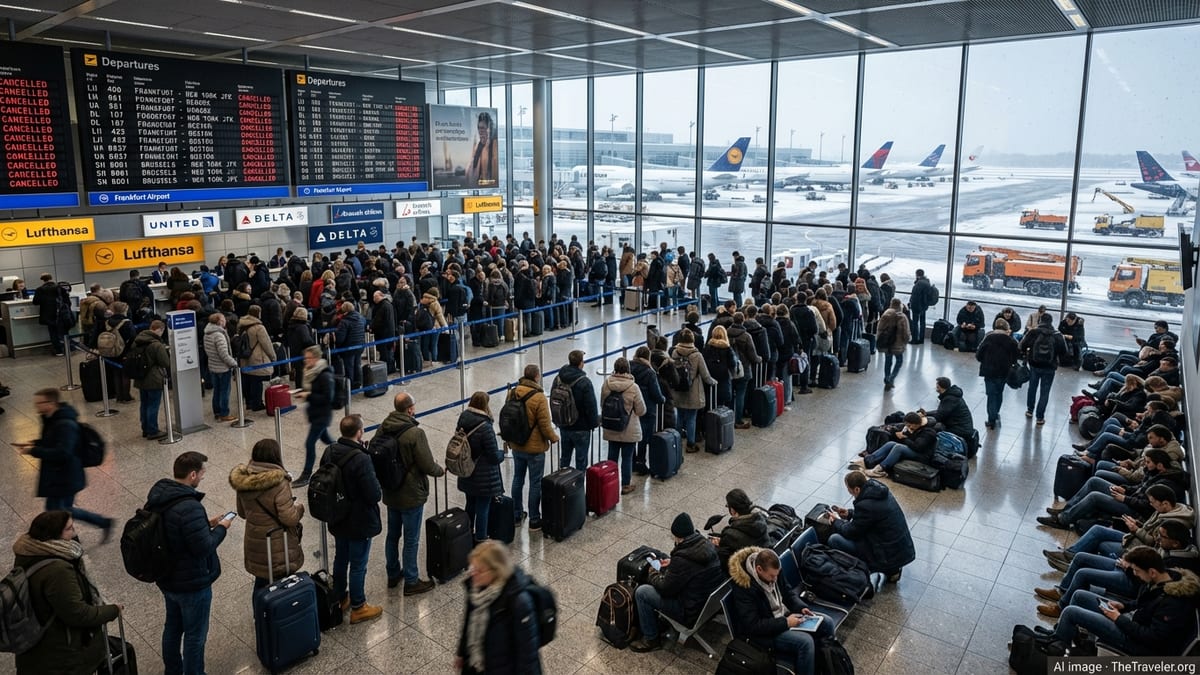
At Frankfurt Airport, Germany’s largest long haul hub, airlines have pulled several key departures and arrivals to the US East Coast. The Lufthansa Group has confirmed that all flights operated by its carriers to New York and Boston scheduled for Monday, February 23, have been cancelled, and return services from those cities back to Germany have also been scrubbed. Other major international airlines, including United Airlines, Condor and Singapore Airlines, have likewise removed multiple services between Frankfurt and the New York area from the day’s schedule as conditions in the United States deteriorate.
Air traffic planners stress that while the blizzard is centered thousands of kilometers away, the tightly interwoven nature of transatlantic schedules means disruption is quickly exported to European hubs. Aircraft that would normally complete an overnight round-trip to New York or Boston and then cycle into new routes are instead sitting on the ground, forcing airlines to unwind complex rotations and, in many cases, preemptively cancel flights in order to avoid even more chaotic last-minute disruptions later in the day.
With the storm forecast to drop up to 50 to 60 centimeters of snow in parts of the northeastern United States, and wind gusts strong enough to compromise de-icing and ground handling, airlines have been advised by regulators and airport authorities to keep operations at a minimum until conditions improve. That guidance is directly impacting Germany’s major gateways, from Frankfurt and Munich to Berlin and Düsseldorf, where departures to the US East Coast form the backbone of long haul schedules.
Lufthansa Group Scraps New York and Boston Services
The Lufthansa Group, Europe’s largest aviation conglomerate, is carrying out one of the most extensive sets of cancellations from Germany. The company has confirmed that all of its flights to New York and Boston on Monday have been pulled from the timetable, including services operated by Lufthansa itself as well as those marketed or flown by group carriers such as Swiss, Austrian Airlines, Ita Airways and Brussels Airlines. The cancellations cover both westbound departures from Germany and eastbound return legs from the United States.
Frankfurt, usually a constant stream of widebody departures to New York’s JFK and Newark, is markedly quieter today. Flags of Lufthansa and its partners that typically dominate the transatlantic afternoon wave are absent from departure boards, as aircraft remain parked at gates or remote stands. Passengers who had been booked on the affected flights are being accommodated on alternative services where possible, but the scale of the disruption means many travelers are facing 24-hour delays or being rerouted via other European hubs once the storm passes.
Munich, Düsseldorf and Berlin are all feeling the secondary impact. While not all of these airports host nonstop flights to New York or Boston every day, they feed significant numbers of passengers into the Frankfurt and Zurich hubs on short haul connections. With the long haul sectors cancelled, many of those feeder flights have been down-gauged or, in some cases, removed from the schedule to avoid moving passengers into hubs where onward travel is no longer available. For travelers starting in regional German cities, this has turned what should have been a straightforward one-stop journey into an uncertain wait for rebooking.
The Lufthansa Group has indicated that, as of early Monday, no large-scale cancellations have yet been scheduled for Tuesday, February 24. However, the company is conceding that the situation remains fluid and highly dependent on how quickly operations on the US East Coast can resume. Any significant extension of airport closures or ground delays in New York or Boston could trigger a further wave of schedule changes across the group’s European network.
United, Delta and Transatlantic Partners Hit Germany Links
Germany’s transatlantic connectivity relies not only on German-based carriers but also on major US airlines and their alliances. United Airlines, which operates an extensive network from Newark to German cities including Frankfurt and Berlin, has already cancelled multiple services into and out of Frankfurt as conditions at its New Jersey hub worsen. These cancellations not only affect United’s own passengers but also travelers booked on codeshare tickets sold by Lufthansa and other Star Alliance partners.
Delta Air Lines, which serves Germany primarily through connections in Amsterdam, Paris and other European hubs, is also trimming parts of its US East Coast schedule. While Delta’s direct footprint in Germany has been more limited since it restructured its New York to Brussels operation earlier this year, the airline remains a crucial transatlantic connector for travelers heading from German airports to US destinations via partner hubs. As Delta cancels or consolidates flights from JFK and other northeastern airports, German-origin passengers on joint itineraries are encountering missed connections and last-minute reroutings.
Brussels Airlines, part of the Lufthansa Group, has also seen its transatlantic operations impacted. Routes from Brussels to New York, which often carry a significant share of German passengers traveling via the Belgian capital, are facing schedule disruptions tied to the same storm system. Travelers who started their journeys in Germany and routed through Brussels, Zurich or Vienna are discovering that even indirect itineraries offer no guarantee of avoiding weather-related cancellations when the US destination airport is effectively shut down by winter conditions.
Across the Atlantic, alliances and codeshare agreements that ordinarily offer flexibility and backup options are working in the opposite direction. When a storm hits multiple hubs and airlines simultaneously, the redundancy those partnerships provide quickly erodes, leaving fewer open seats and longer recovery times. This is particularly true on high-demand corridors such as Germany to New York, where most flights already operate close to full throughout the winter.
Copenhagen and Scandinavian Routes Also Affected
The disruption is not limited to flights starting or ending in Germany. Travelers moving between Germany, Scandinavia and the United States are experiencing knock-on effects as well. In recent days, a Scandinavian Airlines service between Copenhagen and New York was cancelled, underscoring the wider vulnerability of northern European routes that connect into the same cluster of East Coast airports now dealing with heavy snow and blizzard conditions.
For German passengers, Copenhagen and other Scandinavian hubs often serve as alternative gateways to the United States, particularly for those originating in northern Germany or looking for specific connection times. However, when the destination airports in New York or Boston are forced to reduce movements or close temporarily, even these workarounds become unreliable. Cancellations of long haul services from Copenhagen and other regional hubs tighten capacity further, pushing more stranded passengers back toward the same limited number of available seats once operations restart.
Rail and short haul air links between Germany and Denmark are also experiencing higher demand as travelers attempt to reposition themselves for alternative departures. Some passengers who were originally booked on direct Germany to US flights have rebooked through Copenhagen or Stockholm only to discover that those flights too have been suspended, leaving them searching for available hotel rooms and last-minute rebooking options.
Airlines are warning that the knock-on effects could persist even after the storm has passed and East Coast airports reopen. Crews and aircraft need to be repositioned, and complex legal limits on crew working hours must be respected. That means some flights from Copenhagen and other European gateways to New York and Newark over the next one to two days may still be adjusted or cancelled as carriers work to bring their operations back into balance.
Passengers Face Overnight Delays and Onboard Ordeals
For many travelers, the operational charts and schedule diagrams translate into very personal experiences of discomfort and uncertainty. Earlier in the week, heavy snow in Germany led to hundreds of passengers being stranded overnight on grounded aircraft at Munich Airport after several flights were cancelled or delayed beyond the local night flying curfew. Among those affected were travelers booked on a Lufthansa service from Munich to Copenhagen, who remained onboard for hours with limited access to food, water and blankets before they were eventually allowed to disembark in the early morning.
While Monday’s disruption is being driven primarily by weather in the United States rather than Germany, the Munich incident highlights what can happen when airport infrastructure, staffing levels and regulatory restrictions collide with sudden schedule changes. Once again this week, passengers are reporting long lines at check in and transfer desks, limited information about rebooking options and difficulty securing hotel vouchers when overnight stays become unavoidable. Families traveling with children and older passengers with mobility issues are particularly affected when terminal facilities are crowded or when overnight accommodation near the airport is fully booked.
Consumer advocates in Germany and across the European Union point out that, while extreme weather is beyond airlines’ control, carriers still have clear obligations under EU passenger rights regulations. That includes providing meals, refreshments and hotel accommodation when passengers are left waiting for long periods, as well as clear information about their options for rebooking or refunds. However, advocates concede that in the first hours of a major disruption, airlines and airports often struggle to deliver these standards consistently, especially when staffing was planned for a normal operations day.
Social media posts from travelers at Frankfurt, Munich and Berlin on Monday show a mixed picture. Some passengers praise frontline staff for working tirelessly to rebook disrupted journeys and provide updates. Others describe being directed from one service desk to another with little concrete information and long waits on customer service phone lines. With the storm still ongoing in the United States, both airlines and airports are urging passengers to rely on digital channels for real time updates and, where possible, to manage changes online rather than in person.
What Travelers Booked to Newark, JFK and Boston Should Do
Passengers scheduled to fly between Germany and the US East Coast over the next 48 hours are being urged to act proactively rather than waiting until they reach the airport. Travelers holding tickets to New York’s JFK or Newark, as well as to Boston, should first check the status of their flight using airline apps or official communications before departing for the airport. Many of Monday’s cancellations were implemented several hours in advance, and airlines are continuing to adjust schedules as the storm evolves and airports revise their capacity estimates.
Most major carriers, including Lufthansa, United, Delta and Brussels Airlines, have activated flexible rebooking policies in connection with the storm. These policies typically allow passengers scheduled to travel on specific dates and routes to change their travel date once without a change fee, although fare differences may apply if the original booking class is not available. In cases where a flight is cancelled by the airline, travelers are generally entitled to a choice between rebooking at the earliest opportunity, rebooking to a later date or receiving a refund of the unused portion of their ticket.
Experts recommend that passengers consider alternative routings that avoid the most heavily affected airports if their travel is time sensitive. For example, it may be easier to secure seats into or out of mid-Atlantic or Midwest hubs such as Washington, Chicago or Detroit and then connect domestically, rather than insisting on a nonstop service to JFK or Newark in the first 24 hours after the storm. However, travelers should weigh this against the risk of further weather instability and the potential for missed connections as airlines work through their backlogs.
Those whose trips are flexible are being encouraged to postpone travel by several days. Once the immediate wave of cancellations passes, airlines will operate with stretched resources as they clear stranded passengers and reposition aircraft. Flights in the first days after a major storm often depart full, leaving little room for additional last-minute rebookings should new problems arise. Rescheduling for later in the week can reduce the likelihood of additional disruption, particularly for leisure travelers not bound by fixed schedules.
Outlook for the Next 24 to 48 Hours
Forecasters expect the most intense phase of the blizzard impacting the US East Coast to ease gradually over the next 24 hours, but aviation experts warn that the recovery of international schedules will lag far behind the weather improvement. Airports must first clear runways, taxiways and ramp areas of accumulated snow and ice, then reopen at a reduced capacity as air traffic controllers manage a surge of delayed departures and arrivals. Only after that process stabilizes can transatlantic flows between Germany, Scandinavia and the United States return to something approaching normal.
Airlines on both sides of the Atlantic will spend the coming days rebuilding their rotations, moving aircraft and crews back into position and resolving mismatches between where planes are and where they are scheduled to be. This will likely mean a continued pattern of selective cancellations and schedule adjustments through at least midweek, even if the storm itself has passed. Travelers booked from Tuesday onwards should therefore continue to monitor their flights closely and remain prepared for possible changes.
In Germany, airport authorities are emphasizing the importance of clear communication and crowd management as the situation evolves. With passenger volumes still relatively high for the late winter season, terminals at Frankfurt and Munich are expected to remain busy as stranded travelers overlap with newly departing passengers. Additional staff are being deployed to information counters, and airlines are being urged to provide timely digital updates to reduce the need for passengers to queue at physical service points.
For now, the most important message for travelers is that conditions remain dynamic. While there are signs that the worst of the weather may soon pass, the extensive cancellations implemented on Monday, including high profile routes operated by United Airlines, Lufthansa, Delta and Brussels Airlines, will continue to influence travel plans for several days. Anyone holding tickets between Germany, New York, Newark, Boston or Copenhagen over this period should build flexibility into their plans and stay closely tuned to airline advisories.