

More news on this day
Hundreds of flights were canceled and thousands of travelers stranded across the United States on Monday as a powerful blizzard bearing down on the Northeast forced airlines to slash schedules at Philadelphia and other key hubs, sending disruption rippling to major leisure and business destinations from Miami and Orlando to Chicago, Atlanta and Boston.
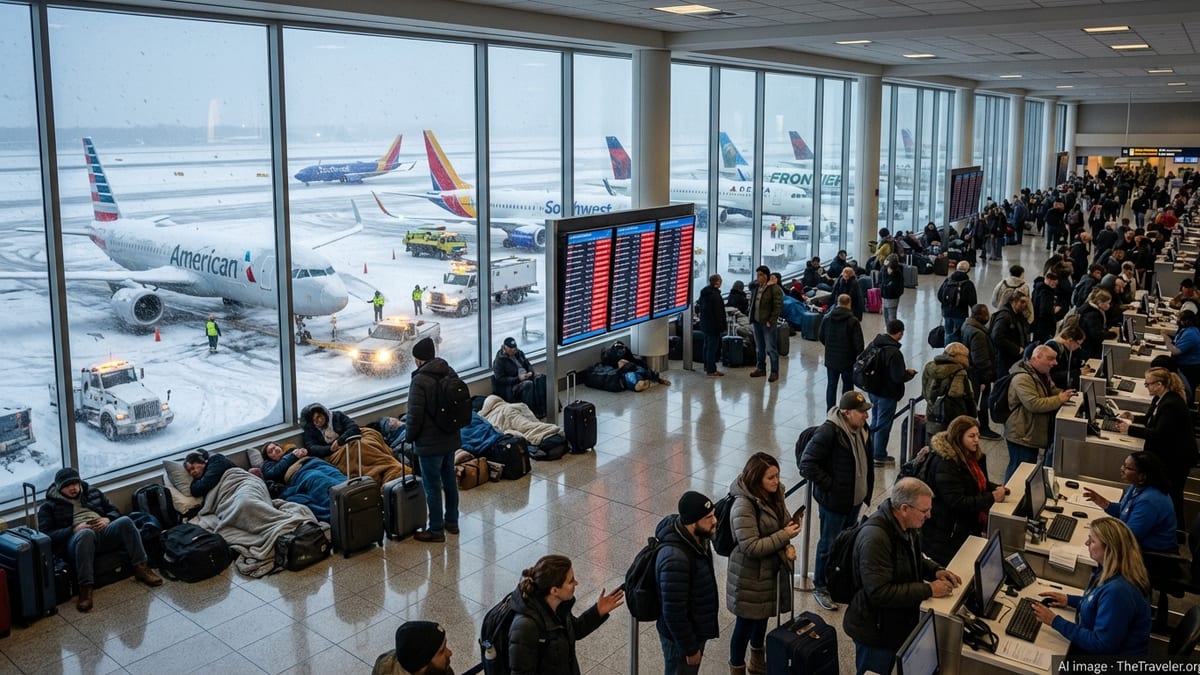
Philadelphia Becomes a Flashpoint in Nationwide Flight Chaos
Philadelphia International Airport emerged as one of the hardest hit facilities as airlines preemptively grounded large portions of their schedules in the face of whiteout conditions and intense winds sweeping across the Mid‑Atlantic and Northeast. Flight data services showed hundreds of cancellations and a wave of delays tied to the storm, which has dumped more than a foot of snow on parts of the metropolitan area and pushed visibility at times to near zero.
Major U.S. carriers including American Airlines and its regional affiliate Piedmont, along with Southwest, Frontier, Delta, Republic and other operators, sharply curtailed operations into and out of Philadelphia. Airlines leaned on their winter weather playbooks, consolidating remaining flights, trimming frequencies on short routes and prioritizing aircraft and crews for essential connections or repositioning missions. With blizzard warnings in effect across a wide swath of the I‑95 corridor, airport officials urged passengers not to travel to the terminal without first checking directly with their airline.
The disruption did not stay local. Because Philadelphia functions as a vital connecting point in several carriers’ networks, cancellations there quickly reverberated outward. Travelers bound for warmer destinations in Florida, business centers in the Midwest and Southeast, and transcontinental gateways on the East Coast faced abrupt changes to their plans as itineraries unraveled.
Inside the terminal, departure boards filled with red cancellation notices, and public‑address announcements repeatedly advised stranded passengers about rebooking options, limited remaining seats and the likelihood that disruptions could extend for at least another day after the storm’s peak impact.
Blizzard Conditions Grip the Northeast Travel Corridor
The sweeping winter system driving the turmoil has placed roughly 40 million people under blizzard warnings from the Mid‑Atlantic through New England, according to meteorologists. Heavy snow bands, gusty winds that in some locations have approached hurricane force, and rapidly falling temperatures combined to create treacherous flying and ground handling conditions at airports from Washington to Boston.
Forecasters described the storm as a classic nor’easter, intensified by strong low‑pressure development off the coast. In and around New York City, Long Island and coastal New Jersey, snow totals climbed toward 20 inches in some communities, while winds whipped snow across runways and taxiways, making it difficult for ground crews to keep surfaces clear. Boston Logan International Airport, already vulnerable to coastal storms and high winds, scaled back operations as airlines scrubbed the vast majority of Monday departures.
In Philadelphia, more than a foot of snow fell at the airport overnight and into the morning, according to early National Weather Service readings, with bands of heavier accumulation north and west of the city. The combination of deep snowpack, low visibility and drifting across aprons made it unsafe for routine takeoff and landing operations for much of the day. Even as snow intensity eased in some areas, crosswinds and blowing snow remained major hazards to aircraft during approach and departure.
Authorities emphasized that the challenges were not confined to runways and airspace. Road conditions on key access routes to airports were dangerous in many locations, complicating staff commutes, fuel deliveries and airport support operations. As a result, even flights that could theoretically operate under instrument flight rules sometimes lacked sufficient ground personnel to turn aircraft around efficiently.
Ripple Effects Stretch from Boston and New York to Florida and the Midwest
While the core of the storm parked over the Northeast, its impact on air travel spread far beyond the region’s snow‑covered runways. Flight cancellations and delays at major hubs such as New York’s trio of airports, Boston Logan, Newark Liberty, Reagan National and Philadelphia triggered a chain reaction that disrupted flights across the country.
In Florida, a popular winter escape for travelers from the Northeast and Mid‑Atlantic, airports in Orlando, Tampa and Miami reported dozens of cancellations and delays tied directly to grounded flights up north. At Orlando International, which ordinarily handles a heavy mix of leisure travelers and theme‑park visitors, gate areas filled with families waiting for updates on flights back to Philadelphia, Boston, New York and Newark. Tampa International reported more than 100 disrupted flights as connections to Philadelphia and other storm‑battered cities fell apart.
Atlanta, the country’s busiest hub and a key connecting point between North‑South and East‑West routes, also felt mounting strain. Delta and other carriers flying into Atlanta from snow‑bound airports across the Northeast were forced to reroute aircraft, swap equipment and juggle crew schedules as incoming flights canceled at the last minute. Some travelers discovered that flights to southern destinations that were technically operating still could not depart because the aircraft assigned to them was stuck in Philadelphia or New York.
Farther north and west, Chicago O’Hare and Midway saw their own knock‑on delays, particularly on routes linked to East Coast hubs. Even where skies remained relatively clear, airlines had to manage the practical limitations of aircraft and crew positioning, resulting in rolling delays for passengers who never came close to the storm zone itself.
Thousands of Passengers Stranded, Rebooked or Diverted
The human toll of the sweeping disruptions became visible at terminal concourses around the country, where passengers struggled to secure alternative flights, lodging and ground transportation as the storm intensified. At Philadelphia, long lines formed at airline service counters as customer service agents attempted to rebook entire planeloads of travelers onto a shrinking pool of available seats later in the week.
Families returning from school vacations and long‑planned cruises, business travelers facing missed meetings, and international visitors trying to make transatlantic connections all confronted a harsh reality. Many would not be reaching their destinations on their originally scheduled day of travel, and some were told to prepare for delays of 24 hours or more. With hotel rooms near major airports filling rapidly, several passengers resorted to makeshift sleeping arrangements in gate areas.
Airlines sought to mitigate the impact through a range of measures. Major carriers issued broad fee waivers across affected regions, allowing customers to change dates and, in some cases, destinations without penalty. Some airlines offered travel credits or vouchers in lieu of refunds for voluntary changes, though passengers whose flights were outright canceled remained eligible for full refunds under federal rules if they chose not to rebook.
In scattered cases, flights bound for heavily affected airports were diverted mid‑journey to alternate fields where weather conditions were more favorable. That created new logistical hurdles as carriers scrambled to provide buses, additional flights or overnight accommodations for passengers suddenly arriving hundreds of miles from their intended destination.
How Major Airlines Are Managing the Storm Response
Behind the scenes, operations centers at airlines including American, Delta, Southwest, Frontier, Piedmont and Republic pivoted into all‑hands emergency mode. Dispatchers, crew schedulers and route planners worked busily to consolidate flights, reassign pilots and flight attendants, and keep remaining core operations safe and functional in the teeth of the storm.
For American Airlines, which counts Philadelphia as a key hub, the blizzard struck at the heart of its domestic and transatlantic network. The carrier dramatically cut back its schedule in and out of the city, focusing on essential connections and on positioning wide‑body aircraft for eventual resumption of long‑haul routes. Piedmont, operating many of American’s regional flights from Philadelphia to smaller East Coast cities, canceled large numbers of short‑haul segments that typically rely on tight turnaround times and precise slot coordination.
Southwest and Frontier, each with sizable operations along the East Coast and in major leisure markets, also made broad schedule adjustments. With flights linking Philadelphia, Boston, New York and the Mid‑Atlantic to Florida and the Southeast in disarray, both carriers pulled down point‑to‑point routes that depend on steady throughput from multiple origins. Regional carriers such as Republic, which operate branded flights on behalf of the major airlines, faced their own constraints as aircraft availability and crew duty limits tightened across their networks.
Industry analysts noted that the widespread advance cancellations, while frustrating to travelers, may ultimately reduce longer‑term chaos. By canceling flights proactively and publishing revised schedules early, airlines can avoid cascading disruptions that linger for days and make it difficult to restart normal operations once weather conditions improve.
Ground Transportation, Power Outages and Airport Operations Under Strain
The blizzard’s effect on travel extended well beyond airplane cabins, reaching deep into the infrastructure that keeps aviation and tourism moving. In parts of the Northeast, hundreds of thousands of utility customers lost power as heavy, wet snow and fierce winds downed trees and power lines. That, in turn, affected some airport support facilities, nearby hotels and transportation services on which passengers rely.
On the ground, state and local transportation agencies struggled to keep major highways and airport access roads open. Plows circled continuously on key approaches to airports such as Philadelphia, Boston and New York LaGuardia, but drifting snow and icy patches remained an obstacle for employees and travelers attempting to reach terminals. Ride‑share wait times lengthened, and some taxi services reduced operations due to safety concerns.
Rail and intercity bus networks also reported significant service disruptions and cancellations, eliminating fallback options for passengers hoping to bypass snarled airports. On some Northeast rail corridors, operators suspended or sharply curtailed service for safety reasons, citing blowing snow, reduced visibility and potential track obstructions. Where limited trains were running, they were often fully booked as air passengers sought last‑minute alternatives.
Inside airports, maintenance teams rotated through long shifts to de‑ice aircraft, clear gate areas and manage snow banks accumulating around jet bridges and service roads. Even with modern equipment, the intensity of snowfall meant that surfaces could only remain clear for short intervals before new accumulation set in, complicating efforts to resume departures between heavier snow bands.
What Travelers Can Expect in the Coming Days
As the storm slowly marches north and east, forecasters expect conditions across parts of the affected region to begin improving late Monday into Tuesday. However, travel experts caution that the airline system may take several days to fully recover even after skies clear. Aircraft and crews will need to be repositioned, maintenance checks completed and backlogs of stranded passengers accommodated on already busy flights.
Travelers with bookings over the next several days are being urged to monitor their airline’s mobile apps and communication channels closely, as same‑day schedule changes remain possible while carriers rebalance their operations. Many airlines are encouraging customers who do not have urgent travel needs to voluntarily move their trips later in the week, when more seats may be available and the risk of weather‑related disruption is lower.
Industry observers note that the current blizzard arrives amid a broader pattern of weather‑driven volatility in U.S. air travel, with major winter storms, severe thunderstorms and extreme heat events increasingly capable of wiping out thousands of flights in a matter of hours. For travelers, that reality underscores the importance of flexible planning, travel insurance tailored to weather disruptions, and a willingness to consider alternate routes or modes of transportation when storms loom.
At Philadelphia and other hard‑hit airports, officials signaled that they would work closely with airlines and federal partners to restore normal operations as quickly as conditions permit. For now, though, passengers across the country remain at the mercy of a powerful storm system that has once again demonstrated how quickly nature can ground even the most sophisticated aviation networks.