

More news on this day
A rapidly intensifying winter storm bearing down on the Northeast on February 21 has unleashed a new round of travel disruption across U.S. and transatlantic networks, with American Airlines, Delta Air Lines, JetBlue and United Airlines reporting hundreds of delays and targeted cancellations on routes into New York, Chicago, London and other major U.S. cities.
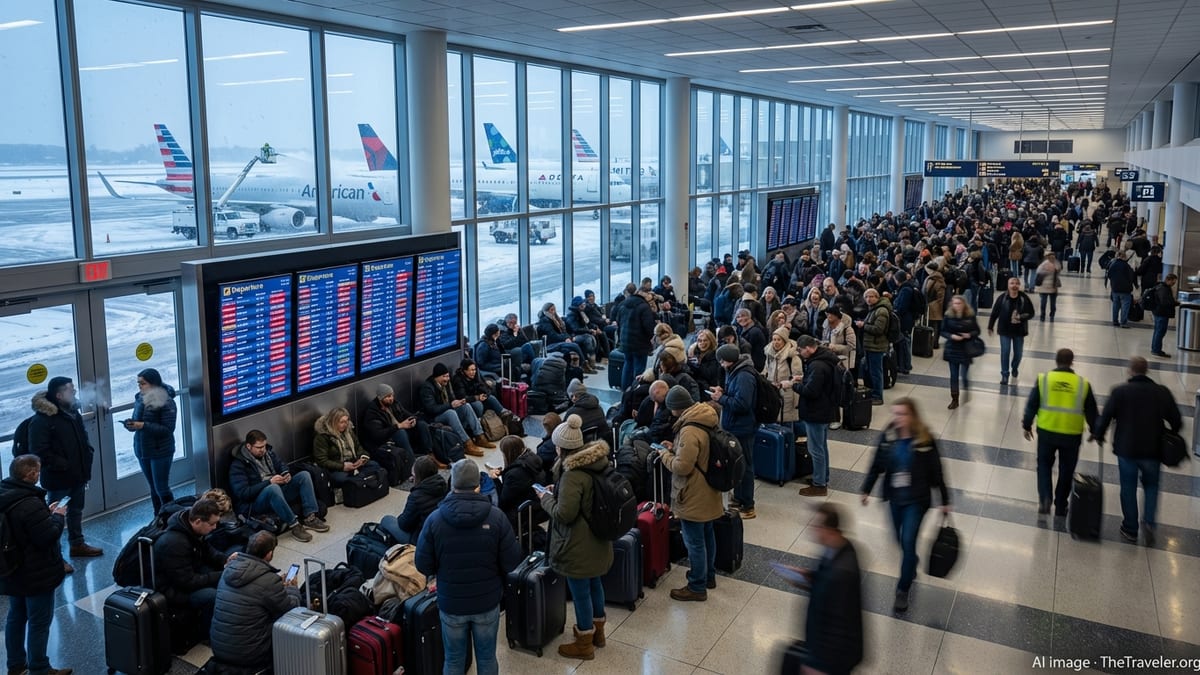
Storm-Battered Networks Face Fresh Strain
The latest wave of disruption comes as airline operations are still recovering from a punishing winter marked by multiple major storms, including a deadly January system and a powerful bomb cyclone that snarled flights across the eastern United States earlier this month. With a new historic blizzard now forecast to slam the Northeast corridor, the four largest U.S. network carriers are again scrambling to contain operational fallout.
Blizzard warnings and winter storm alerts stretching from Philadelphia to Boston have prompted airlines to impose ground delays and flow-control programs at key hubs, particularly the New York City airports and Chicago. Aviation planners say even modest schedule changes in those choke-point hubs can quickly cascade across the country and into Europe, as aircraft and crews struggle to rotate back into position.
While Friday’s headline numbers of 259 delays and four cancellations affecting services into New York, Chicago, London and other major U.S. cities are modest compared with previous mass meltdown events, they tell only part of the story. Many flights are departing significantly behind schedule, and large numbers of passengers have proactively rebooked or abandoned travel plans ahead of the storm’s peak, reducing immediate cancellation tallies but not the scale of disruption.
Across the major carriers, operations teams are focusing on “protecting” early-morning departures and long-haul services, especially transatlantic flights linking New York and other East Coast gateways with London, by trimming some mid-day and evening frequencies and consolidating passenger loads.
New York and Chicago at the Eye of the Disruption
New York’s three major airports remain the most visible flashpoint. With blizzard conditions expected to develop over the weekend, airlines and air-traffic managers have already been metering arrivals and departures at John F. Kennedy International, LaGuardia and Newark Liberty, triggering rolling ground delays that ripple through the system.
Flights bound for New York from southern and Midwestern cities have faced extended holding patterns and reroutes to skirt the leading edge of the storm. Some carriers have also implemented pre-emptive flight time buffers, padding schedules to account for anticipated de-icing and runway-clearing operations, which inevitably squeeze gate availability and slow aircraft turnarounds.
Chicago, which sits at the crossroads of major east-west and north-south routes, has also seen growing knock-on effects. With snow and gusty winds forecast to intensify across the broader Great Lakes region, Chicago O’Hare and Midway have both reported rising delay counts. Network planners say constricted capacity in Chicago can strand aircraft that were scheduled to continue onward to New York, Washington and Texas, contributing to that total of 259 delays on services funneling into the nation’s biggest business and leisure markets.
Airport operations managers in both metropolitan areas have activated winter-weather teams, bringing in extra snow-removal crews and coordinating with city transportation agencies on staff access and passenger ground transport, but warn that visibility and wind conditions during the storm’s peak could force temporary runway closures or even brief airport shutdowns.
Transatlantic Links to London Under Pressure
Long-haul transatlantic flights have not escaped the turbulence. London services, especially those departing from New York and other northeastern gateways, are particularly vulnerable to upstream disruption when U.S. hubs slow down. Carriers try to shield their flagship routes from outright cancellation because they are heavily booked and strategically important, but doing so often means juggling aircraft and crews at short notice.
With the new winter system arriving only weeks after a powerful bomb cyclone disrupted East Coast operations, airlines had already been operating tighter-than-usual rotations on their Europe networks. Any late-arriving inbound aircraft from London can throw off the carefully calibrated sequence of departures back to Heathrow and Gatwick, leading to rolling departure delays and schedule knock-on effects that may persist for several days.
Passengers heading from London into New York and Chicago on Friday and through the weekend are being urged to monitor flight status frequently and to anticipate extended boarding and ground time, particularly if their aircraft requires de-icing. Travel advisors say that even when flights operate relatively close to schedule, queues at immigration, baggage claim and ground transportation can be swollen as multiple delayed flights arrive simultaneously.
Aviation analysts note that the current wave of disruption underscores the continued fragility of transatlantic schedules during the peak of winter, when storms frequently track along or just offshore the U.S. East Coast. With load factors high on many London routes, re-accommodating passengers whose flights are delayed or canceled often requires complex re-routing via secondary hubs.
Major U.S. Carriers Lean on Waivers and Proactive Cuts
American, Delta, JetBlue and United have each responded to the looming blizzard with a familiar set of tools: flexible rebooking policies, targeted schedule reductions and appeals to travelers to move their trips outside the worst of the weather window. The aim is to reduce the number of passengers and aircraft tangled in the system when conditions deteriorate.
Travel waivers for the Northeast and Great Lakes regions allow affected customers to change their itineraries without penalty, often enabling them to depart a day early or postpone trips into the following week. Such waivers, now a standard feature of U.S. airline storm planning, have become a key pressure valve as carriers try to avert the scenes of stranded passengers and overflowing terminals that have dominated travel headlines in recent winters.
On Friday, the four big carriers opted for a strategy sometimes described as “surgical disruption.” Instead of sweeping cancellations across entire route networks, planners have selectively trimmed frequencies on shorter domestic segments into New York and Chicago, consolidating bookings and freeing aircraft and crews to maintain long-haul and critical hub-to-hub services. That approach helps explain the relatively low number of outright cancellations, even as the number of delayed flights edges upward.
At the same time, airlines are emphasizing the importance of digital tools. Mobile apps and websites are being used to push rebooking options, proactive alerts and airport-specific guidance on check-in times, security wait estimates and gate changes. In several hubs, carriers have also deployed additional airport staff to assist with rebooking and provide real-time information in the terminals.
Passengers Confront Long Lines and Uncertain Timelines
For travelers on the ground, the experience is a familiar blend of waiting, re-routing and improvisation. At New York’s major airports, long lines have formed at customer service counters as passengers seek earlier departures or alternate connections to avoid traveling during the height of the storm. Many are also weighing whether to push trips entirely, especially discretionary leisure travel.
With 259 flights delayed into key cities, connection banks are under strain. A late inbound flight to New York or Chicago can quickly cause passengers to miss onward connections to secondary markets, from Florida beach destinations to tech hubs in Texas and the Pacific Northwest. Airports have responded by extending concessions hours and deploying volunteers to help guide travelers through congested terminals and to alternative routes on local transit.
Families with children and elderly passengers are among the most affected, often facing the tough choice between braving crowded airports or postponing visits. Business travelers, meanwhile, are turning to video conferencing and hybrid work arrangements when meetings in New York or Chicago become logistically impossible.
Hotel bookings near major airports are also ticking up as some passengers opt to overnight close to terminals in case of sudden schedule changes, particularly with the possibility that Sunday and Monday operations may be significantly curtailed if blizzard conditions materialize as forecast.
Weather Forecasts Point to a Difficult Weekend
Meteorologists are warning that the fast-developing winter storm poised to hit the Northeast and Mid-Atlantic from late Saturday into Monday could prove one of the more disruptive events of the season. Forecast models point to heavy, wet snow, powerful winds and near-whiteout conditions along portions of the Interstate 95 corridor, encompassing New York City and extending north toward Boston and south toward Philadelphia and Washington.
As the system strengthens and moves along the coast, lake-enhanced and lake-effect snow is expected to spread across parts of the Great Lakes region, including areas feeding into Chicago’s airspace. The combination of strong crosswinds, low visibility and rapidly accumulating snow will challenge airport operations teams, who must balance safety margins for takeoff and landing with the desire to keep at least a skeleton schedule moving.
Forecasters caution that exact snowfall totals and the precise storm track remain subject to change, but the consensus among weather agencies is that travel conditions by Sunday night could become hazardous enough to warrant further schedule cuts. That uncertainty complicates airline planning, as carriers must decide whether to cut more flights pre-emptively or risk more intense same-day disruptions if the storm overperforms.
Ground transportation is also expected to be heavily affected, limiting options for travelers who might otherwise turn to trains or intercity buses as backups. Authorities across the Northeast are advising people to avoid nonessential travel during the storm window, a warning that reinforces the likelihood of airlines deepening their flight reductions if conditions deteriorate.
Operational Lessons From a Punishing Winter
The latest round of flight disruptions is unfolding against a backdrop of renewed scrutiny over how U.S. airlines manage winter operations. A pair of major January storms brought widespread cancellations, exposed weaknesses in crew and aircraft positioning, and prompted fresh calls from regulators and lawmakers for carriers to strengthen contingency plans.
In response, the major airlines have invested in better forecasting tools, more robust crew scheduling systems and improved de-icing capacity at key hubs. This week’s relative emphasis on advance waivers and measured schedule trims reflects those lessons, as carriers acknowledge that attempting to operate full schedules in the face of severe weather can lead to sprawling, multi-day meltdowns.
Still, passengers have limited visibility into the behind-the-scenes calculations that determine whether a flight is delayed, canceled or allowed to depart on time. Consumer advocates argue that clearer communication is essential, especially when carriers are managing numerous small disruptions that collectively add up to significant inconvenience across the network.
Some airline executives have also pointed to persistent staffing and supply chain challenges, noting that spare aircraft and reserve crew are not as plentiful as they were before the pandemic. That leaner operating posture leaves less margin for error when storms upend carefully planned rotations, increasing the likelihood that even relatively small events will generate noticeable pressure on schedules.
What Travelers Should Do Now
With the storm’s peak impacts still ahead, travel experts say passengers booked into New York, Chicago, London or other major U.S. hubs over the next several days should act quickly. Those with flexible plans are being urged to move trips to earlier departures on Friday or to midweek slots after the storm passes, using the fee waivers offered by American, Delta, JetBlue and United.
Travelers whose flights are among the 259 already delayed should keep a close watch on their airline’s app or text alerts, as departure times can shift repeatedly throughout the day. Checking in early, allowing extra time for security and de-icing, and packing essential medications and chargers in carry-on bags can help mitigate some of the stress of longer-than-usual waits on the ground or on the tarmac.
Those with critical engagements, such as international connections to London or onward travel from New York and Chicago to smaller domestic airports, may want to consider backup routings or even alternative airports, bearing in mind that the storm’s footprint is wide and that surface travel could become treacherous as snow and winds intensify.
Ultimately, while Friday’s 259 delays and four cancellations are only the latest snapshot of a winter that has repeatedly tested the resilience of U.S. aviation, the evolving storm underscores a reality familiar to frequent flyers: in the heart of the season, even the best-laid travel plans remain at the mercy of the weather and the complex networks that keep global air travel moving.