

More news on this day
Blue Dream Cruises, once promoted as a symbol of China’s growing cruise ambitions, is rapidly becoming a cautionary tale as unpaid salaries, office closures, and the forced sale or arrest of ships reveal the depth of its financial crisis.
Get the latest news straight to your inbox!
A Rapid Descent From Regional Hopeful to Distressed Operator
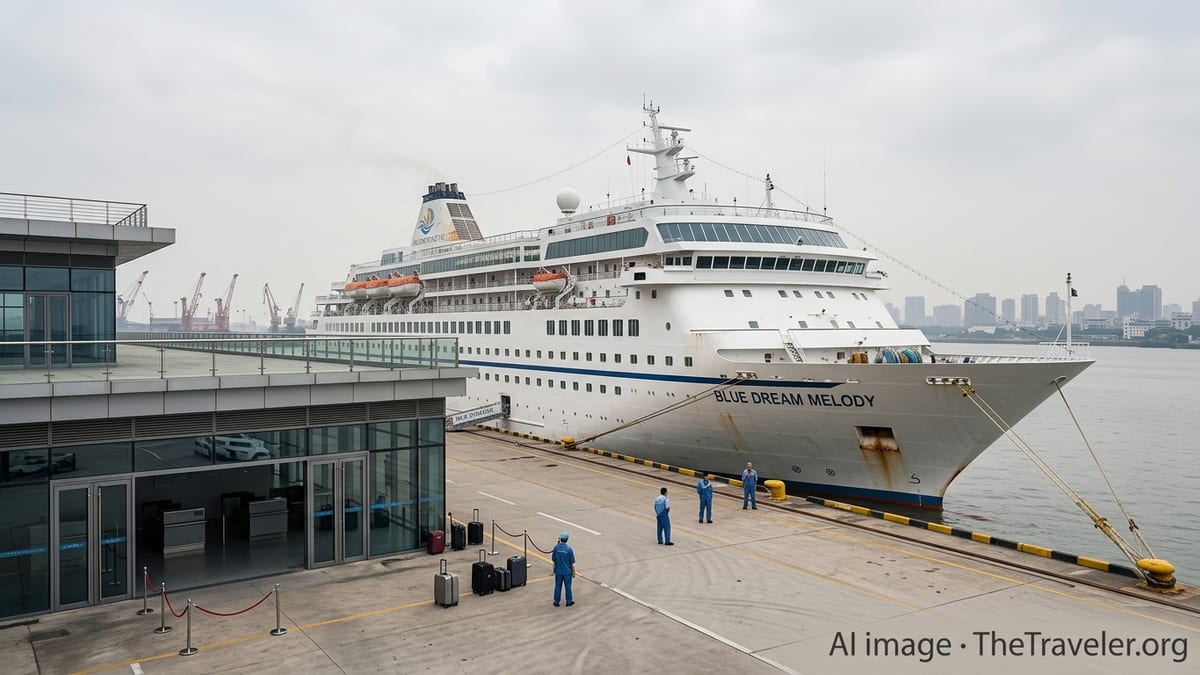
Founded in the mid-2010s as a vehicle to expand domestic and regional cruise travel in China, Blue Dream Cruises marketed itself as a fresh, locally rooted alternative to global giants. Publicly available company histories describe an operator built around a single mid-size vessel, the 42,289‑gross‑ton ship now known as Blue Dream Melody, previously sailing for a major European brand before being acquired for the Chinese market.
Industry coverage shows that after a lengthy layup and refit, Blue Dream Melody was positioned on short regional routes from Chinese ports, pitching affordable cruises to nearby destinations in East Asia. The plan depended heavily on a steady flow of first-time cruisers and resilient outbound demand from mainland China, both of which have proven far less predictable than the company appears to have anticipated.
Analysts tracking the sector note that this precarious model left Blue Dream Cruises highly exposed to any downturn in bookings or spike in operating costs. Over the past year, a series of operational suspensions, payment disputes, and now asset arrests have turned what began as a rough patch into a full-blown corporate crisis.
Suspended Sailings and Detained Ships Signal Deepening Cash Strain
In early January 2026, Blue Dream Cruises announced that all sailings of Blue Dream Melody would halt for what was described in public notices as essential hardware upgrades and maintenance. Travel trade publications reported that the pause was to begin on January 4 and would affect the company’s entire near-term program, with assurances that passengers would receive refunds or be assisted with rebooking through travel agencies.
Soon after, more troubling details emerged. Cruise news outlets and maritime industry publications have documented how Blue Dream Melody was subsequently detained in the Chinese port of Beihai following a dispute with a bunker supplier over unpaid fuel bills reportedly totaling hundreds of thousands of dollars. The arrest of what appears to be the company’s only active ship stripped Blue Dream Cruises of its primary revenue source at precisely the moment it needed cash most.
The vessel itself is now closely tied to a financial lessor, with shipping databases indicating that ownership shifted to a Chinese finance entity that chartered the ship back to Blue Dream Cruises. That structure complicates any rapid restructuring, as creditors, lessors, and service providers all move to protect their own interests, potentially accelerating pressure to sell or redeploy the asset outside the company’s control.
Unpaid Wages, Office Closures, and Mounting Human Costs
Alongside operational troubles at sea, reports have surfaced of unpaid salaries and shrinking shoreside operations. Coverage in regional business and maritime media describes travel agents and staff struggling to obtain clear information from the company as refunds, commissions, and payroll fall behind schedule. In some accounts, former employees describe local offices that have either sharply reduced staffing or closed altogether as cash shortages deepen.
The situation echoes a pattern seen in other cruise and ferry collapses: once ships stop sailing, the financial burden shifts quickly to workers both on board and on shore. Industry labor advocates point to earlier cases in which crew have been stranded aboard laid‑up ships for months while wage claims wind their way through courts and flag state procedures. While the full scope of unpaid wages at Blue Dream Cruises is still emerging, the detainment of Blue Dream Melody and ongoing legal disputes over fuel payments suggest that crew compensation risks being caught behind secured creditors in any recovery process.
Travel advisors in key source markets have also voiced concern in trade press about commissions and customer funds locked up in suspended itineraries. With reservations taken for sailings that may never depart, the financial pain radiates outward to small agencies and individual travelers who often lack the leverage to recoup their losses quickly.
Sale of Assets and What It Means for Future Travelers
As liabilities mount, attention has turned to the fate of Blue Dream Cruises’ key asset, Blue Dream Melody. Maritime transaction reports and industry briefings indicate that the vessel has already changed hands at least once in recent years, moving from a European fleet into the orbit of Chinese financial institutions that specialize in ship leasing. Any further sale, whether at auction or through negotiated transfer, is likely to prioritize repayment of institutional creditors, with little clarity about how existing passengers or staff claims would be addressed.
For travelers, the implications are immediate. Prospective guests are being urged by consumer advocates to scrutinize refund policies, avoid prepaying large sums far in advance, and favor payment methods that offer strong chargeback protections in the event of nonperformance. The Blue Dream Cruises case underscores how quickly a seemingly stable itinerary can unravel when a small or mid‑size operator loses access to credit or faces a sudden demand shock.
Industry observers note that the ship itself will almost certainly sail again, potentially under a different flag, name, and brand. For destination ports that had come to rely on calls from Blue Dream Melody, however, a sale could mean a prolonged gap in traffic, affecting local tour operators, guides, and small businesses that built products around its schedule.
A Microcosm of a Fragile Cruise Recovery
Blue Dream Cruises’ troubles are unfolding against a broader backdrop of uneven recovery in the global cruise sector. While major brands report strong forward bookings and new-ship orders, smaller operators with limited fleets are far more vulnerable to swings in demand, regulatory changes, and input costs such as fuel, port fees, and insurance.
Travel and tourism research organizations have highlighted that, across the industry, pandemic-era debts, rising interest rates, and new environmental compliance expenses are squeezing balance sheets just as competition intensifies. In Asia, where outbound travel from China has yet to fully rebound to pre‑2020 levels, operators that invested heavily in capacity are facing a longer-than-expected wait for sustained profitability.
For ports, agents, and travelers, the unraveling of Blue Dream Cruises serves as a reminder that even as cruise ships once again fill popular harbors, the underlying economics remain fragile. The end of this particular line’s operations, marked by unpaid salaries, shuttered offices, and a flagship detained over debts, illustrates how swiftly a dream of maritime expansion can tip into crisis when financial and operational risks are underestimated.