

More news on this day
Tech-powered hospitality company Bob W is preparing to open a flagship serviced apartment property in Munich city centre in May 2026, a move that underscores both its own rapid expansion in Germany and the broader shift toward tech-enabled, flexible accommodation in one of Europe’s tightest hospitality markets.
Get the latest news straight to your inbox!
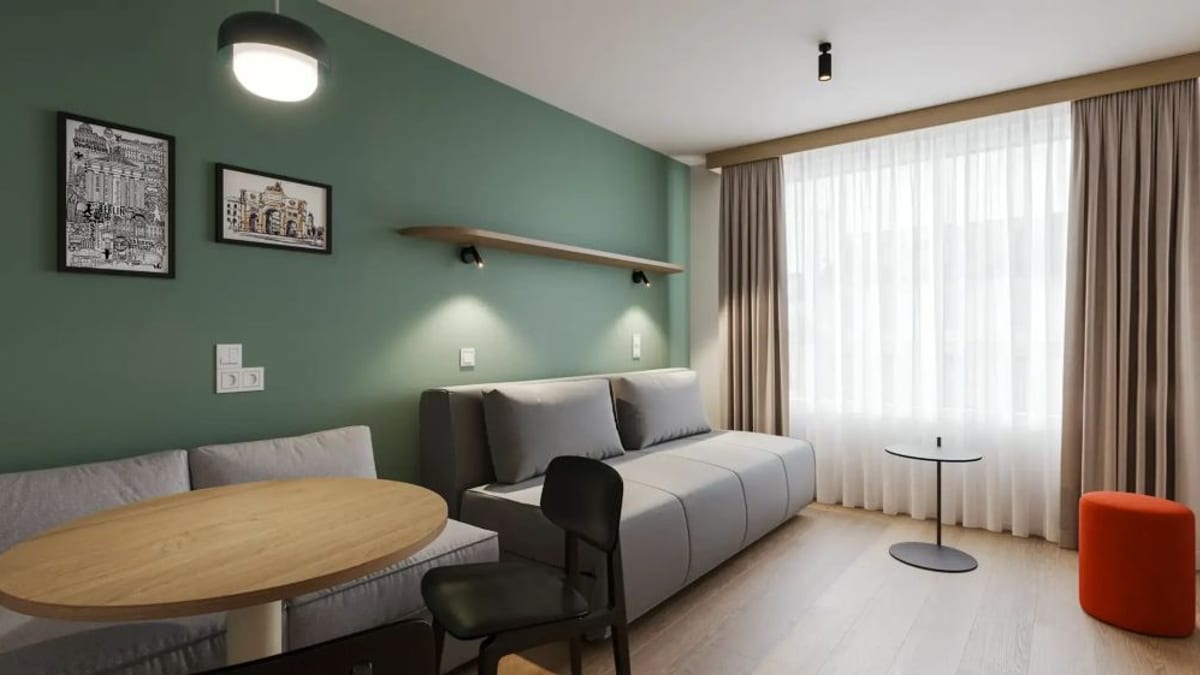
Image by International Hotels News, Hotel Industry & Hospitality News
Flagship Serviced Apartments in a Prime Munich Location
Publicly available information shows that the new Bob W Munich City Centre will be located on Schwanthalerstraße, a few minutes’ walk from Munich Central Station, the historic Old Town and the Theresienwiese grounds where Oktoberfest takes place. The address positions the property in one of the city’s busiest central districts, with strong appeal to both business and leisure travellers.
The scheme will comprise 119 design-led serviced apartments across roughly 5,800 square metres. Reports indicate that the inventory will be a mix of studios and one-bedroom units, each equipped with kitchenettes, aligning with the wider trend toward hybrid stays that can serve short city breaks, project-based corporate travel and longer relocations.
According to industry coverage, Bob W has signed a long-term lease on the building and will phase the transition from its existing operation into a fully branded Bob W asset. This staged approach is intended to minimise downtime while upgrading interiors, amenities and guest-facing technology to the company’s current standards.
The opening, targeted for May 2026, is expected to add significant capacity to the constrained central Munich market at a time when tourism and business travel volumes across Germany are recovering and global brands are competing aggressively for prime city-centre sites.
Tech-Enabled Hospitality Model Meets Rising Demand
Bob W’s Munich City Centre launch comes as serviced apartments and aparthotels gain ground in Europe’s hospitality sector. Market reports highlight strong demand from corporate travel buyers and digital nomads for properties that combine residential-style layouts with hotel-like services and professional operations.
The company is known for a digital-first operating model built around app-based services, automated check-in, flexible early or late departures and largely contactless guest interaction. This structure is designed to reduce operating costs while maintaining high service levels, which has been a key focus across Europe’s hospitality industry since the pandemic.
In Munich, where traditional hotel room supply is tightly controlled and development sites in central districts are scarce, such tech-enabled serviced apartments are being positioned as a way to increase capacity without building large-scale new hotels. Industry observers note that Bob W and comparable brands are increasingly seen as partners for institutional owners seeking flexible but professionally managed accommodation concepts.
Reports also point to strong investor interest in hybrid hospitality formats, with long-income lease structures and a focus on adaptable floorplates that can be reconfigured over time. The Munich City Centre property is being cited as an example of this shift, combining a long-term lease agreement with a highly central urban asset.
Strengthening Bob W’s Footprint in Germany
The May 2026 opening is part of a broader German expansion strategy for Bob W. Published coverage indicates that the company now operates multiple properties in Munich, including locations in Schwabing, Münchner Freiheit, the Old Town and other central districts, alongside additional sites across Germany.
Munich has emerged as a particular focus, reflecting its role as a major corporate hub for technology, automotive and financial services firms. Industry reports describe the city as one of Europe’s most supply-constrained hospitality markets, where new branded capacity in central locations is relatively rare and quickly absorbed.
Beyond Munich, Bob W has secured or opened properties in cities such as Dortmund and is reported to be in advanced discussions on further sites in German markets including Hamburg, Cologne, Berlin and Stuttgart. The Munich City Centre flagship is therefore being viewed within the industry as part of a coordinated effort to build critical mass in the country rather than a standalone project.
Analysts note that this strategy mirrors wider patterns in Europe, where tech-enabled aparthotel operators are targeting key gateway and secondary cities, aiming to create national networks attractive to corporate travel programmes and extended-stay guests.
Munich’s Hospitality Market Rides a Wider Recovery
The Bob W Munich City Centre project also reflects broader momentum in Germany’s hospitality sector. Data from hotel groups and consultancies over the past year has shown improving occupancy levels and rate growth in major German cities, helped by the return of trade fairs, conferences and international tourism.
Munich’s positioning as both a business powerhouse and a major leisure destination, with events such as Oktoberfest, year-round cultural attractions and strong transport connectivity, has underpinned sustained demand for rooms and extended-stay inventory. Pipeline announcements across brands and segments, from hostels to upscale hotels and aparthotels, suggest that investors and operators remain optimistic about the market’s medium-term prospects.
At the same time, developers and owners have increasingly favoured renovations, conversions and repositionings of existing assets rather than large-scale new construction, citing planning constraints, cost inflation and sustainability targets. Bob W’s Munich City Centre lease and phased conversion are consistent with this pattern, focusing on upgrading an existing building in a central urban block.
Sector commentators add that these types of projects can often reach the market faster than ground-up developments, an important factor as operators seek to capitalise on growing demand in the second half of the decade.
What the Opening Signals for Future Urban Stays
For travellers, the forthcoming opening of Bob W Munich City Centre points to a future in which the line between traditional hotels, serviced apartments and short-term rentals continues to blur. Tech-led operators are positioning themselves as a middle ground, offering professional standards and regulatory compliance alongside the space and autonomy associated with private rentals.
In practical terms, that means central locations with self-contained units, digital access, on-demand services and curated local partnerships rather than full-service hotel facilities. Industry observers suggest that this format is gaining traction among younger business travellers and remote workers who prioritise flexibility and connectivity over formal front-desk interaction.
As May 2026 approaches, the Munich City Centre property is expected to become a focal point for how this segment evolves in one of Europe’s most closely watched hospitality markets. The performance of the new aparthotel is likely to inform further investment decisions across Germany, as owners and operators assess which concepts are best aligned with changing patterns of urban travel, work and living.