

More news on this day
As UK travellers look ahead to summer, a mix of classic Mediterranean favourites and an unexpectedly resurgent British seaside town are emerging as standout options, with Bodrum, Barcelona, Menorca and Skegness each offering a distinct take on sun, sea and increasingly experience-driven holidays.
Get the latest news straight to your inbox!
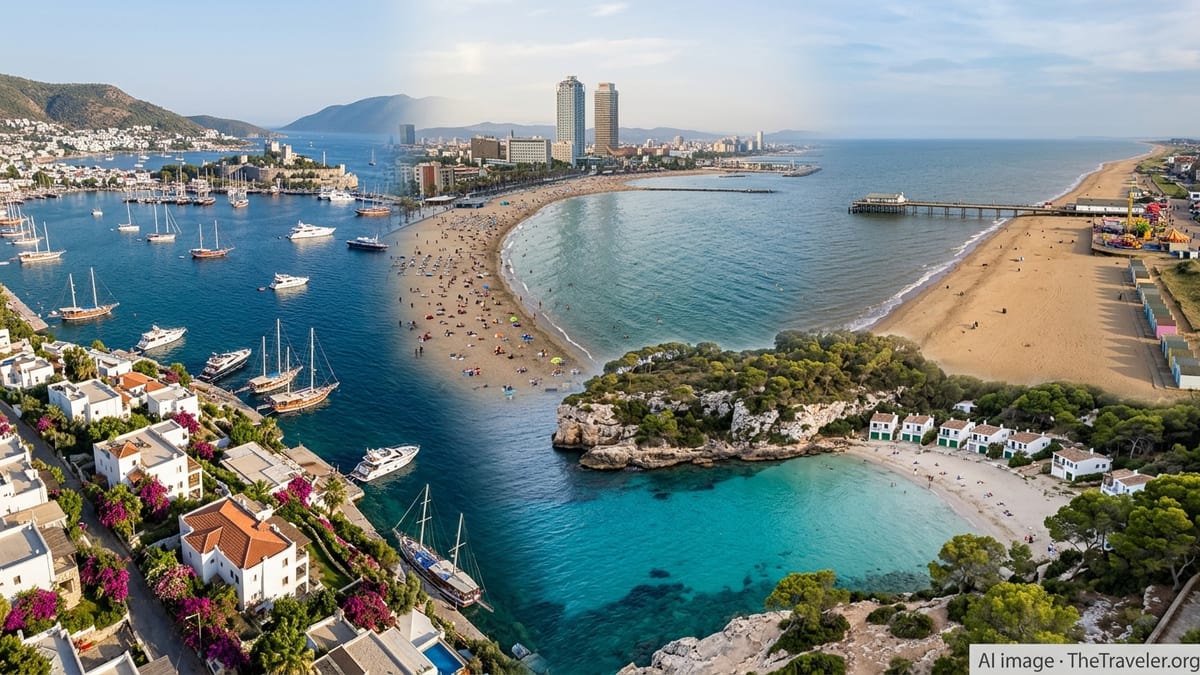
Bodrum: Aegean Glamour Meeting Value-Conscious UK Demand
Bodrum on Turkey’s Aegean coast is drawing renewed attention from UK holidaymakers seeking warm weather, clear water and resort comforts that still undercut prices in parts of the eurozone. The wider Turkish Riviera has long been popular for all-inclusive packages and luxury hotels, and publicly available booking data for summer 2026 indicates strong forward demand from the UK as travellers look for value while maintaining beachside standards.
Recent commentary on Turkish tourism highlights a period of adjustment after inflation and currency volatility, which have made on-the-ground costs relatively attractive for visitors paying in pounds. Reports indicate that while some domestic travellers have been priced out of coastal hotspots, international guests are benefitting from competitive hotel rates compared with Mediterranean rivals. In Bodrum, this is reinforcing investment in high-end resorts, beach clubs and marinas that target visitors interested in dining, nightlife and water-based activities rather than purely budget breaks.
For UK travellers, there are practical considerations as well as lifestyle appeal. Summer schedules show dense connections between British airports and Bodrum’s international gateway at Milas-Bodrum, making it a realistic alternative to more familiar Spanish and Greek islands for one-week or ten-day holidays. Travel industry analysis notes that many visitors are now combining Bodrum’s resort atmosphere with short excursions to quieter bays and inland villages, reflecting a broader shift toward more varied, tailor-made itineraries.
Environmental factors are also shaping expectations. Southern Turkey has experienced hotter and drier summers in recent years, and climate assessments for the wider Mediterranean suggest further warming is likely. Travel organisers now increasingly recommend that UK visitors consider late spring or early autumn for more moderate temperatures while still enjoying Bodrum’s beaches and outdoor nightlife.
Barcelona: Big-City Beach Break Under Pressure From Overtourism
Barcelona remains one of the most visited urban destinations in Europe, and tourism analysis from Spanish and Catalan authorities shows that international arrivals have continued to grow, with the United Kingdom among the city’s key source markets. The city’s combination of architecture, food culture and beaches makes it a natural long-weekend or twin-centre option for British travellers pairing it with coastal resorts in Catalonia or the Balearic Islands.
At the same time, Barcelona has become a focal point in Spain’s wider debate over overtourism. Since 2024, local and national media have reported regular protests in major destinations including Barcelona and the Balearic Islands, with residents highlighting housing pressures, congestion and the strain on public space. Policy responses have included restrictions on certain types of short-term rentals and a push to redistribute visitor flows beyond the most saturated central districts and peak summer months.
For UK visitors planning 2026 trips, these developments are reshaping how Barcelona is experienced rather than reducing its appeal. Tourism board data and industry briefings point to a growing emphasis on sustainable tourism, encouraging longer stays, off-season visits and exploration of lesser-known neighbourhoods. Travel providers are also steering visitors toward trips that combine the city with nearby wine regions, hiking routes and coastal towns reachable by train, in line with a continent-wide push for lower-impact travel.
Heat is another emerging concern. Climate statistics show that Spain endured record-breaking summer temperatures in 2025, and local forecasts warn that extreme heat events are likely to become more frequent. As a result, UK travellers are being urged by travel advisors to plan around mid-day outdoor activities, prioritise accommodation with adequate cooling and consider June or September stays in place of the hottest peak weeks.
Menorca: Quiet Mediterranean Alternative in a High-Season Era
In contrast to Barcelona’s density, Menorca is positioning itself as a quieter Mediterranean escape at a time when many UK travellers are rethinking how and when they holiday. Tourism reports on Spain note that demand in the Balearic Islands has recovered to and in some cases surpassed pre-pandemic levels, but Menorca’s offer remains markedly different from that of Mallorca and Ibiza, with more emphasis on low-rise development, protected landscapes and family-friendly beaches.
Travel guides and recent coverage highlight Menorca’s network of calas, or small coves, as a key draw, alongside walking routes that follow historic coastal paths. Publicly available tourism planning documents for the island stress a focus on environmental protection and controlled growth, reflecting concerns about water resources and the carrying capacity of small resorts. This has supported a reputation among UK visitors for calmer nightlife, slower-paced villages and accommodation that prioritises space and sea views over intensive entertainment.
Booking trends for 2025 and early 2026, cited in airline and tour operator updates, suggest that British travellers are increasingly treating Menorca as a shoulder-season choice, with strong interest in May, June and September when temperatures are warm but crowds are thinner. Industry analysis for Spain’s tourism sector points to a broader reduction in seasonality, as work-from-anywhere policies and flexible school arrangements in some markets allow families to travel outside traditional peak weeks.
At the same time, Menorca is not untouched by Spain’s overtourism debate. Regional media coverage has recorded concerns about housing affordability and visitor numbers, particularly in the height of summer. For UK holidaymakers, this is translating into advice to reserve accommodation early, respect local regulations on coastal access and noise, and consider car-free or low-car itineraries that focus on a smaller section of the island.
Skegness: A Classic UK Seaside Town in the Middle of Reinvention
Closer to home, Skegness on the Lincolnshire coast is emerging as one of the most closely watched stories in UK domestic tourism. Long known for its sandy beaches and traditional amusements, the town has been the subject of criticism in recent years, yet fresh investment and new visitor rankings for 2025 indicate a notable turnaround. Travel and tourism news outlets have reported that Skegness has broken into shortlists of top UK beach destinations, citing rising visitor numbers and improved facilities.
Local and regional development documents show that Skegness is benefiting from multi-million-pound funding aimed at revitalising the foreshore, expanding cultural spaces and improving public realm along the seafront. Reports on the government-backed Towns Fund detail projects such as a new learning campus and upgrades to leisure infrastructure, while private operators have invested in attractions, holiday parks and premium lodge developments catering to families and short-break guests.
The area remains economically reliant on tourism, but coastal organisations and local partnerships are increasingly promoting its natural assets as well as its arcades and rides. Information from destination marketing bodies underlines efforts to highlight the nearby nature reserves, walking and cycling routes, and the wider “wild coast” that stretches beyond the main resort. This aligns with a broader UK trend in which domestic travellers are seeking experiences that balance nostalgia with outdoor activities and perceived value compared with overseas travel.
Skegness is also being positioned as a shoulder-season option for UK residents who may be wary of extreme heat or travel disruption in continental Europe. With domestic travel forecasts suggesting robust demand for coastal breaks through 2026, analysts expect continued pressure on accommodation in peak school-holiday weeks, but also opportunities for visitors willing to travel in early summer or early autumn. For many UK households, the decision between Bodrum, Barcelona, Menorca and Skegness this year will reflect not only budget and weather, but also evolving preferences around sustainability, crowding and the balance between familiar comforts and new horizons.