

More news on this day
A body has been discovered in Colombia during the search for missing American Airlines flight attendant Fernando, intensifying concern over reports that he vanished after a night out in Medellín amid speculation that he may have been targeted with the notorious street drug commonly known as “devil’s breath.”
Get the latest news straight to your inbox!
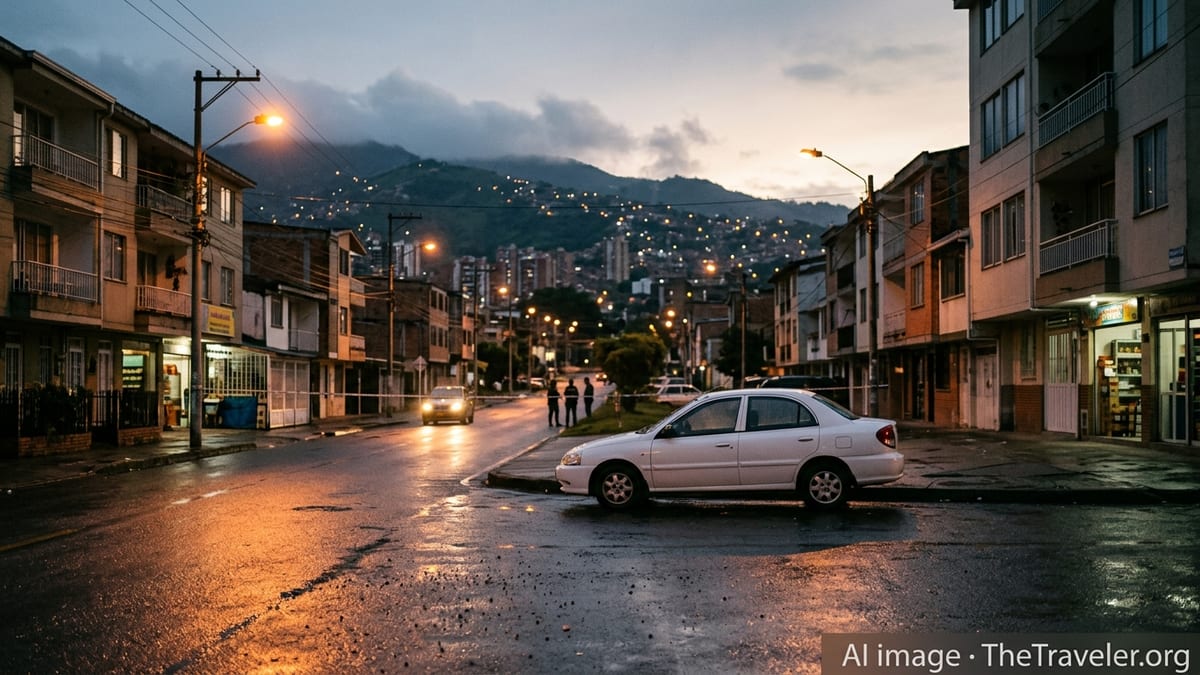
Body Located After Days-Long Search
Reports from Colombian and international media indicate that a body believed to be that of the missing flight attendant was found on March 28 in a rural area near Jericó, in the department of Antioquia, roughly an hour’s drive from Medellín. Coverage describes the discovery as part of a coordinated search effort launched after Fernando failed to return from an evening out while on a layover in the city.
Publicly available information describes the remains as consistent with the missing American traveler, although formal identification procedures are still reported to be in progress. Family and colleagues, who had been appealing for help through social media and news outlets, responded online with messages of grief and remembrance as news of the discovery spread.
The reported location, far from central Medellín and along a route known more for coffee-country landscapes than nightlife, has prompted widespread speculation about how the flight attendant may have been transported there. Commentators following the case note that the distance and terrain underscore the seriousness of the circumstances and have renewed calls for caution among foreign visitors.
Mysterious Disappearance During Medellín Layover
According to timelines gathered from published coverage and social media posts, Fernando was in Medellín on a work layover with a fellow cabin crew member earlier in the week. The pair were reported to have left their hotel area for a night out, with images circulating online that appear to show him at a local casino shortly before he vanished.
Accounts shared by colleagues and in local reporting suggest that the accompanying crew member later reappeared disoriented and in need of medical attention, while Fernando did not return to the hotel or report for duty. When he failed to check in and could not be reached by phone, friends, family and airline workers began raising alarms, and Colombian authorities initiated a missing-person search.
For several days, the case drew growing attention among flight attendant communities and travelers, with online forums sharing posters and updates about the missing American. The absence of clear information about his movements after leaving the casino contributed to an atmosphere of uncertainty that has continued even after the discovery of a body thought to be his.
‘Devil’s Breath’ Theory Gains Attention
As details of the disappearance emerged, many observers focused on the possibility that Fernando may have been targeted with scopolamine, a substance widely referred to in Colombia and abroad as “devil’s breath.” Public reporting and safety advisories describe the drug as sometimes used in robberies and abductions, with victims allegedly rendered confused, compliant or unconscious.
Travel safety guides have long warned visitors to major Colombian cities, including Medellín and Bogotá, about incidents in which scopolamine is said to be administered through spiked drinks, cigarettes or contact with contaminated items. While experts frequently stress that some popular narratives exaggerate how the drug is delivered or how completely it can control behavior, recent crime reports continue to link it to cases of violent robbery and unexplained deaths.
In Fernando’s case, no official toxicology findings have yet been made public, and the exact chain of events remains unclear. Nevertheless, widespread discussion of the “devil’s breath” theory reflects broader anxieties about opportunistic crimes targeting tourists and airline crews in nightlife districts, particularly in areas where foreign visitors may be less familiar with local risks.
Concerns for Airline Crews and International Travelers
The incident has resonated deeply across airline and hospitality communities, where workers routinely spend nights in unfamiliar cities between flights. Colleagues posting on aviation forums and social networks have pointed to long-standing safety briefings that warn crew members about ride-hailing risks, unregistered taxis, drink spiking and the importance of staying in groups during layovers.
Public guidance from travel security specialists often emphasizes preventive steps in cities with known scopolamine-related crime, such as monitoring drinks closely, avoiding accepting food, cigarettes or gum from strangers, and using vetted transportation arranged through hotels or reputable services. In Medellín, visitor advisories commonly highlight the contrast between its popular tourism renaissance and ongoing pockets of violent and opportunistic crime.
For travelers, the flight attendant’s disappearance and the subsequent discovery of a body have become a stark reminder that high-profile destinations can still present serious safety challenges. Commentators note that incidents involving airline crew members can carry particular weight, since these workers are generally considered experienced travelers who receive regular briefings on urban risks.
Impact on Medellín’s Image and Ongoing Questions
The case arrives at a time when Medellín has been working to consolidate its image as a transformed, innovation-focused city with thriving tourism, gastronomy and cultural scenes. In recent years, international coverage has frequently celebrated its cable cars, hillside neighborhoods and digital-nomad influx, while still acknowledging uneven security conditions across different districts.
High-profile incidents involving foreign visitors, particularly those that draw attention to drugs like scopolamine, can complicate that narrative. Local commentators quoted in regional outlets often seek to balance calls for vigilance with reminders that millions of tourists visit Colombia each year without serious incident. Even so, the stark details circulating about Fernando’s disappearance have renewed debate about how nightlife, alcohol and unfamiliar social settings can heighten vulnerability for visitors.
As investigators continue their work, many questions remain about what happened in the hours between the last known images of the flight attendant in the city and the discovery of a body in rural Antioquia. For the airline community and the wider traveling public, the case is likely to inform layover protocols, personal safety habits and perceptions of risk in Medellín and similar destinations long after the formal inquiries conclude.