

More news on this day
A body has been discovered in western Colombia during the search for a missing American Airlines flight attendant who disappeared while on a layover in Medellín, intensifying concern among aviation workers and travelers who closely followed the case.
Get the latest news straight to your inbox!
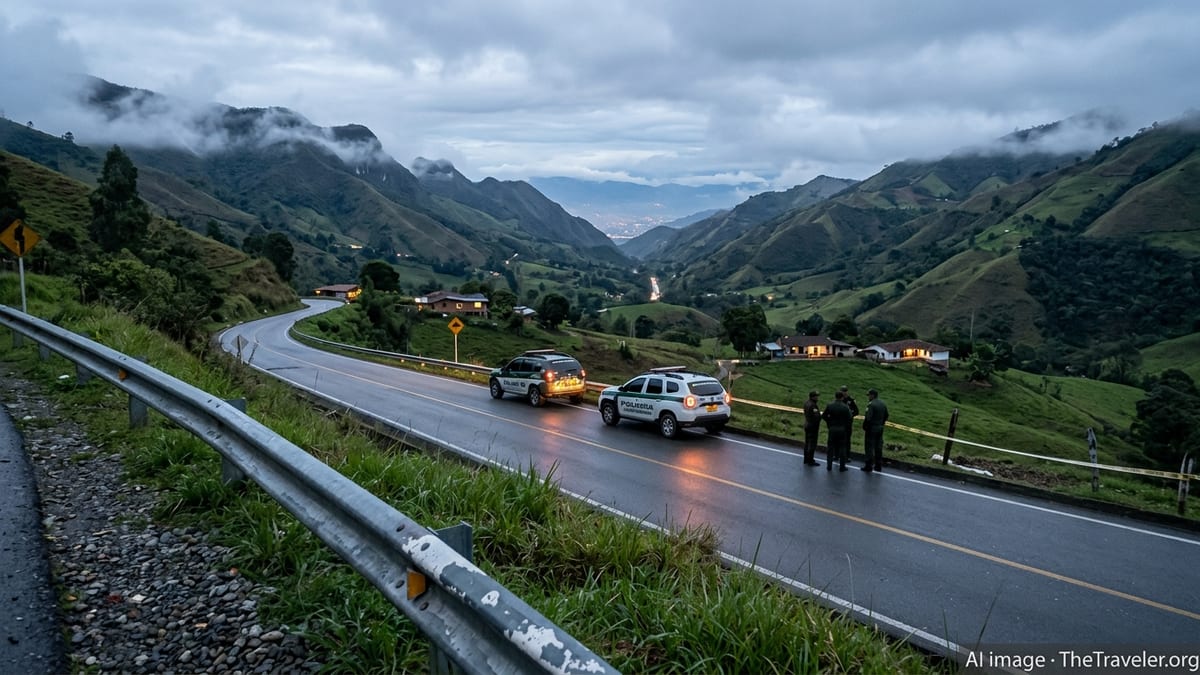
Body discovered near Jericó in Antioquia region
Local search teams in Colombia located a body near the municipality of Jericó in the department of Antioquia, an area of steep hillsides and rural roads roughly an hour’s drive southwest of Medellín. According to published coverage, the discovery was made on Saturday, March 28, as crews widened their search beyond the city where the flight attendant was last seen.
Publicly available information indicates that the remains were found in terrain commonly used by farmers and drivers traveling between small Andean towns, rather than in the dense rainforest associated with other high-profile Colombian search operations. The location has drawn attention because it is some distance from central Medellín, raising questions about how and when the flight attendant may have been taken there.
As of publication time, reports indicate that formal identification procedures are still underway. Outlets following the case closely state that investigators are comparing physical characteristics and available records to determine whether the body is that of the missing crew member, a process that can take additional time even when there are strong early indications.
Regional media coverage notes that the recovery site has been cordoned off while forensic teams work, and that subsequent movements of the remains are being coordinated through Antioquia’s established medico-legal channels. Those procedures are standard in unexpected deaths that may involve foreign nationals.
Timeline of the flight attendant’s disappearance
The American Airlines flight attendant, based in the United States, had been working a route that included a scheduled layover in Medellín, one of the major international gateways to Colombia. According to reports shared by aviation-focused outlets and social media posts by colleagues, the crew arrived in the city as part of a routine rotation earlier in the week.
Accounts compiled from public posts and media summaries suggest the flight attendant was last in contact with colleagues and loved ones over the weekend during off-duty hours. When the crew was due to reassemble for subsequent duties, the individual did not appear as expected. Efforts to reach the flight attendant by phone reportedly went unanswered, prompting growing concern among coworkers who were still in the city.
As questions mounted, relatives in the United States and members of the airline community began organizing information online, sharing photos and timelines in the hope of locating the missing person. Social media forums dedicated to flight attendants circulated warnings and safety reminders about nightlife, rides, and interactions during layovers, reflecting real-time anxiety as hours passed without news.
By midweek, publicly available information shows that local law enforcement in Medellín had opened a missing persons case consistent with Colombian procedures, which often require a minimum elapsed time before a formal report is accepted. The search that would eventually extend toward Jericó developed from that initial urban investigation.
Reactions from airline community and travelers
The disappearance and subsequent discovery of a body have resonated strongly within the global flight attendant community. On professional forums and social networks, colleagues described the missing crew member as part of a tight-knit group of cabin staff who routinely cross borders and time zones together, and many expressed how vulnerable they feel during layovers far from home.
Public comments from airline workers highlight an increased focus on personal safety when off duty in foreign cities. Contributors have been sharing practical advice drawn from experience, including checking ride details carefully, moving in groups when possible, and avoiding detailed discussions about flight schedules in public spaces. While many of these practices have long been part of informal crew culture, the case in Colombia appears to have renewed emphasis on them.
Among travelers, the news has prompted renewed scrutiny of leisure trips to Colombia, a country that has grown rapidly as a tourism destination in the past decade. Medellín in particular has attracted visitors for its temperate climate, digital nomad scene, and proximity to coffee-growing regions, but also faces persistent concerns about robberies and scams that specifically target foreigners in nightlife and entertainment districts.
Travel-focused commentators note that high-profile incidents involving airline staff can significantly shape traveler perceptions, because crew members are often viewed as experienced, security-conscious visitors. When those individuals are harmed or go missing, the events tend to resonate beyond the aviation sector and influence broader debates about destination risk.
Safety concerns for layovers in popular Colombian cities
Colombia’s main urban centers, including Medellín, Bogotá, and Cartagena, receive large numbers of airline crews every day as part of scheduled international operations. Publicly available travel advisories from several countries have long recommended heightened awareness in entertainment districts, where pickpocketing, express robberies, and cases involving suspected drugging of visitors are periodically reported.
Industry discussions in recent days suggest that some airline workers are re-evaluating their personal habits during Colombian layovers. Commenters on crew forums describe sticking closer to hotel areas, relying on vetted transportation providers, and sharing real-time location details with colleagues and family when leaving the property. Some also mention reviewing existing company policies on check-in procedures and welfare checks when a crew member does not appear at a scheduled time.
Security analysts who specialize in Latin American travel often stress that risk levels can vary substantially from neighborhood to neighborhood. In Medellín, areas that are popular with foreign visitors sometimes sit close to districts where organized crime and street-level robberies are more common. For airline personnel whose layovers may be limited to a single evening or day, becoming familiar with that local geography can be challenging.
At the same time, tourism officials and business owners in Colombia frequently point to the vast majority of visits that pass without incident, noting that the country’s aviation and hospitality sectors depend heavily on international confidence. The tension between promoting growing destinations and acknowledging specific safety concerns is evident in the reactions to the flight attendant case.
Ongoing investigation and impact on future travel
As investigators move ahead with forensic identification of the body found near Jericó, attention is turning to what the case may mean for future airline operations and traveler behavior in Colombia. Publicly available reporting indicates that local authorities are examining the missing person’s final known movements, financial activity, and communications, alongside any potential footage from businesses in the areas visited.
If the remains are confirmed to be those of the missing American crew member, subsequent inquiries are expected to focus on whether the death was linked to criminal activity such as robbery, forced withdrawals, or targeted attacks against foreigners. Analysts following the situation note that patterns observed in past incidents involving travelers can influence how airlines, hotels, and tour operators adjust their risk assessments.
For now, major carriers continue to operate regular schedules in and out of Medellín and other Colombian cities. There has been no indication in publicly accessible information of immediate route suspensions or large-scale changes to crew layover patterns. However, companies commonly review internal security guidance in the aftermath of incidents that involve employees abroad, which can lead to longer-term adjustments not immediately visible to passengers.
For travelers, the case serves as a stark reminder of the importance of understanding local conditions, using official transport options where possible, and staying in close contact with traveling companions or trusted contacts at home. As more details emerge from the investigation near Jericó, both the aviation industry and the wider travel community are likely to draw lessons about balancing Colombia’s growing appeal with prudent safety measures.