

More news on this day
A body has been located in a rural area of Colombia during the search for a missing American Airlines flight attendant who disappeared while on a layover in Medellín, according to recent international news coverage citing the city’s mayor.
Get the latest news straight to your inbox!
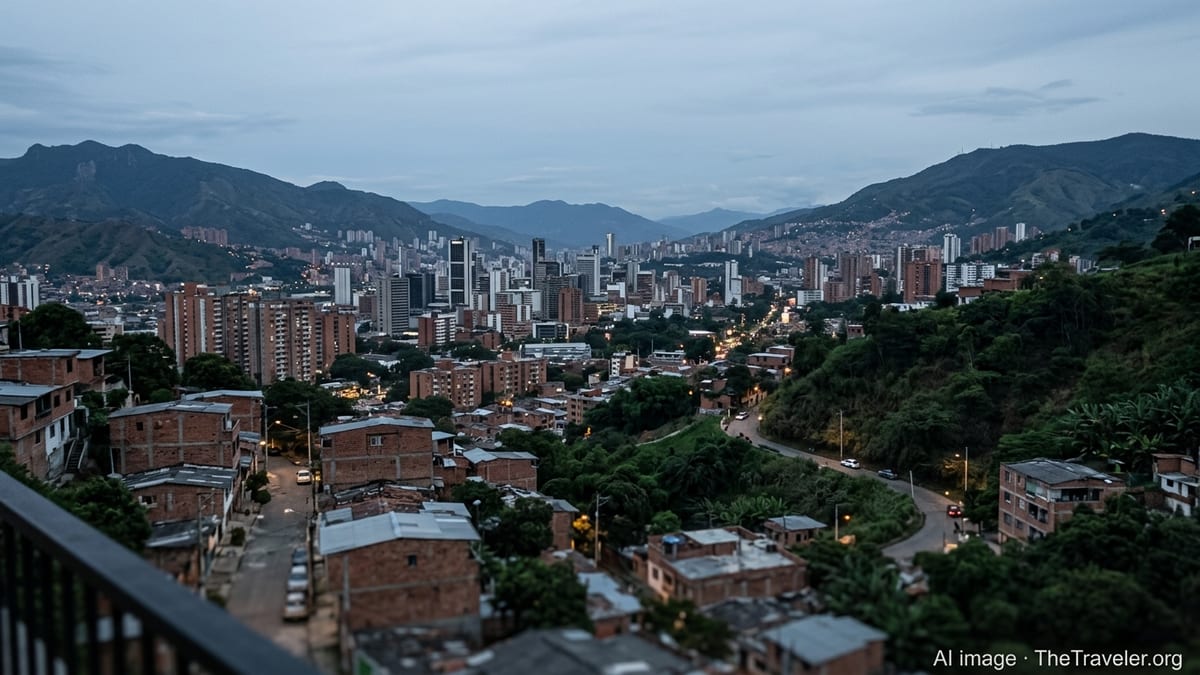
Discovery in rural Antioquia intensifies investigation
Recent reports indicate that a body was found in southwest Antioquia, in a zone near the town of Jericó, roughly an hour’s drive from Medellín. The discovery came after several days of searches for the American flight attendant, who was last seen during a scheduled layover in the city. Coverage of the case notes that the remains were located in a more remote, mountainous area outside the main urban core.
According to publicly available information referencing statements by Medellín’s mayor, the body was located during an organized search operation coordinated with regional authorities. Initial reports emphasize that forensic analysis and formal identification procedures are still required before any definitive confirmation can be made regarding the victim’s identity.
The search had focused not only on the central Poblado and Laureles districts of Medellín, where many airline crews typically stay, but also on nearby municipalities connected by winding roads through the Aburrá Valley and into the hills of Antioquia. The reported discovery in such terrain underlines the challenges investigators face in reconstructing the movements of a missing person in an area that combines dense urban neighborhoods with sparsely populated countryside.
As international media and aviation communities follow developments, coverage consistently notes that the case remains under active investigation, with no final public determination about the cause or circumstances of death.
From routine layover to high-profile disappearance
Published accounts describe how the flight attendant had traveled to Medellín as part of regular duty on an American Airlines service. The crew layover in the city was part of a standard routing used by many North American airlines serving Colombia’s growing tourism and business market. Colleagues and online aviation communities began sharing missing-person alerts shortly after contact with the crew member was lost.
Reports shared by cabin crew forums and social media posts suggest that fellow employees and family members grew alarmed when the flight attendant did not appear for scheduled obligations and could not be reached by phone. Posters described attempts to raise awareness among travelers and expatriate communities in Medellín while urging caution about personal safety on layovers.
Publicly available coverage notes that local police protocols required a defined waiting period before filing a missing person report in the city, a factor that has been widely discussed among aviation workers who depend on predictable safety procedures during short stays abroad. As the days passed without verified sightings, international outlets began to pick up the story, turning a routine overnight stop into a widely reported disappearance.
The case has resonated strongly within the airline industry, where crew members regularly navigate unfamiliar cities with very limited downtime. Many of the online discussions prompted by this incident focus on how quickly a normal layover can shift into a critical situation when a colleague fails to check in.
Medellín’s image under scrutiny amid safety concerns
The discovery of a body in connection with the missing flight attendant has reignited conversation about traveler safety in Medellín and across Colombia. While the city has invested heavily in tourism infrastructure and has welcomed growing numbers of international visitors in recent years, online forums and travel communities continue to share accounts of robberies, scams, and occasional violent incidents involving foreigners.
Travel-related commentary circulating in response to this case highlights recurring concerns around nightlife zones such as El Poblado and Parque Lleras, where visitors may encounter targeted theft, drink spiking, or other criminal schemes. Some observers speculate that foreign airline crew and tourists can be especially vulnerable if they are perceived as carrying cash, electronics, or other valuables.
At the same time, broader travel reporting stresses that incidents involving serious harm to visitors remain a small fraction of overall tourism activity in Medellín, a city that has seen extensive urban renewal, expanded public transport, and a thriving hospitality sector. Nonetheless, this high-profile case is likely to influence traveler perceptions, particularly among those considering solo trips, digital nomad stays, or nightlife-focused visits.
Travel industry analysts note that such coverage can have a lasting impact on destination branding, especially when airline employees are involved. For carriers, perceptions of crew safety on layovers form part of broader risk assessments that can shape hotel contracting, ground transport arrangements, and patterns of station assignments.
Airline crews reevaluate layover routines
Within aviation circles, the incident has prompted renewed discussion of personal security practices during international layovers. Public posts from flight attendants and cabin crew trainers emphasize longstanding guidance to avoid disclosing employer details to strangers, to verify the identity of ride-hailing drivers, and to remain in groups when exploring unfamiliar cities.
Some crew members commenting publicly on the case describe hotel routines where specific floors or room blocks are reserved for airline staff, with colleagues encouraged to check in on one another if someone fails to answer messages. The disappearance in Medellín has led many to revisit these informal safety nets and to call for more consistent support systems across different stations.
Industry observers note that airlines typically rely on contracted local partners for ground transfers and security information, but that rapidly changing conditions in certain neighborhoods can outpace formal risk assessments. Incidents like this may lead to additional briefings for crews operating into destinations with a known pattern of robberies or scams involving tourists.
For frequent travelers who follow aviation news, the case offers a stark reminder that airline professionals face many of the same risks as leisure visitors when navigating nightlife districts, using rideshare services, or venturing beyond hotel areas during limited free hours between flights.
Implications for travelers heading to Colombia
For travelers planning trips to Medellín and other Colombian cities, the reported discovery of a body in the search for the missing flight attendant adds urgency to standard safety advice. Travel specialists commonly recommend using registered taxis or reputable ride-hailing services, confirming vehicle details before boarding, and avoiding public displays of expensive phones, jewelry, or cash.
Public discussions sparked by this incident also underline the importance of sharing itineraries and live locations with trusted contacts, especially when meeting new people or visiting unfamiliar neighborhoods after dark. Many experienced visitors to Medellín emphasize that extra caution is warranted around nightlife hubs and in situations involving alcohol or dating apps.
Despite the renewed focus on risk, tourism data and media coverage continue to portray Colombia as a major regional destination, particularly for digital nomads, nature travelers, and urban travelers drawn to Medellín’s climate and cultural scene. Travel writers point out that, as in many big cities around the world, outcomes often depend on situational awareness, local knowledge, and adherence to conservative safety habits.
As investigators work to formally identify the body found near Jericó and clarify the circumstances surrounding the flight attendant’s disappearance, airlines and travelers alike are watching closely. The case is likely to influence how both industry professionals and visitors think about personal security during short urban stays in Colombia and beyond.