

More news on this day
Boeing shares advanced in recent trading despite Air China Cargo’s decision to order up to 10 Airbus A350 freighters at what the carrier described as a significant price discount, highlighting how aggressive pricing and shifting airline strategies are reshaping the long-running rivalry between the two aerospace giants.
Get the latest news straight to your inbox!
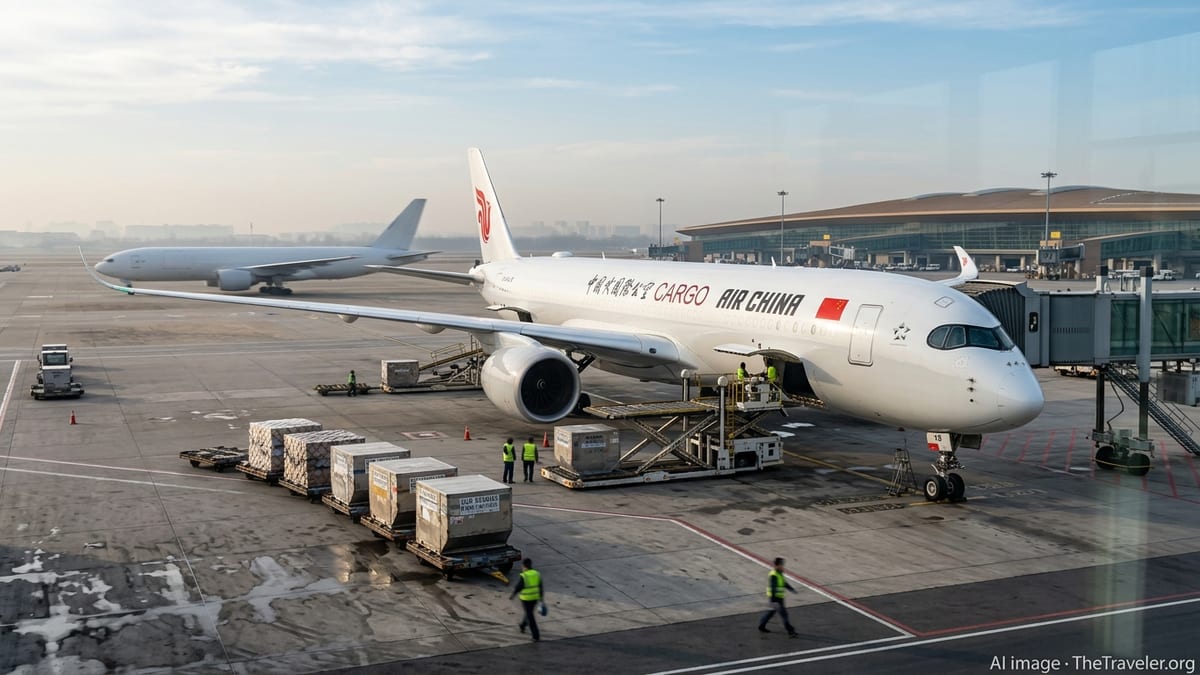
Air China Cargo Picks Airbus in Discounted Freighter Deal
Publicly available company statements and industry coverage indicate that Air China Cargo has outlined plans to acquire up to 10 Airbus A350F freighters, with six firm aircraft and four options. The airline values the transaction at more than 4 billion dollars at list prices, but has emphasized that negotiations produced a substantial cut from headline figures.
According to published information on the transaction, Air China Cargo said the agreement followed talks that resulted in a significant price discount from Airbus. The disclosure offers a rare glimpse into the commercial pressure now shaping widebody aircraft campaigns, particularly in the cargo sector where fuel efficiency and payload performance carry increasing weight.
The A350F is scheduled to enter service later this decade and is being marketed as a new generation freighter designed to meet tighter emissions rules and lower operating costs. For Air China Cargo, the model is positioned as a complement to an existing fleet built primarily around Boeing 777 freighters, signaling a move toward greater fleet diversification.
The decision means Airbus secures another foothold in a cargo market that has long been dominated by Boeing’s 747 and 777 freighter families. It also underscores how discounts and delivery slots can tilt closely fought tenders, even when an airline already operates a sizeable Boeing cargo fleet.
Boeing Stock Climbs Despite Losing High-Profile Campaign
While the Air China Cargo order represents a clear commercial setback, Boeing’s share price has recently moved higher, with trading data showing gains that contrast with the negative headline of losing out to Airbus. Market reaction suggests investors are weighing broader factors, including expectations for improved production stability and ongoing demand for Boeing’s existing product lines.
Recent coverage of Wall Street research notes that some analysts remain optimistic about Boeing’s ability to restore margins as supply chain bottlenecks ease and as airlines seek additional capacity in both the single-aisle and widebody markets. In that context, the Air China Cargo decision is seen as one campaign among many rather than a decisive turning point.
Investors also appear to be distinguishing between near-term order headlines and the longer-term fundamentals of global air travel and freight. Passenger traffic has continued to recover across major regions, and air cargo volumes, while volatile, remain well above pre-pandemic levels in key trade lanes, reinforcing the case for sustained fleet renewal.
The modest rise in Boeing’s stock indicates that, for now, equity markets are prepared to look past a single lost order and focus instead on whether the manufacturer can execute on its delivery commitments, stabilize its supply base, and navigate regulatory demands on safety and quality.
Discount Strategy Highlights Airbus’s Competitive Tactics
The prominent reference to a significant price discount in the Air China Cargo disclosure reinforces a longstanding perception among industry observers that Airbus is prepared to use pricing flexibility to secure strategically important wins. Historical commentary on prior campaigns has frequently cited deep discounts and residual value support as tools used to convert Boeing operators to Airbus fleets.
In the freighter segment, this approach carries particular weight. Cargo operators tend to be acutely sensitive to acquisition costs, residual values, and fuel efficiency, especially when demand can swing quickly with global trade cycles. By compressing the purchase price gap, Airbus can make the economics of switching from Boeing freighters more compelling over the life of the aircraft.
For airlines, price concessions may also mitigate the perceived risks of introducing a new aircraft type, such as additional pilot training, spare parts inventories, and maintenance infrastructure. A lower entry cost, paired with more efficient operations, can shorten the payback period and encourage carriers to diversify their fleets.
For Boeing, the latest episode illustrates the challenge of defending long-held market positions against a rival willing to bargain aggressively. It may prompt renewed scrutiny of Boeing’s own pricing strategy, especially in cargo where the company has historically enjoyed both scale and customer loyalty.
Implications for Global Freighter Competition
The Air China Cargo agreement adds momentum to the A350F program, which has been gradually building a customer base among large network carriers and leasing groups. As more operators commit to the type, Airbus gains additional leverage in discussions with airports, maintenance providers, and financiers, further embedding the aircraft in the global freighter ecosystem.
Boeing, for its part, continues to market its 777F and 767F models while advancing cargo variants tied to newer passenger platforms. Industry analyses note that regulatory moves to tighten emissions and noise limits are likely to accelerate the phase-out of older freighters, opening room for both manufacturers but also intensifying competition over each major tender.
For airlines and cargo operators, this rivalry can translate into more favorable commercial terms, including discounts, support packages, and flexibility on delivery schedules. The reference to a significant price discount in the Air China Cargo deal suggests that carriers able to play both manufacturers against each other may be well positioned to extract value in the form of lower capital costs.
At the same time, heavy discounting raises questions about long-term profitability for airframers, particularly when development and certification costs for new-generation freighters are substantial. How Airbus and Boeing balance the desire for market share with the need for sustainable margins will be a key storyline as the cargo market evolves.
What the Deal Signals for Travelers and the Wider Aviation Market
Although freighter orders operate largely out of public view, they influence the broader aviation landscape in ways that can ultimately touch travelers. A robust cargo network supports global supply chains, underpins airline profitability during downturns in passenger demand, and can help justify new long-haul routes that share belly space between freight and luggage.
The choice by Air China Cargo to deepen its commitment to widebody freighters, and to diversify beyond Boeing, reflects confidence in long-term trade flows across Asia, Europe, and North America. Airports that position themselves as cargo hubs may see more widebody traffic, additional logistics investment, and improved connectivity that can, over time, support new passenger services.
For Boeing, the mixed signal of a rising share price alongside a lost campaign underscores the complexity of the current aviation cycle. Safety scrutiny, supply chain resilience, and capital discipline are weighing heavily on investor sentiment, often more than individual order announcements.
For travelers and cargo customers alike, the intensifying competition between Airbus and Boeing, exemplified by high-profile deals that turn on significant price discounts, points toward an industry where manufacturers must work harder to win business, airlines gain additional bargaining power, and the shape of global fleets continues to evolve.