

More news on this day
Boeing’s widebody strategy is increasingly tied to the Middle East, where about fourteen percent of its commercial backlog is exposed to fast-changing airline ambitions, regulatory pressures and a growing tilt toward rival Airbus, creating fresh uncertainty for the planemaker’s long haul bet.
Get the latest news straight to your inbox!
A Growing Dependence on Gulf Carriers
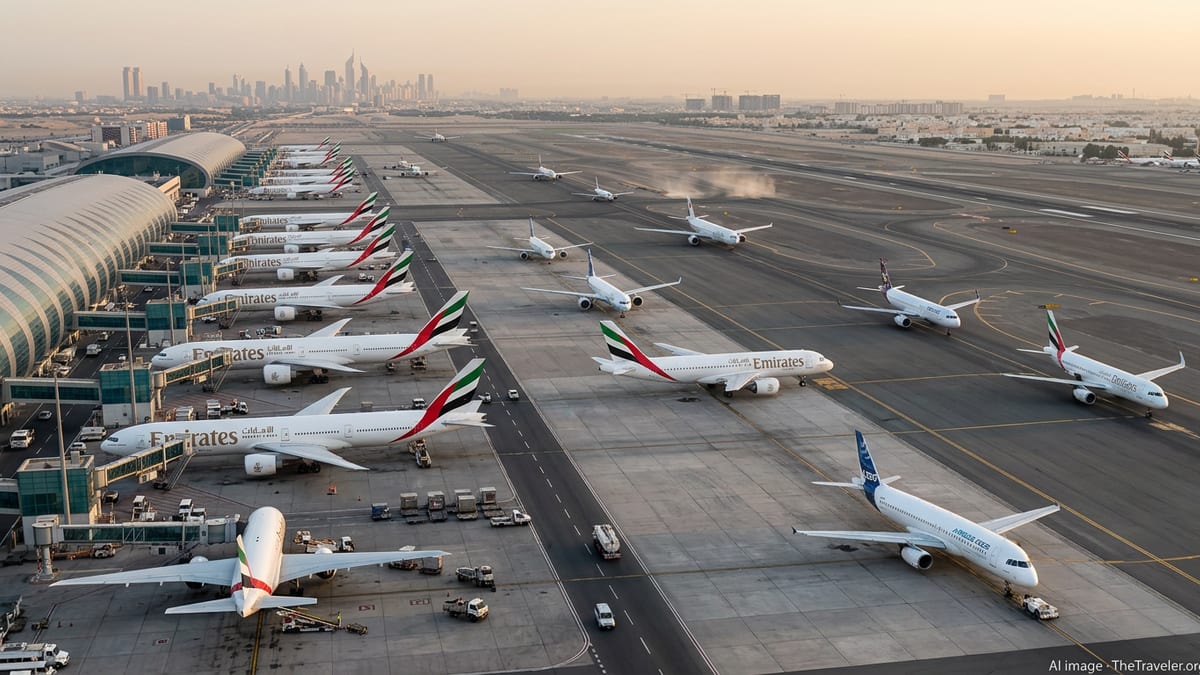
Publicly available order data and industry analyses show that Boeing’s backlog is now heavily concentrated in the Middle East, particularly in widebody aircraft such as the 787 Dreamliner and the 777X. Major commitments from Emirates, Qatar Airways, Etihad Airways, Saudia and emerging players such as Riyadh Air together account for a significant slice of the company’s long haul pipeline. Analysts tracking the order book estimate that roughly fourteen percent of Boeing’s total commercial orders are linked to Middle Eastern customers, a larger share than at any point in the previous decade.
That concentration reflects the region’s unique role as an intercontinental transfer hub linking Europe, Asia and Africa, with Gulf super-connectors designing fleets around large twin aisle jets. Emirates in particular has doubled down on Boeing’s largest widebody, lifting its total 777X commitments to around 270 aircraft following a fresh order placed at the 2025 Dubai Airshow, even as the program continues to face certification and delivery delays.
At the same time, the region’s growing influence is not confined to legacy Gulf carriers. Saudi Arabia’s aviation strategy, anchored by Vision 2030 tourism goals, has spawned Riyadh Air and encouraged Saudia and low cost affiliates to rethink their long haul fleets. These new entrants and expansions, many of them built around Boeing widebodies, have deepened the manufacturer’s exposure to political, economic and competitive shifts in the Middle East.
Delays on the 777X Put Fleet Plans Under Pressure
Boeing’s repeatedly revised timeline for the 777X has become a central point of tension with Gulf customers. Published coverage from late 2025 shows that the first 777X deliveries, once slated for 2020, are now expected around 2027 after another schedule slip and an additional multibillion dollar charge related to certification challenges. The aircraft remains central to the long term business models of Emirates and Qatar Airways, which plan to use it to replace aging 777-300ERs and bridge capacity left by the end of Airbus A380 production.
Emirates executives have warned in recent months that ongoing delays are constraining capacity growth through the latter half of the decade. Reports indicate that the airline has been forced to extend the life of older widebodies and invest heavily in cabin retrofits for both A380s and 777s to preserve product standards while it waits for the new jets to arrive. Each year of additional delay increases cost and operational complexity, while also narrowing the window in which the 777X can enjoy a technological edge over new Airbus widebodies.
The knock on effects reach beyond Emirates. Qatar Airways and other regional operators that built long term schedules, crew plans and maintenance programs around the 777X face similar uncertainty. Industry data show that Boeing has already reclassified a portion of 777X commitments into an accounting category used for at risk orders, reflecting doubts about whether some contracts will ever be delivered as originally envisioned.
Saudi Ambitions and the New Competitive Map
The most dramatic shift in the Middle East aviation landscape is unfolding in Saudi Arabia. The launch of Riyadh Air and a sweeping plan to transform the kingdom into a tourism and business hub are anchored in large aircraft orders, including up to 72 Boeing 787 Dreamliners that are expected to form the backbone of the new carrier’s long haul fleet. Saudi officials have outlined plans for tens of millions of additional visitors annually, dependent on significant widebody capacity connecting Riyadh to major global cities.
Yet Saudi strategy is explicitly multi vendor. Riyadh Air has also committed to substantial Airbus narrowbody orders, and reporting from recent air shows indicates that additional widebody deals are being courted from both Airbus and Boeing. Meanwhile, low cost offshoots such as Flyadeal have opted for Airbus A330neo aircraft over the 787 for dense long haul markets, citing capacity and availability considerations. These moves signal that Saudi planners are willing to diversify away from Boeing when commercial or timing advantages tilt toward its European rival.
If Saudi tourism targets soften, are delayed, or shift in focus, a portion of Boeing’s Middle East 787 exposure could quickly come under review. For a manufacturer already grappling with production constraints and quality concerns on the 787 line, any adjustment in Saudi demand would ripple through factory planning, supplier commitments and financial projections tied to widebody output in the late 2020s.
Airbus Gains Ground as Gulf Fleets Diversify
While Boeing seeks to stabilize production and work through certification hurdles, Airbus has been steadily capturing more of the region’s long haul growth. Emirates has introduced the A350 into its fleet and placed further orders for the type, adding a new widebody platform alongside its large Boeing commitments. Etihad Airways has likewise leaned into Airbus A350 orders, and recent show announcements highlighted additional long haul purchases from Abu Dhabi.
Elsewhere in the Gulf, FlyDubai’s landmark decision to order 150 Airbus A321neo jets, following a history of operating only Boeing 737s, illustrates a broader diversification trend. For Boeing, this shift on the narrowbody side underscores a risk that could spill into future widebody campaigns if airlines seek more balanced exposure between manufacturers. Each new Airbus foothold in the region increases the competitive pressure on Boeing to protect its existing 787 and 777X positions.
Industry observers note that Airbus has benefited from the relative maturity of its A350 program, which has avoided the most disruptive certification and grounding crises seen in some recent Boeing programs. For Gulf carriers that depend on reliable fleet planning to underpin hub expansion and airport investment, perceived execution stability is increasingly factored into procurement decisions, complicating Boeing’s efforts to convert options and letters of intent into firm, long term orders.
What a Middle East Meltdown Would Mean for Boeing
The idea of a “Middle East meltdown” in Boeing’s order book does not necessarily imply a sudden wave of cancellations. Instead, analysts describe a scenario in which geopolitical tensions, oil price swings, tourism underperformance, or further program delays prompt carriers to defer deliveries, convert widebody slots to smaller types, or quietly walk away from tentative commitments across the Gulf and Saudi Arabia.
Given that around fourteen percent of Boeing’s commercial backlog is tied to the region, such a shift would be material. Stretching out deliveries would slow cash inflows precisely in the years when Boeing aims to repair its balance sheet and invest in future product development. It would also leave the company more reliant on narrowbody programs that face their own regulatory scrutiny and competitive challenges from the Airbus A320neo family.
For the travel industry, any significant reshaping of Gulf widebody orders would have immediate consequences for connectivity. Fewer or later 787s and 777Xs flowing into Emirates, Qatar Airways, Etihad, Saudia and Riyadh Air could limit capacity growth on key Europe to Asia and Africa corridors, potentially keeping fares higher and slowing the rollout of new long haul routes and frequencies. Conversely, if Airbus is able to fill any gaps more quickly with A350s or A330neos, the regional balance of power among manufacturers and hub airports could shift in ways that redefine how global travelers move through the Middle East in the decade ahead.