

More news on this day
A newly announced multibillion-dollar jet order between Boeing and Vietnamese carriers is set to strengthen US–Vietnam trade ties and accelerate growth across Southeast Asia’s aviation and tourism sectors, with travelers expected to see more routes, newer aircraft, and expanded connectivity over the coming decade.
Get the latest news straight to your inbox!
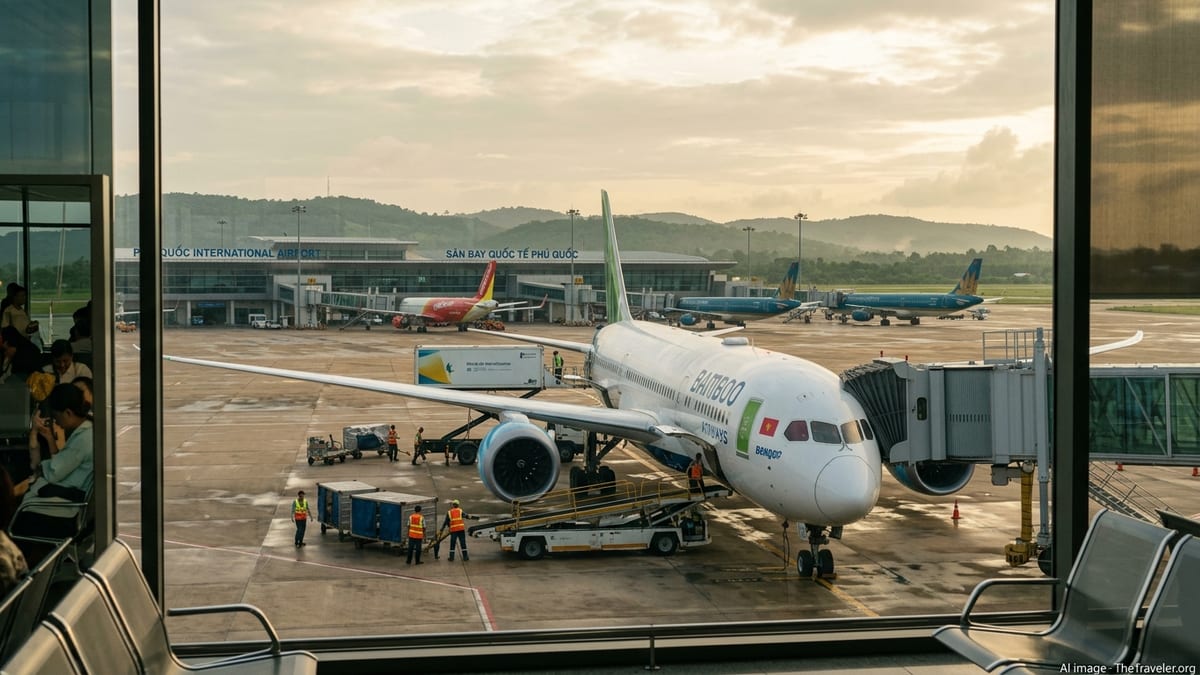
A Landmark Boeing Order Anchored in Vietnam’s Aviation Boom
Recent coverage of Vietnam’s aviation market highlights a sharp uptick in aircraft orders, including a high-profile Boeing deal involving multiple Vietnamese airlines and a reported total value in the tens of billions of US dollars. One of the standout components is a widebody order from Sun PhuQuoc Airways for up to 40 Boeing 787 Dreamliner jets, a package publicly valued at around 22.5 billion dollars at list prices. Additional Boeing commitments by other Vietnamese carriers have pushed the combined figure for new jets close to 30 billion dollars, underlining both Vietnam’s long-term travel demand and Boeing’s renewed commercial momentum in the region.
The new contracts build on several earlier tie-ups between Boeing and Vietnamese airlines that were signed in previous years but are now being revived or expanded as travel rebounds. Publicly available information shows that these deals collectively cover dozens of single-aisle and widebody jets, intended to serve both fast-growing domestic routes and long-haul flights linking Vietnam with North America, Europe, and the wider Asia Pacific. For Boeing, Vietnam is emerging as a strategic customer base in Southeast Asia at a time when regional air traffic is outpacing global averages.
Industry data from Vietnam’s civil aviation authorities and regional market reports indicate that passenger volumes at Vietnamese airports have climbed strongly through 2025 and early 2026, with double-digit growth compared with pre-pandemic levels. This demand has encouraged local airlines to lock in delivery slots before production backlogs lengthen further. The new Boeing contracts are being positioned as part of a broader national push to turn Vietnam into a regional air hub, complementing ongoing airport expansion projects and tourism promotion campaigns.
Deepening US–Vietnam Trade and Investment Links
The fresh Boeing orders also fit into a wider pattern of deepening economic ties between the United States and Vietnam. Recent trade commentary notes that American aerospace exports, led by Boeing aircraft and related services, have become a prominent component of bilateral commerce. Multi-billion dollar jet deals are viewed by analysts as helping to balance trade, as Vietnam’s exports of electronics, textiles, and consumer goods to the United States continue to grow.
According to published coverage of official joint statements and business forums, policymakers in both countries have framed large aircraft agreements as strategic, rather than purely commercial, because they combine manufacturing, financing, training, and maintenance cooperation. Vietnam’s carriers gain access to advanced aircraft technology and global support networks, while US industry benefits from long-term production work and aftermarket service revenue. The latest Boeing contracts, which involve extended delivery schedules and associated services packages, are expected to anchor these links well into the 2030s.
For travelers, these trade developments matter because they sustain the financial and regulatory environment that makes more nonstop flights viable. As aviation ties deepen, airlines find it easier to secure traffic rights, codeshare arrangements, and investment in airport infrastructure that, in turn, translate into more direct routes, fewer connections, and potentially more competitive fares between Vietnam, the United States, and other key markets.
What the New Jets Mean for Routes, Capacity, and Fares
The most immediate impact of the Boeing deals for passengers is likely to be a gradual but noticeable increase in capacity. Widebodies such as the Boeing 787 are typically deployed on long-haul and high-demand regional routes, allowing airlines to add additional frequencies or open entirely new city pairs. Market observers expect more nonstop services linking Ho Chi Minh City and Hanoi with major US gateways, as well as additional routes to Northeast Asia, Australia, and Europe as aircraft are delivered over the next several years.
Domestic and short-haul travelers can also expect ripple effects. As widebody jets shift onto intercontinental services, existing single-aisle aircraft can be redeployed to strengthen busy intra-Asian and domestic routes, including links to secondary Vietnamese cities and emerging beach destinations. This cascade of capacity often translates into more choice of departure times, better chances of finding seats during peak holidays, and more room for airlines to experiment with new point-to-point routes that bypass traditional hubs.
In terms of fares, industry analysts generally caution that aircraft orders alone do not guarantee cheaper tickets. However, the combination of higher capacity, more competition on popular routes, and increasing operational efficiency from new-generation jets tends to put downward pressure on average prices over time. The Boeing 787 family is designed to burn less fuel per seat than older widebodies, which can help airlines manage costs on long sectors. In a competitive market such as Vietnam, these savings are often partially passed on to consumers through promotional sales and expanded fare classes.
Tourism and Regional Connectivity Across Southeast Asia
The Boeing deal also has broader implications for Southeast Asia’s tourism landscape. Vietnam has already emerged as one of the region’s fastest-growing destinations, with coastal hotspots like Phu Quoc, Da Nang, and Nha Trang attracting rising numbers of international visitors. Sun PhuQuoc Airways’ decision to center its fleet expansion around Boeing 787 Dreamliners underscores the island’s ambitions to become a high-end leisure and meetings hub, with nonstop links to distant markets that previously required multiple connections.
Regional tourism boards and industry groups have highlighted how new long-haul connectivity tends to reshape travel patterns. When direct services open to destinations like Phu Quoc or Da Nang, travelers increasingly choose them as primary gateways rather than simply connecting through more established hubs such as Bangkok or Singapore. This shift can shorten total journey times for visitors from North America and Europe, making beach-and-culture combinations in Vietnam and neighboring countries more feasible within standard vacation windows.
Improved connectivity is also expected to benefit multi-country itineraries around mainland Southeast Asia. With Vietnamese airlines adding Boeing capacity, travelers may find it easier to construct open-jaw trips, flying into Vietnam and out of another ASEAN country, or vice versa, using a mix of full-service and low-cost carriers. For tour operators and travel agents, the additional widebodies and new airport infrastructure provide more flexibility in crafting packages that combine major cities, heritage sites, and emerging resort areas across the region.
How Travelers Can Prepare for a Changing Aviation Landscape
Although many of the newly ordered Boeing aircraft will be delivered over several years, travelers can already start positioning themselves to benefit. Frequent flyers to and within Vietnam may wish to monitor airline announcements for new routes, upgraded aircraft on existing services, and changes in cabin products. Historically, Vietnamese carriers have used new aircraft introductions to roll out refreshed seating, upgraded in-flight entertainment, and improved Wi-Fi coverage, particularly on long-haul routes.
Passengers planning trips from North America or Europe to Southeast Asia should also pay attention to evolving schedule patterns. As more nonstop flights become available, the traditional choice between an indirect connection via a regional hub or a more expensive direct option may shift, with Vietnamese carriers exerting greater competitive pressure on established players. This environment often leads to periodic fare wars and promotional campaigns that reward flexible travelers willing to adjust travel dates or consider alternative Vietnamese gateways.
Over the longer term, the multi-billion dollar Boeing deals suggest that Vietnam will remain one of the region’s most dynamic aviation markets. For leisure travelers, that likely means easier access to beaches, heritage towns, and emerging secondary cities. For business travelers, it signals more direct links to industrial zones and technology hubs, supported by growing US–Vietnam trade. While the full impact will unfold gradually as aircraft enter service and airports expand, the direction of travel is clear: more capacity, more choice, and a tighter web of connections that places Vietnam firmly at the center of Southeast Asia’s aviation and tourism map.