

More news on this day
Passengers traveling between Colombia, the United States, Canada, Spain and Ecuador faced mounting frustration on Monday as Bogotá’s El Dorado International Airport reported 40 flight cancellations and 38 delays, triggering a cascade of missed connections and last-minute rebookings across hubs including Miami, Toronto, Madrid and Guayaquil.
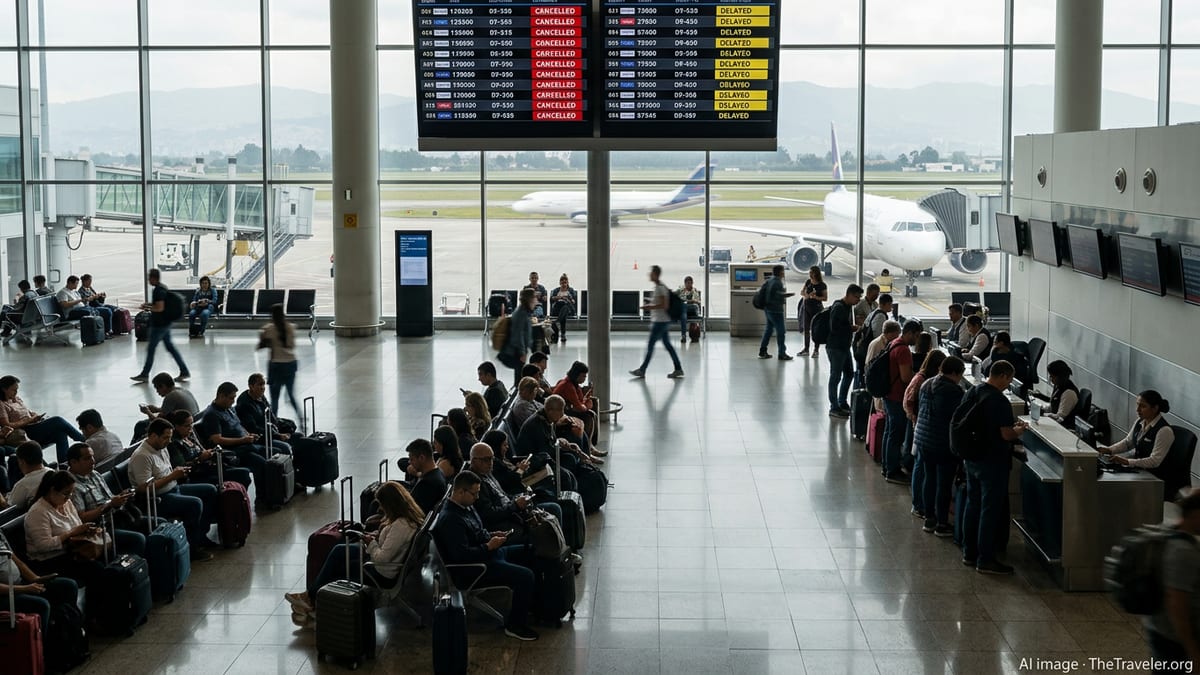
El Dorado Disruptions Send Shockwaves Across the Americas
By mid-afternoon on March 9, operations at El Dorado International Airport in Bogotá had slowed significantly, with 40 departures and arrivals canceled outright and at least 38 more running behind schedule, according to airport status boards and airline tracking data. The disruption affected a mix of domestic and international services, many of them linking Colombia with key long-haul gateways in North America and Europe.
Services to and from major U.S. markets, including Miami and New York, as well as Canadian and European capitals, were among those hit. Routes connecting Bogotá with Guayaquil and other Latin American cities also saw rolling knock-on delays as aircraft and crews failed to arrive on time from Colombia’s capital.
Ground staff at El Dorado reported crowded check-in halls and long rebooking lines as airlines attempted to consolidate lightly loaded flights and reposition aircraft. While some carriers issued waivers allowing passengers to change dates without penalty, many travelers described confusion at departure gates and limited real-time information on revised schedules.
Aviation analysts noted that even a few dozen cancellations at a hub like Bogotá can quickly radiate across the network. When aircraft scheduled to operate onward sectors into the United States, Canada or Europe remain stuck on the ground, subsequent rotations are pushed back, often for the rest of the day.
Miami, Toronto and Madrid Feel the Ripple Effect
The largest impacts outside Colombia were felt at Miami International Airport, Toronto Pearson and Madrid Barajas, all of which see regular traffic to and from Bogotá and other Colombian cities. In Miami, where operations were already strained by more than 200 delays and a cluster of cancellations on Monday, the additional disruption from El Dorado compounded congestion at immigration, security and baggage claim.
In Toronto, several southbound departures to Latin America were delayed as aircraft inbound from Bogotá arrived late or were rerouted. Passengers connecting onward to Western Canada reported tight connections, with some missing flights entirely after being held on arriving aircraft waiting for gates to free up.
Madrid, a primary European gateway for passengers traveling between Spain and Latin America, also saw knock-on effects. A number of long-haul arrivals from the region, including services that had originated in Colombia or carried large numbers of Bogotá-origin passengers, landed behind schedule, leading to missed connections onto other European destinations and extended layovers for travelers bound for secondary Spanish cities.
Airport authorities in all three hubs urged passengers to check their flight status frequently and to arrive early, particularly for long-haul and U.S.-bound services subject to additional screening. However, with information changing by the minute, many travelers said they were relying on airline apps and departure screens that lagged behind events on the ground.
Guayaquil and Regional Links in Ecuador Under Strain
In Ecuador, Guayaquil’s José Joaquín de Olmedo International Airport became another visible pressure point. Services operating between Guayaquil and Bogotá, often used as feeders into wider networks covering the United States and Europe, were among those most affected by the slowdown at El Dorado.
With aircraft and crews arriving late from Colombia, turnarounds in Guayaquil stretched beyond their allotted slots, pushing back subsequent departures. Some flights to U.S. destinations required retiming to ensure crew duty limits were not exceeded, leaving passengers contemplating unplanned overnight stays or lengthy waits in departure lounges.
Travel agents in Guayaquil reported a surge in calls from customers seeking alternative routings via Quito, Panama City or Lima to salvage onward connections to North America and Spain. For many, options were limited, as neighboring hubs were already operating close to capacity following earlier bouts of weather and congestion-related disruption elsewhere in the region.
Local tourism operators warned that continued instability on regional routes could dampen confidence ahead of the upcoming holiday periods, when Ecuador customarily welcomes higher numbers of visitors from Colombia, the United States and Europe.
Passengers Confront Confusion, Long Queues and Mixed Messages
Across affected airports, travelers spoke of hours-long waits in check-in and transfer lines, difficulty contacting airline support centers and a lack of clear guidance on accommodation or meal vouchers for those facing overnight delays. Many described learning of their cancellations only after arriving at the airport, despite having checked in online earlier in the day.
Families with children and older passengers appeared particularly vulnerable, with some left to navigate complex rebooking processes on their own. At Bogotá, volunteer airport staff and airline representatives attempted to triage the worst-affected cases, prioritizing passengers with urgent medical appointments or tight connection windows.
Industry observers noted that while airlines have invested heavily in digital tools and mobile notifications, real-world disruptions can still outpace these systems. When multiple hubs experience strain simultaneously, call centers quickly become overloaded and automated rebooking options may fail to capture individual needs, such as traveling in groups or requiring special assistance.
Consumer advocates reiterated longstanding advice for long-haul and connecting passengers: build generous buffers between flights, keep essential medications and documents in carry-on bags, and know the basic outlines of compensation and care obligations under the rules of the countries you are flying from and to.
Airlines and Authorities Race to Restore Order
By late Monday, airlines operating at El Dorado had begun implementing recovery plans, including substituting larger aircraft on certain routes to accommodate stranded passengers and adding extra staff at check-in and customer service desks. Some carriers opened additional counters in Bogotá and at key transit points such as Miami and Madrid to handle rebookings and refund requests.
Airport officials in Bogotá said they were coordinating closely with Colombia’s civil aviation authority to optimize runway use and minimize further delays. Measures included tighter slot management and prioritization of long-haul departures with large numbers of connecting passengers, particularly those heading to North America and Europe.
Operational experts cautioned that, although the worst of the disruption could ease within 24 hours, residual effects might linger for several days. Aircraft and crews displaced by Monday’s cancellations will need to be repositioned, and some late-running services may knock into early Tuesday schedules across time zones from the Americas to Europe.
Travel planners urged passengers with upcoming itineraries touching Bogotá, Miami, Toronto, Madrid or Guayaquil to monitor their flights closely and consider flexible options where available. For now, the episode at El Dorado serves as a stark reminder of how quickly local operational problems can cascade into a multi-country travel headache for thousands of passengers.