

More news on this day
A powerful bomb cyclone sweeping up the Eastern Seaboard this weekend has plunged one of the nation’s busiest travel regions into chaos, with blizzard conditions, grounded flights and treacherous highways from the mid-Atlantic through New England bringing winter tourism and everyday movement to an abrupt standstill.
Bomb Cyclone Becomes Latest Blow in a Punishing Winter
The latest system, unofficially dubbed Winter Storm Hernando by forecasters, began rapidly intensifying off the East Coast late February 22, meeting the technical definition of a bomb cyclone as its central pressure dropped sharply over a 24 hour period. By early February 23, the storm was lashing major metropolitan areas from Philadelphia and New York City to Boston with heavy, wind driven snow and near whiteout visibility.
The National Weather Service has warned that the storm is likely to become one of the most disruptive of the 2025 to 2026 winter season. That season has already seen a deadly late January cold wave and a separate early February bomb cyclone that hammered the Southeast and up into Atlantic Canada. For travelers, this latest round feels less like an isolated event and more like the culmination of a relentless winter that has repeatedly upended plans and exposed vulnerabilities in transportation networks.
With snow totals forecast to reach 1 to 2 feet in parts of New Jersey, the New York metro area, coastal Connecticut and eastern Massachusetts, officials are emphasizing that the impacts will not be limited to the height of the storm. Snow removal, rail and runway clearing, and recovery from power outages are expected to drag into the workweek, amplifying the storm’s effect on both leisure and business travel.
Air Travel Grinds to a Halt at Major Northeast Hubs
Air travel has borne the brunt of the bomb cyclone’s initial punch. Airlines began issuing broad preemptive cancellations on February 22, a strategy honed during recent major winter storms to reduce the number of passengers stranded on planes or in terminals when conditions deteriorate faster than expected. By Sunday evening, thousands of flights scheduled for February 23 had been canceled, particularly at key hubs in the New York and Boston regions.
New York’s three main airports, John F. Kennedy International, LaGuardia and Newark Liberty, have seen the greatest disruption. Schedules there serve as critical linchpins for domestic and international connections across the United States, meaning delays ripple far beyond the storm zone. Passengers aiming for sunny resorts in Florida, business meetings in the Midwest or connections to Europe and Asia are finding themselves stuck in departure cities from Atlanta and Chicago to Dallas as crews, aircraft and open slots vanish from the system.
At Boston Logan International Airport, carriers consolidated operations into fewer terminals and gates as snow intensified, focusing on limited core routes and essential repositioning flights. Ground crews working in gusts expected to exceed 50 to 60 miles per hour are facing whiteout conditions on the tarmac, making deicing, baggage handling and aircraft taxiing hazardous. Even where runways can technically remain open, the sheer pace of snowfall and wind driven drifts have forced temporary closures while plows make repeated passes.
Smaller regional airports from Baltimore and Hartford to Providence and Portland are also significantly affected, with some effectively shuttered during the storm’s peak. Travelers relying on these gateways for ski trips in northern New England or city breaks along the Eastern Seaboard are being advised to expect multiday disruptions rather than a quick reset once the snow stops.
Highways Closed and Travel Bans Strand Drivers
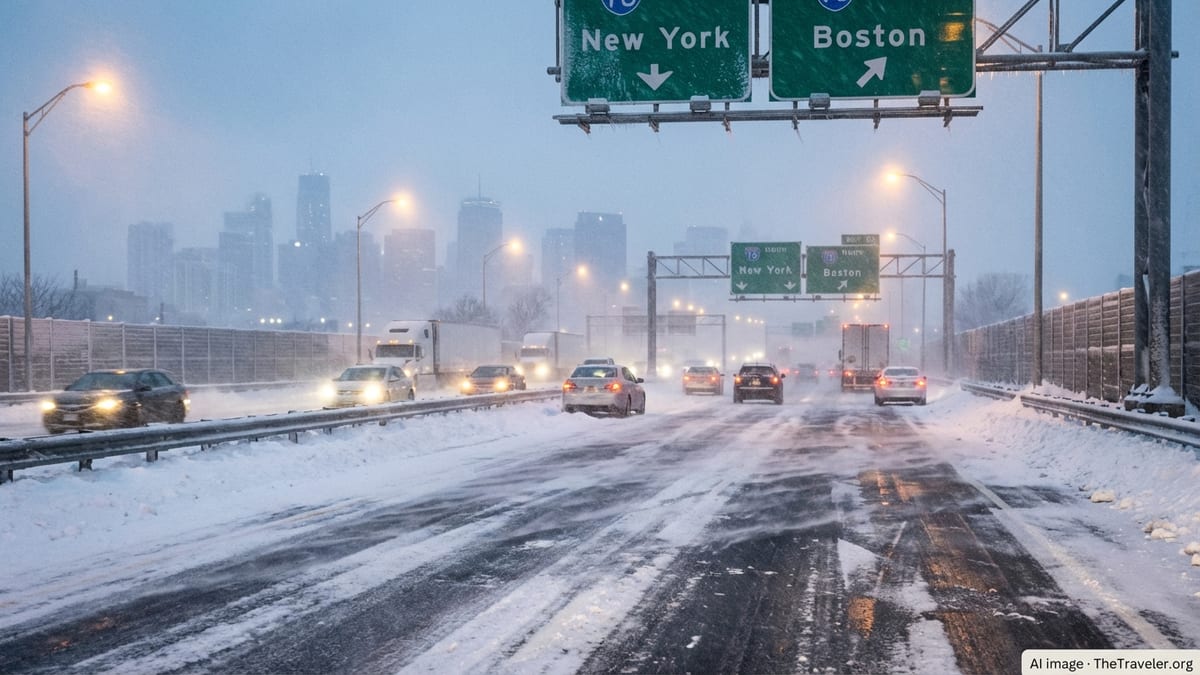
On the ground, state and local officials across the Northeast have taken the rare step of imposing sweeping travel bans and major highway shutdowns as conditions worsened overnight. Heavy, wet snow and intense wind gusts have produced zero visibility on exposed stretches of interstate, particularly along the busy Interstate 95 corridor that serves as the spine of travel between Washington, New York and Boston.
In New York City, a citywide ban on nonessential road travel took effect as bands of heavier snow pushed across the five boroughs. Similar restrictions are in place in portions of New Jersey, Connecticut and Massachusetts, where governors have declared states of emergency and urged residents to stay off the roads to allow plow crews and emergency services to operate. Tractor trailers and buses have been barred from key stretches of interstate highways, amplifying delays in freight movement and long distance coach services alike.
For those already on the road when conditions deteriorated, the storm has produced a patchwork of stranded vehicles, jackknifed trucks and multi car accidents. Sections of secondary highways and rural routes have become impassable where wind is piling snow into deep drifts and where downed branches are blocking travel. Transportation departments are warning that even four wheel drive vehicles and experienced winter drivers can quickly become stuck, especially during the storm’s peak when snowfall rates top one to two inches per hour.
Rest areas and service plazas along major corridors are filling with motorists waiting out the worst of the weather, some sleeping in their cars or in improvised cots set up by emergency managers. For travelers and long haul truckers alike, the storm is a stark reminder of how quickly a routine winter drive can turn into a night spent waiting for plows and tow trucks that may be hours away.
Rail, Transit and Intercity Buses Face Widespread Disruptions
Rail and urban transit systems across the Northeast are also being hit. Amtrak has curtailed or canceled many services along the Northeast Corridor, particularly high speed routes between Washington, New York and Boston that are vulnerable to snow laden overhead lines, switches clogged with ice and drifting snow, and coastal flooding on low lying stretches of track. Some long distance trains originating or terminating in the region are being rerouted, truncated or replaced with buses, if roads remain passable.
Commuter rail networks serving the New York, Philadelphia and Boston metropolitan areas are operating on heavily reduced schedules or have suspended service on some lines altogether, especially those with open air stations and older infrastructure. Signal problems and disabled trains can quickly cascade through a tightly timed suburban rail system, leaving platforms crowded with commuters and weekend travelers who assumed trains would be more reliable than roads.
City subway and light rail operators are racing to keep tracks clear with snow fighting trains and special crews, but high winds and blowing snow are creating particular challenges for elevated lines and outdoor segments. Some cities have pulled buses off the road during periods of peak wind and low visibility, both to protect drivers and to avoid vehicles becoming stuck on steep or poorly plowed routes. Intercity bus operators are similarly canceling departures across the Northeast, cutting off a vital budget friendly option for students, tourists and workers traveling between major cities.
For many travelers who might otherwise turn to trains or buses when flights are canceled, the across the board nature of the disruption is especially frustrating. With each transportation mode hampered at once, options to rebook, reroute or improvise detours are shrinking by the hour.
States of Emergency, Power Outages and Coastal Flooding Risks
Governors and mayors from the mid Atlantic through New England have declared states of emergency, unlocking additional funding and enabling faster deployment of National Guard units, utility crews and emergency services. These declarations also give officials greater flexibility to close public facilities, restrict travel and requisition private equipment such as tow trucks or construction vehicles for snow removal.
Beyond the immediate travel shutdowns, one of the greatest concerns for both residents and visitors is the risk of power outages as heavy, wet snow and wind gusts topple trees and power lines. Already, tens of thousands of customers across multiple states are without electricity, a number that could climb as the storm lingers. For travelers stranded in hotels or short term rentals, that means the possibility of losing heat and internet access just as they are trying to monitor rebooking options and weather updates.
Along the coast, the bomb cyclone’s low pressure and strong onshore winds are driving water toward shorelines from the Jersey Shore to Cape Cod, raising the risk of coastal flooding, overwash and beach erosion. In some seaside communities, local officials have ordered voluntary or limited mandatory evacuations for low lying neighborhoods and barrier islands, complicating travel logistics for residents as well as for visitors in winter rentals or off season beachfront hotels.
All of these cascading effects underscore how a winter storm of this magnitude is not just a snow event but a broad regional emergency, snarling the movement of goods and people across the northeastern United States and reverberating through national supply chains and travel plans.
Tourists and Business Travelers Scramble to Rebook
The timing of the bomb cyclone has caught a diverse mix of travelers in its path. Families on midwinter school break trips, international tourists using New York or Boston as gateways, and business travelers returning from or heading to key financial and political centers are all scrambling to adjust itineraries. Hotels from Manhattan to downtown Boston report surging demand as stranded passengers accept airline vouchers or book rooms out of pocket to wait out the storm.
At airport terminals and train stations, scenes familiar from past winter disruptions are playing out once again. Long queues snake in front of airline counters as passengers seek rebooking assistance, while others hunch over phones and laptops searching for available seats days out. Airport lounges and concourses are crowded with travelers camped on the floor, sharing power outlets and swapping information about which carriers are offering the most flexible change policies.
For some, especially international visitors or travelers on complex multi leg itineraries, the knock on effects could stretch into next week. Missed connections can mean lost nonrefundable reservations for tours, hotels and events in cities far from the storm zone. Travel insurance providers are bracing for a wave of claims related to weather cancellations, interrupted trips and additional accommodation and meal expenses.
Business travelers face their own set of challenges. High profile conferences, board meetings and product launches scheduled in the Northeast early in the week are being postponed or shifted to virtual formats, while sales teams and consultants find themselves stuck between clients. The storm is accelerating a familiar shift toward remote alternatives whenever a major weather event threatens, even as companies weigh the cost of last minute changes.
What Travelers Should Expect in the Coming Days
As the bomb cyclone continues to move up the coast and eventually into Atlantic Canada, travel experts say the most disruptive period for the northeastern United States is likely to last through at least Monday, with lingering effects beyond that. Even after the heaviest snow ends, airports will need time to clear runways, reposition aircraft and crew, and work through backlogs of stranded passengers. Some routes, particularly those with limited daily frequencies, may not return to normal schedules for several days.
On the roads, plows will be racing against time and temperature. Daytime melting followed by overnight refreezing could transform slushy streets into sheets of black ice, extending hazardous driving conditions well after skies clear. Motorists who postponed trips during the height of the storm may all head out at once once bans are lifted, causing heavy congestion on major highways just as road crews are still managing snowbanks and narrowed lanes.
Rail and transit systems are likely to restore core services first, focusing on heavily used commuter and intercity routes. More remote branches and secondary lines might take longer to come back online as fallen trees are removed, signals repaired and switches thawed. Travelers relying on these lines for access to ski towns, small coastal communities or rural getaways should be prepared for last minute schedule changes.
For those with flexible plans, experts recommend treating the multi day period around the storm as a moving target. That may mean building extra nights into itineraries, considering alternate arrival or departure cities outside the hardest hit areas, or even shifting trips entirely into March when the risk of extreme cold snaps and heavy snow may begin to lessen.
Resilience, Climate Questions and the Future of Winter Travel
The February 2026 bomb cyclone arrives in what has already been a bruising winter for travelers, reviving questions about how prepared the nation’s transportation infrastructure is for frequent high impact storms. The rapid escalation from routine winter weather to paralyzing blizzard, combined with the interconnectedness of modern air and rail networks, has again exposed the challenges of keeping people and goods moving during extreme events.
Meteorologists and climate researchers have been cautious about drawing direct lines between any single storm and long term climate trends, but many note that a warmer atmosphere can hold more moisture, potentially fueling heavier snowfall when temperatures are still below freezing. For travelers, the practical takeaway is not a scientific debate but a rising sense that severe, travel halting winter storms may be less a once a decade anomaly and more a recurring feature of the cool season.
Airlines, rail operators and highway agencies are already under pressure from regulators and the public to invest in more resilient systems. That includes better snow removal equipment, more robust communications with passengers, and clearer protocols for when to preemptively shut down or maintain limited service. For destinations that rely on tourism, from New York’s cultural attractions to New England’s ski resorts and coastal towns, adapting to this new winter reality will be essential.
For now, as the bomb cyclone continues to batter the Northeast, the focus remains on safety and gradual recovery. But as planes return to the skies, trains roll again along the corridor and plows finish clearing the last suburban cul de sacs, the storm of 2026 will likely stand as another milestone in the evolving story of how Americans move, work and explore in a changing winter climate.