

More news on this day
A passenger on a New York to Chicago American Airlines flight has been charged with making a bomb threat after the aircraft diverted to Detroit, where federal agents met the plane and the man was taken into custody, according to publicly available court documents and news reports.
Get the latest news straight to your inbox!
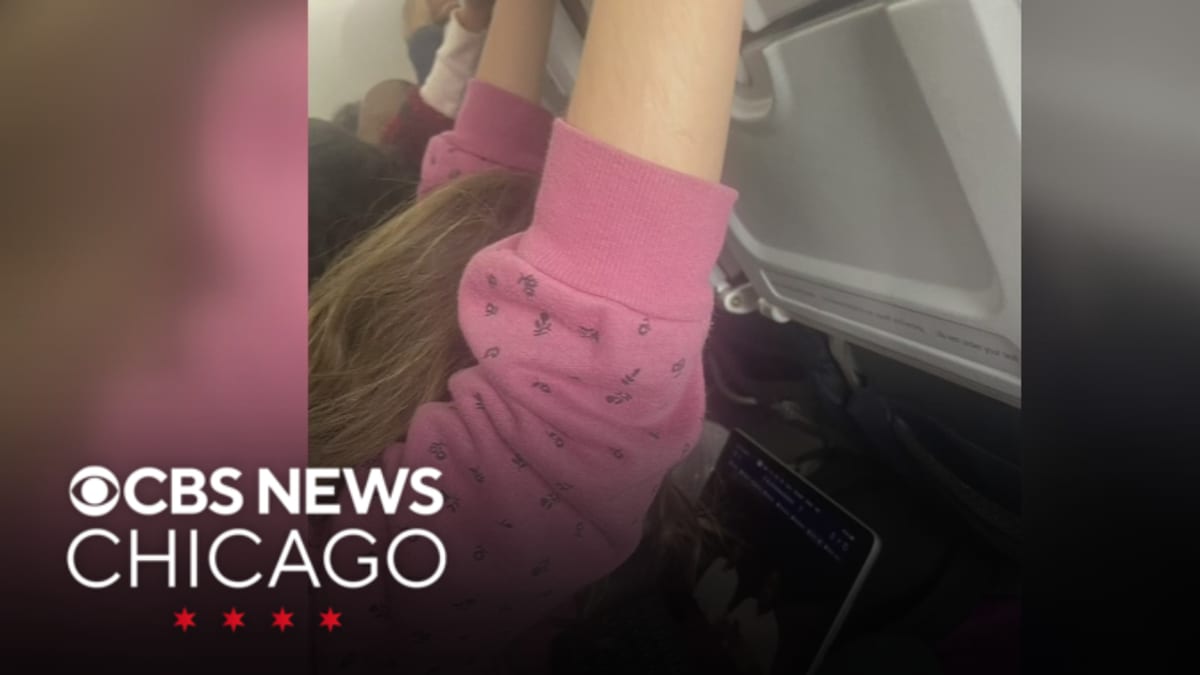
Image by CBS News
Alleged Threat Aboard Chicago-Bound Flight
Published coverage indicates that the incident occurred on March 29, when American Airlines Flight 2819 was traveling from John F. Kennedy International Airport in New York to Chicago O’Hare International Airport. Partway through the journey, a male passenger allegedly became disruptive and issued a threat suggesting he would blow up the aircraft, prompting immediate concern among those on board.
According to a federal criminal complaint and media summaries of the filing, the passenger made explicit references to having a bomb or taking violent action, statements that were heard by other travelers and members of the cabin crew. Reports describe a chaotic scene in which the man’s behavior escalated, with shouting and continued references to a potential explosion.
The reported conduct led the crew to treat the situation as a potential bomb threat, triggering established in-flight security procedures. While no explosive device was ultimately found, the verbal threat alone was sufficient to set in motion a significant aviation security response.
Diversion to Detroit and Security Response
Flight-tracking data and local coverage show that the Airbus operating Flight 2819 diverted from its planned route and landed at Detroit Metropolitan Wayne County Airport late on the morning of March 29. After touchdown, the aircraft was directed to an isolated area of the airfield away from terminal gates, in line with standard protocols for potential security threats on board.
Video published by multiple outlets shows numerous law enforcement vehicles surrounding the aircraft after it came to a stop, with heavily armed personnel approaching the jet. Passengers later described waiting on board while responders assessed the situation and prepared to remove the individual at the center of the disturbance.
According to publicly available information, the man was detained on the tarmac and subsequently taken into federal custody. Passengers were eventually allowed to disembark and undergo additional screening before continuing their journeys, either on the same aircraft or alternative arrangements, once officials determined there was no ongoing threat.
Federal Complaint Details and Charge
A criminal complaint filed in federal court outlines the basis for the charge, indicating that the passenger is accused of making a bomb threat that interfered with the operation of the flight. Reports summarizing the filing state that he faces at least one federal count related to conveying false information and threats involving an aircraft, a serious offense under U.S. law.
Publicly available summaries of the affidavit describe how the man’s comments about blowing up the plane, combined with his agitated behavior, led crew members to believe that the safety of passengers and the aircraft could be at risk. That assessment, in turn, justified the diversion to Detroit and the deployment of a large security presence upon landing.
At this stage the case remains in its early phases, with initial court appearances focused on the formal reading of the charge and conditions of detention. Further proceedings are expected to address the defendant’s plea and, if necessary, set a schedule for additional hearings or trial.
Impact on Travelers and Airline Operations
The diversion disrupted travel plans for scores of passengers, many of whom were on a relatively short-haul journey between two of the country’s busiest airports. Accounts shared with local and national media describe a tense period in the cabin as the flight changed course, followed by uncertainty while the aircraft waited on the tarmac surrounded by emergency vehicles.
American Airlines issued a brief statement, cited widely in news coverage, acknowledging that a disruptive customer had prompted the unscheduled landing in Detroit. The airline emphasized that the flight landed safely and that there was no broader threat to the traveling public, aligning with subsequent comments from federal law enforcement that characterized the episode as an isolated incident.
The incident illustrates how even a verbal threat can rapidly transform a routine domestic flight into a security emergency. For airlines and airports, such situations can require quick coordination across multiple agencies, potential gate closures or tarmac restrictions, and rebooking or accommodations for affected passengers when schedules are significantly disrupted.
Broader Context of Onboard Threats
This case adds to a series of recent episodes in which disruptive behavior or alleged threats have forced commercial aircraft to divert from their intended destinations. Industry observers note that while the vast majority of flights operate without incident, carriers and federal agencies treat bomb-related statements on board as inherently serious, regardless of a person’s apparent intent or mental state.
Travel security specialists frequently point out that air crews are trained to respond conservatively when faced with possible threats, prioritizing safety over schedule. That approach typically means diverting to the nearest suitable airport, isolating the aircraft after landing, and allowing specialized teams to assess both the individual involved and the aircraft itself.
For travelers, the Detroit diversion underscores the potential consequences of threatening language or unruly conduct in a confined cabin environment. Even when no physical device is present, a bomb threat can lead to federal charges, lengthy investigations, and lasting impacts on everyone aboard, reinforcing the strict legal and operational framework that governs modern air travel.