

More news on this day
Cross-border travel patterns between the United States and Canada are undergoing a historic reversal in early 2026, as fresh data and surveys point to more Americans heading north for vacations while a growing share of Canadians are scaling back or boycotting trips to the U.S. amid political, economic and safety concerns.
Get the latest news straight to your inbox!
A Rare Reversal on the World’s Busiest Bilateral Border
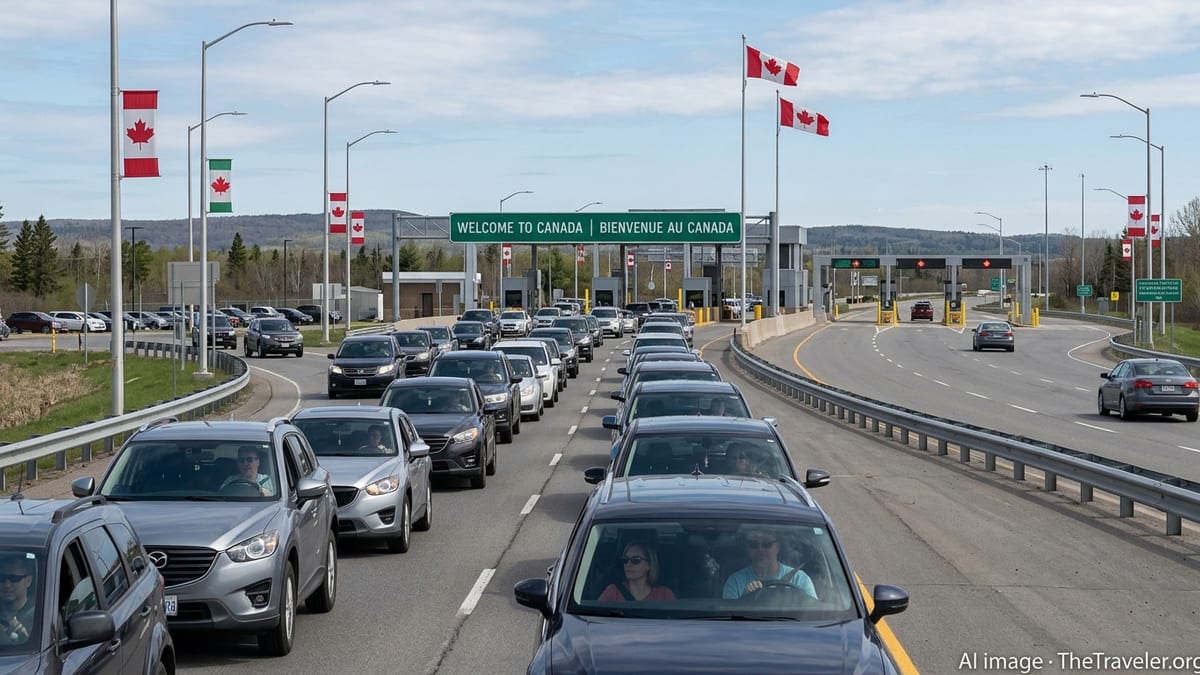
Recent border and tourism figures suggest that the traditional flow of leisure travel between the two countries is tilting in an unfamiliar direction. For only the second time since 2006, excluding pandemic months, reports indicate that more Americans visited Canada than Canadians traveled to the United States during key periods of 2025, a gap that appears to be widening in early 2026 as Canadian southbound trips continue to soften.
Preliminary data cited by industry analyses show that Canadian visits to the U.S. fell sharply through 2025, with some estimates pointing to double-digit percentage declines compared with 2024. At the same time, American trips north rose enough to close and, in some months, surpass the long-standing Canadian lead in cross-border tourism. Transportation statistics and tourism association briefings describe the situation as a structural shift rather than a short-term blip.
The change is visible at individual crossings. In New York State, coverage of border trends notes that entries from Canada declined by millions of passengers in 2025, with some bridges and land crossings recording drops of 20 percent or more. Early 2026 monthly counts show the downward trend persisting, even as Canadian airports expand long-haul capacity to Europe, Asia and sun destinations that bypass the United States entirely.
While total arrivals to Canada dipped in 2025, the mix of who is traveling is evolving. International inbound groups report that the United States remains Canada’s largest single source market, and American leisure travelers are increasingly prominent in gateway regions, from the Niagara corridor to British Columbia’s mountain resorts, filling some of the gap left by other markets still recovering from pandemic-era disruptions.
Trade Tensions and the Politics Behind the Boycott Mood
The travel reset is unfolding against the backdrop of an acrimonious trade dispute between Washington and Ottawa that escalated in 2025. New tariffs, retaliatory measures and heated rhetoric around the United States–Mexico–Canada Agreement have filtered quickly into the consumer arena, fueling what several outlets describe as an organized Canadian boycott of U.S. goods and destinations.
Public polling referenced in that coverage shows significant shares of Canadians expressing reluctance to vacation in the United States for at least a year, citing dissatisfaction with the trade relationship and broader political direction in Washington. Boycott campaigns on social media encourage travelers to “stay Canadian” by redirecting holiday budgets toward domestic destinations or alternative international options in Europe and Asia.
Surveys compiled in late 2025 and early 2026 by insurers and research firms highlight a layered picture of motivation. Large majorities of respondents identify at least one deterrent to U.S. travel, ranging from concerns about political leadership and border hassles to crime perceptions and the appeal of more affordable trips within Canada. Analysts note that these attitudes are emerging at the same time as Canada’s travel industry is heavily promoting regional road trips, national parks and coastal escapes as a patriotic alternative to crossing the border.
Observers of North American tourism policy point out that the timing of this consumer backlash coincides with preparations for the 2026 joint review of the continental trade pact. Industry groups argue that the travel sector, which has often been treated as peripheral in trade negotiations, is now at the center of public sentiment and economic risk, raising the stakes for any decisions that could ease or exacerbate the boycott dynamic.
Economics: A Weak Loonie and Strong Incentives to Head North
In addition to politics, old-fashioned currency math is playing a powerful role in the border flip. Through much of 2025, the Canadian dollar hovered around some of its weakest levels in recent years against the U.S. dollar, making hotel stays, restaurant bills and shopping trips in American cities markedly more expensive for Canadians. Travel agencies and consumer finance outlets have documented steep drops in bookings to the U.S., attributing a large portion of the decline to unfavorable exchange rates.
For Americans, however, the same currency spread effectively turns Canada into a discounted destination. A strong U.S. dollar stretches further in Canadian resort towns, ski areas and urban centers, and travel marketers have leaned into this advantage with messaging focused on value. Reports from provincial tourism boards and rental car platforms describe robust American demand in peak months of 2025, with many travelers taking advantage of road-trip-friendly infrastructure just across the border.
Economic uncertainty on both sides also shapes corporate and conference travel. National-level data released in 2025 showed the United States losing some international business travelers amid broader concerns over border detentions and entry procedures, with overall Canadian travel to the U.S. declining in key months. At the same time, Canadian outbound travelers have been reallocating limited budgets toward fewer, longer international trips, often to destinations where their currency goes further or where package pricing locks in costs upfront.
Industry analysts caution that currency cycles can reverse, potentially easing some of the pressure on Canadian visitors in the future. For now, though, the combination of a weak Canadian dollar, higher U.S. prices and widespread awareness of these factors in consumer media is reinforcing the boycott mood and accelerating the shift toward northbound travel from the United States.
On the Ground at the Border: Quiet Duty-Free Shops and Busy Canadian Hubs
At several major land crossings, the human face of the reversal is visible in quieter parking lots and struggling duty-free businesses that have long relied on Canadian travelers heading south for shopping and sunshine. Local news coverage from communities near the border describes shop owners cutting staff and hours after reporting drops of 70 to 80 percent in sales linked directly to reduced Canadian traffic.
On the Canadian side, airports are adapting to changing demand. Ottawa, Montreal and other hubs have reported growth in non-U.S. routes, with additional frequencies to Europe, the Caribbean and transpacific gateways. Passenger statistics shared by airport authorities show rising volumes of Canadian-resident return trips from overseas, even as transborder traffic to the U.S. lags behind pre-dispute benchmarks.
Some provincial tourism campaigns have pivoted quickly, targeting residents who might previously have spent winter holidays in Florida or desert resort states. Advertising budgets are being redirected to highlight ski regions, coastal retreats and city-break options within Canada, framed as both a financially savvy and values-driven choice. Travel advisors report increased interest in cross-Canada rail journeys, northern aurora-viewing trips and culinary tours that showcase homegrown food and wine.
For U.S. border towns, the ripple effects are significant. State-level tourism offices in places such as Florida, California and parts of New England have launched fresh marketing pushes specifically aimed at Canadians, sometimes including discounts or partnerships with airlines and tour operators. Publicly available statements from these offices emphasize the economic importance of Canadian visitors, who historically generated billions of dollars in annual spending and supported tens of thousands of jobs across accommodation, retail and entertainment.
Looking Ahead to a Pivotal 2026 Travel Season
With the peak summer season approaching and the 2026 World Cup on the horizon, travel stakeholders across North America are treating the current realignment as a critical test. Strategic briefings from international inbound associations describe the present moment as a crossroads: either policymakers move to rebuild confidence and facilitate easier movement, or entrenched habits of avoiding U.S. trips could harden among Canadian travelers.
Surveys released in early 2026 capture that uncertainty. A recent national poll conducted for a Canadian broadcaster found more than four in ten Canadians less likely to travel to the United States this year than last, while a similar share reported not vacationing there at all in general. Commentators interpret these findings as evidence that the boycott mood remains potent, even as some Canadians continue to visit the U.S. for family, work or essential reasons.
Meanwhile, the window may be opening wider for Canada to capitalize on American interest. As foreign visitors from other regions weigh their options amid stricter U.S. border controls and high-profile incidents at airports, some European and Asian travelers are redirecting North American itineraries to focus more heavily on Canadian cities and landscapes. Analysts note that this could amplify the perception of Canada as a welcoming, relatively hassle-free hub in contrast to a more restrictive United States.
For travelers themselves, the border flip presents a new set of decisions. Americans planning 2026 vacations may find favorable exchange rates and less crowded destinations just across the 49th parallel, while Canadians weighing trips south must balance long-standing cultural and family ties to the U.S. against political, economic and practical concerns. As the year unfolds, how those individual choices add up will determine whether the current shock solidifies into a lasting new normal for the continent’s most important travel corridor.