

More news on this day
Travelers across the United States faced fresh disruption on Sunday as Boston Logan International Airport reported 91 flight delays and eight cancellations, impacting departures and arrivals on heavily trafficked leisure routes linking New England with Orlando, Fort Lauderdale, Atlanta and other major hubs.
Get the latest news straight to your inbox!
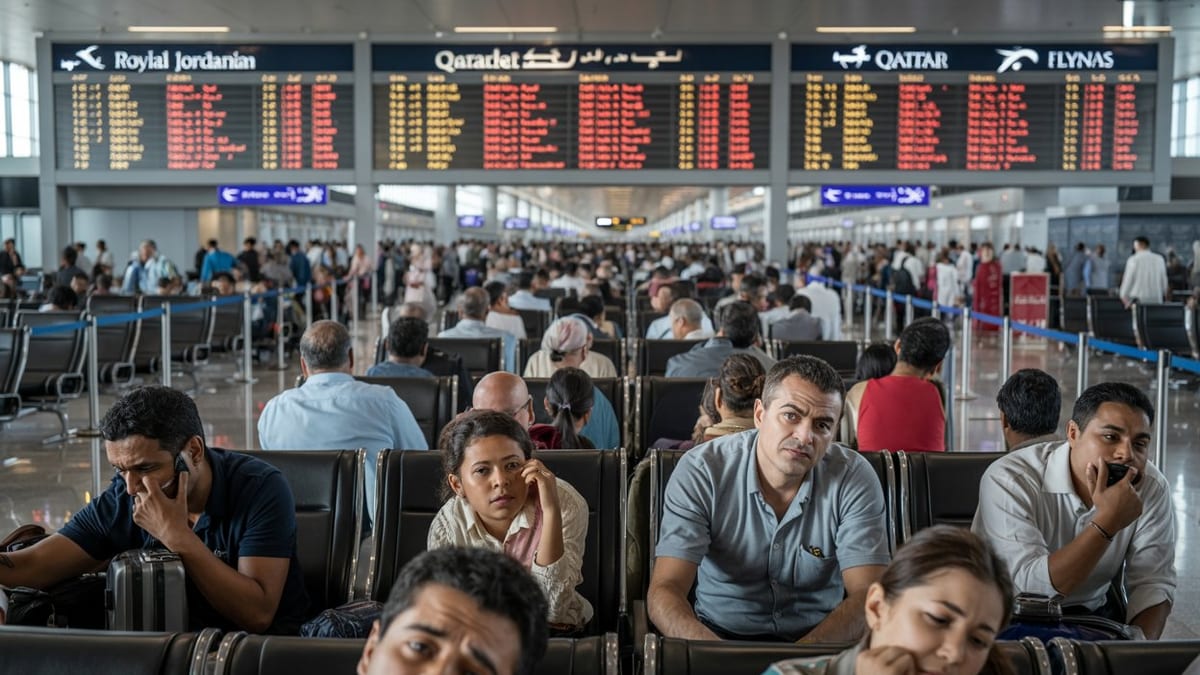
Operational strain behind Sunday’s Boston disruptions
Publicly available tracking data for April 12 shows a spike in schedule disruptions at Boston Logan, with 91 flights delayed and eight cancelled across multiple carriers. These issues coincided with a busy spring weekend, when demand between Boston and popular warm-weather destinations typically increases and leaves airlines with less slack in their networks.
While the federal aviation dashboard did not list a formal ground stop for Boston on Sunday, reports indicate that a combination of routine congestion, minor weather impacts and rolling knock-on delays elsewhere in the system contributed to longer-than-normal waits for departure slots. Once an airport reaches a certain level of congestion, a single late arriving aircraft can cascade into missed connections and late departures stretching across much of the day.
A higher share of delays appeared on domestic routes linking Boston to Florida and the Southeast, where airlines had scheduled dense frequencies to capture spring travel demand. Logan’s role as both a major origin-and-destination airport and a growing connecting hub added to the strain as late arrivals compressed turnaround times at the gates.
Florida links hit, including Orlando and Fort Lauderdale
Connections between Boston and Florida were among the most visibly affected on Sunday. Flight data and published schedules show frequent nonstops from Logan to Orlando, Fort Lauderdale, Fort Myers, Palm Beach and other Florida airports run by JetBlue, Spirit, American, Delta and Frontier. When operations slow in Boston, these tightly banked departures can quickly fall behind schedule.
On the Orlando corridor, where multiple daily flights normally operate between Boston and central Florida, delays left some services departing significantly behind their planned times. Similar patterns were evident on Fort Lauderdale and Fort Myers routes, with aircraft arriving late into Boston or waiting on the ground for revised departure times as traffic flows were metered.
The disruption followed a separate incident on Saturday involving a Delta flight from Fort Lauderdale to Boston that returned to its departure airport due to a mechanical issue, according to local broadcast coverage in South Florida. Although that diversion was resolved without injuries, its eventual cancellation removed one aircraft and crew from the rotation and illustrates how even isolated events can amplify pressure on already busy Florida to Boston links.
Impact on Spirit, Envoy Air, JetBlue and other carriers
The wave of delays and cancellations at Logan affected a cross-section of airlines. Low-cost carrier Spirit, which markets budget fares on the Boston to Orlando and Fort Lauderdale routes, saw its Florida flights operating into a crowded schedule that left limited room for recovery once earlier services ran behind. For passengers on point-to-point leisure trips, even moderate delays meant curtailed vacation time or missed evening connections in Florida.
Regional operator Envoy Air, which flies under the American Eagle brand, also experienced knock-on effects where its Boston feeder services connect smaller markets into the American Airlines network. Delayed regional arrivals into Logan can force tight connections onto later flights, especially for travelers routing via Boston to southern destinations such as Atlanta and Florida cities.
JetBlue, historically one of the largest carriers at Boston Logan and a key player on routes to Orlando, Fort Lauderdale and other Florida airports, featured prominently in Sunday’s delay tallies. Tracking services showed selected JetBlue departures pushing back later than scheduled as aircraft arrived behind plan or waited for updated slots, a pattern that can be particularly disruptive on days when aircraft are scheduled to operate several consecutive legs up and down the East Coast.
Legacy and network airlines, including American and Delta, were not immune, with late departures on Boston services feeding delay minutes into their broader networks. For passengers, the practical impact was longer waits at gates, tighter connection windows and a higher likelihood of missed onward flights from Southern hubs.
Atlanta and other domestic hubs feel the ripple
The disruption extended beyond Florida to major connecting hubs such as Atlanta, where flights to and from Boston form part of larger national and international itineraries. When a Boston departure to Atlanta leaves late, aircraft often miss their planned arrival time at the hub, squeezing the window for hundreds of passengers to make onward connections to the Midwest, West Coast and smaller regional cities.
Tracking information on Sunday showed Boston-linked flights into Atlanta and other hubs operating with added buffer time or posting arrival delays, prompting some airlines to rebook travelers onto later services. While individual delays on these sectors might appear modest compared with severe weather events, even 30 to 60 minutes of additional flight or taxi time can break carefully synchronized connection banks.
The network effect also worked in reverse. Earlier disruptions at other airports fed late incoming aircraft into Boston, further undermining Logan’s ability to recover punctuality as the day progressed. Once crews reached duty-time limits or aircraft missed their next scheduled rotations, cancellations became more likely, contributing to the eight flights scrubbed from the timetable by late evening.
Travelers urged to monitor flights closely during busy spring period
Travel industry analysts note that the April travel period often combines high leisure demand with variable spring weather, creating conditions in which even minor operational setbacks can translate into widespread disruption. The busy pattern on Boston’s links to Orlando, Fort Lauderdale, Atlanta and other popular destinations on April 12 reflects this broader seasonal vulnerability.
Publicly available guidance from airlines and airport operators consistently highlights the importance of monitoring flight status in real time, particularly for travelers heading to or through large hubs such as Boston Logan. Same-day schedule checks can help passengers adjust ground transport, connecting flights and hotel plans when irregular operations arise.
For carriers like Spirit, Envoy Air and JetBlue that operate dense schedules up and down the East Coast, Sunday’s disruptions underline the challenge of maintaining punctuality when aircraft and crews are deployed in tightly timed rotations. Industry observers suggest that as airlines move deeper into the peak spring and summer seasons, they may face additional pressure to build in more resilience on heavily trafficked leisure corridors between New England and the Southeast.