

More news on this day
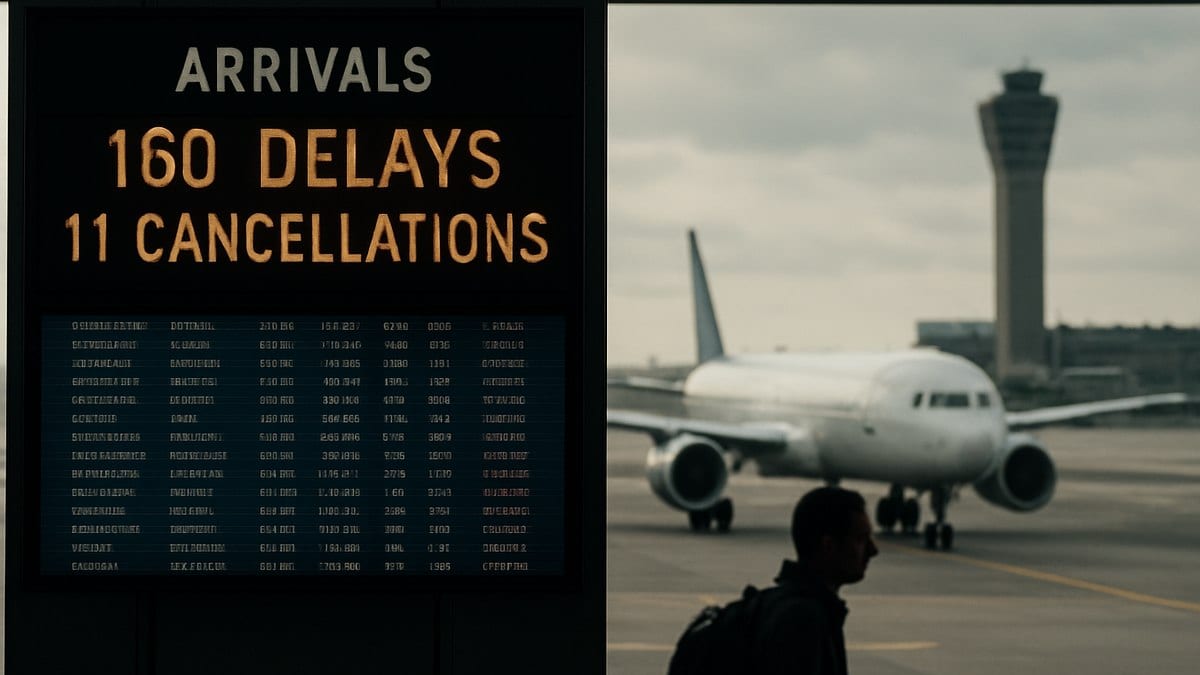
Boston Logan International Airport recorded more than 160 delayed flights and at least 11 cancellations on April 3, 2026, as a mix of spring weather, tight airline schedules and regional airspace constraints combined to disrupt thousands of travelers at one of New England’s busiest hubs.
Get the latest news straight to your inbox!
High Disruption Levels at a Key New England Hub
Publicly available flight tracking data for April 3 indicate that disruption at Boston Logan built steadily through the day, with delays accumulating across multiple terminals and airlines. By evening, tally counts showed more than 160 flights running late and at least 11 cancellations, affecting departures and arrivals across the United States as well as several major transatlantic links.
Published aviation coverage notes that the pattern at Boston Logan on April 3 mirrored a broader national surge in disruptions, with major hubs from Texas to the Mid Atlantic also reporting elevated delay and cancellation totals. Within that national picture, Logan stood out for the concentration of delayed flights relative to outright cancellations, creating long stretches of schedule slippage without a complete shutdown of operations.
The figures underscore Boston Logan’s importance in the regional aviation network. As a primary gateway for New England and a growing transatlantic hub, even moderate disruptions at the airport can cascade across connecting itineraries, particularly for travelers linking from secondary U.S. cities onto evening departures for Europe and other long haul destinations.
Weather, Airspace and Network Strain Converge
Reports on early April conditions point to a combination of low clouds, unsettled regional weather and air traffic management measures as key contributors to the spike in delays and cancellations at Boston Logan. While April 3 did not feature a headline winter storm or severe thunderstorm outbreak over the airport itself, shifting ceilings and visibility levels, along with precautionary spacing between arrivals and departures, reduced the rate at which flights could move through the system.
Regional airspace constraints also appear to have played a role. When traffic management initiatives limit flows into crowded Northeast corridors, airports such as Boston Logan, New York’s major gateways and Philadelphia share a smaller slice of usable capacity. That can force airlines to hold aircraft on the ground, adjust routings or accept longer taxi and holding times, all of which translate into departure and arrival delays recorded in flight status data.
At the same time, tight airline schedules typical of the spring ramp up period left limited room to absorb disruption. Once early flights on April 3 departed behind schedule, aircraft and crews cycled through the day with narrowed recovery windows. Analyses of nationwide data for the same date show similar dynamics at other hubs, suggesting that the Logan figures were part of a larger pattern in which modest operational stresses produced outsized impacts on punctuality.
Impact on Domestic and Transatlantic Routes
The disruption at Boston Logan on April 3 affected a mix of short haul domestic services and long haul international departures. According to published coverage drawing on airport boards and tracking platforms, delays were logged on routes to key U.S. hubs including New York, Washington, Chicago and Atlanta, along with busy leisure markets in Florida and the Southwest.
For transatlantic travelers, delays at Logan created particular challenges. Evening departures to hubs such as London, Dublin and Frankfurt rely on tight inbound connections from smaller U.S. cities. When those feeder flights arrive late, airlines must choose between holding long haul departures for connecting passengers or protecting on time performance for the overnight crossing. Reports indicate that on April 3, a mix of extended holds and missed connections contributed to crowding at customer service desks and rebooking counters.
Even where cancellations were limited to around a dozen flights, the concentration of more than 160 delays meant that many trips ended several hours behind schedule. For some passengers, that translated into missed events or additional nights of accommodation, while others faced compressed layovers at onward hubs. Travel commentary on the spring 2026 disruption wave notes that such ripple effects are becoming more common as airline networks operate with less slack, particularly at peak travel times.
Part of a Wider Spring 2026 Disruption Wave
The April 3 figures at Boston Logan did not occur in isolation. Nationwide data for the same date show hundreds of cancellations and several thousand delays across the United States, with cities including Austin, Dallas, Chicago, Orlando, Las Vegas and Philadelphia also reporting significant operational strain. Aviation analysts describe this period as a fresh wave of spring disruption, shaped by volatile weather patterns and strong travel demand.
Boston Logan’s experience fits into a longer running story in which coastal hubs and constrained urban airports shoulder a disproportionate share of delay minutes. Government transportation statistics have previously identified Logan as an airport where a notable percentage of flights arrive late in a typical year, reflecting both its dense airspace and exposure to Atlantic weather systems. The April 3 data point adds another example of how quickly conditions can tighten when several stress factors align.
Industry observers also point to robust passenger volumes in early 2026, with many large airports operating at or above pre pandemic traffic levels. In that context, even minor slowdowns can translate into crowded gate areas, stretched concession operations and high demand for airport hotels when evening disruptions cascade into missed connections. Reports from multiple hubs during the same week describe similar scenes, suggesting that Boston Logan’s challenges were part of a broader national pattern rather than an isolated local issue.
What the Disruptions Mean for Upcoming Travelers
While the 160 delays and 11 cancellations recorded at Boston Logan on April 3 represent a snapshot of one difficult day, the episode offers several takeaways for travelers planning spring and summer trips through the airport. Travel advisories and industry commentary continue to emphasize the value of early departures, longer connection windows and flexible itineraries when flying through capacity constrained hubs during unsettled seasons.
Publicly available data from transportation agencies and airport operators also indicate that Logan has invested in measures to keep security checkpoint wait times comparatively low, even during periods of heightened flight disruption. Recent reporting on checkpoint performance suggests that, in early 2026, many travelers have experienced relatively smooth screening at Logan, meaning that the primary pain points on days like April 3 are more likely to arise around gate and runway operations than at security lanes.
For now, April’s disruption statistics at Boston Logan serve as a reminder that significant delays do not require an extreme weather headline. Instead, a combination of modest meteorological challenges, packed schedules and regional airspace limits can quickly add up to triple digit delay counts and a noticeable uptick in cancellations. Travelers passing through the airport in the coming weeks may benefit from monitoring conditions closely, building in extra time and preparing contingency plans when tight connections or last flights of the day feature in their itineraries.