

Bracebridge sits in the heart of Ontario’s Muskoka region, where the Muskoka River tumbles over granite ledges and widens into island-dotted lakes. Known for its dramatic waterfalls, easy access to Lake Muskoka and a deep culture of outdoor recreation, the town blends small-town charm with big-nature scenery in every direction.
From spring paddling and summer swims to fiery fall foliage and snow-filled trails, Bracebridge invites visitors to slow down and experience cottage country at its most authentic.
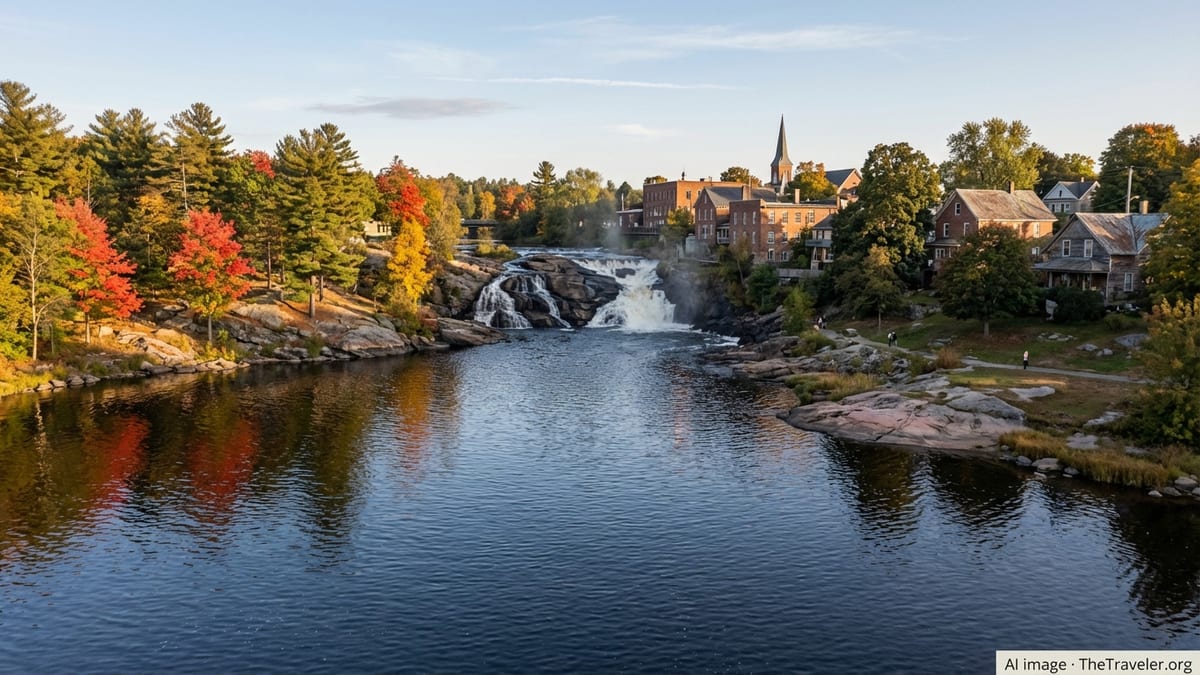
The Heart of Muskoka: Setting and Seasonal Atmosphere
Bracebridge is often described as the heart of Muskoka, both for its central location and for the way the town is wrapped around the Muskoka River. The river’s north and south branches weave through rocky Canadian Shield before flowing into Lake Muskoka, creating an environment where water is rarely out of sight for long. The main streets sit on a rise above Bracebridge Bay, giving many downtown viewpoints a natural overlook of the falls and the river below.
The town is a true four-season destination. Spring brings rushing water and fresh green along the riverbanks, a favourite time for photographers chasing high-flow waterfalls. Summer is peak cottage-country season, when docks fill with boats, patios hum with conversation and swimming spots on Lake Muskoka and along the river become daily rituals. In autumn, Muskoka is widely regarded as one of Canada’s standout leaf-viewing regions, and the rugged hills around Bracebridge glow with maple reds and birch gold. Winter shifts the focus to snow sports, with cross-country ski and snowshoe trails, frozen waterfalls and festive events that make the cold feel like part of the adventure.
Despite its wilderness backdrop, Bracebridge keeps a practical, low-key feel. Visitors find independent cafes, outfitters, and local markets within walking distance of the riverfront parks and trailheads. The town’s compact size means you can have breakfast downtown, walk to a waterfall lookout before lunch, and be launching a canoe onto the Muskoka River by afternoon, all without long drives or complicated logistics.
Waterfall Highlights: From Downtown Cascades to High Falls
Bracebridge’s waterfalls are central to its identity, shaping both the landscape and the town’s character. The best introduction is Bracebridge Falls, a wide curtain of water that drops through a dam and over a rock ledge directly below the historic downtown. The falls empty into Bracebridge Bay, framed by the town’s silver-colored bridge and flanked by walking paths that showcase different perspectives on the rushing water. This is one of the most photographed spots in town, and in high flow the sound of the river is audible from the main street.
Just a short drive north of downtown, Wilson’s Falls offers a somewhat wilder feel while still being easy to access. Here the Muskoka River narrows and bends through exposed granite, with frothing whitewater tumbling over a series of ledges. The Wilson’s Falls Trail follows the riverbank, offering multiple lookouts and a good sense of the Canadian Shield landscape. The combination of mossy forest, pink and gray rock and churning water is particularly striking in spring and after heavy rains, though the area remains scenic even during lower summer flows.
For sheer drama, High Falls on the north branch of the Muskoka River is one of the most impressive waterfalls in the region. Often nicknamed the “Niagara of the North,” the main drop plunges over a steep rock face, and the surrounding site includes several additional cascades such as Muskoka Canyon Falls, Little High Falls and Potts Falls. Trails, open rock slabs and picnic areas allow visitors to choose between close-up viewing at river level and higher vantage points where the power of the water and the scale of the gorge become clear. The area is also part of the Trans Canada Trail corridor, which hints at its importance as a natural waypoint for hikers and cyclists.
Together, these sites form a compact waterfall circuit that can be comfortably explored over one or two days. Some visitors build entire trips around “chasing waterfalls,” pairing scenic stops with picnics, short hikes and swims depending on the season. With several falls just minutes from services in town, you can easily intersperse nature time with coffee breaks, brewery visits or gallery stops, keeping the pace flexible and relaxed.
Lakes, Rivers and Classic Muskoka Waterfronts
While waterfalls grab attention, it is Bracebridge’s broader network of lakes and rivers that defines daily life and recreation. The Muskoka River is ever-present, flowing directly through town and offering miles of navigable water for paddlers and boaters. Its sheltered channels, gentle bends and occasional portages make it suitable for a wide range of abilities, from beginners renting canoes for the first time to experienced paddlers planning multi-hour explorations.
Lake Muskoka, one of Ontario’s most storied cottage-country lakes, lies just west of Bracebridge. With its rocky shorelines, pine-covered islands and wide-open bays, the lake has long drawn seasonal residents and visitors who come for swimming, boating, fishing and sunset cruises. Public access points around Bracebridge, including Kirby’s Beach and Bowyer’s Beach, give day-trippers a way to experience the lake without owning a cottage or boat. Shallow entry, sandy sections and picnic areas make these beaches especially popular with families in the warmer months.
Closer to downtown, Bracebridge Bay Park and Annie Williams Memorial Park bring the waterfront right into the heart of town. Bracebridge Bay Park sits below the main street at the base of the falls, with docks, green space and a small beach where people swim, launch canoes or simply sit and watch the water. Annie Williams Memorial Park, on the south branch of the river, spreads across a gentle riverside landscape with open lawns, shade trees and a sandy edge that functions as a casual community beach. These parks double as event venues and quiet retreats, depending on the day and time of year.
Beyond the well-known lakes, smaller ponds and back channels of the river offer quieter escapes. On early summer mornings, mist can linger above still water where loons call and kayakers glide past granite outcrops. In autumn, reflections of orange and red hillsides ripple across the lake surface, creating some of the region’s most memorable views. Whether you explore by rental boat, guided tour or your own paddlecraft, the combination of shield rock, tall pines and clear water is quintessentially Muskoka.
Trails, Parks and Land-Based Adventures
Bracebridge’s network of trails and parks makes it easy to explore the surrounding forest and rock without venturing far from town. The Wilson’s Falls Trail, following the Muskoka River’s north branch, is a favourite for its mix of river views, forest sections and exposed rock ledges. It is a good introduction to the Canadian Shield landscape, giving hikers a feel for the roots, rocks and short climbs that define so many Muskoka routes.
Another key hub is the Bracebridge Resource Management Centre, a large greenspace on the outskirts of town with about 19 kilometres of multi-use trails. In warmer months, these paths are popular with hikers, trail runners and mountain bikers, who appreciate the mix of double-track and more technical single-track through mixed forest. In winter, the same area transforms into a groomed cross-country ski and snowshoe trail network, with options suited to both beginners and more experienced visitors looking for a solid workout.
Closer to the downtown, the Downtown Historic Walkway loops around the riverfront and Bracebridge Bay, blending gentle walking with interpretive stops about local history and landmarks. This route is ideal for those who want a softer adventure, combining riverside views with cafes and shops. Families often combine a stroll along the walkway with playtime in nearby parks and an ice cream stop on warm days.
Further afield, regional routes such as the Great Lakes Waterfront Trail and sections of the Trans Canada Trail connect Bracebridge to surrounding communities and lakes. Cyclists in particular use these corridors to create day rides that take in Lake Muskoka viewpoints, quiet rural roads and occasional detours to waterfalls. The result is a trail system that supports everything from a half-hour stretch of the legs to full-day bike or hike excursions.
Four-Season Outdoor Activities and Adventure Culture
Outdoor life in Bracebridge shifts with the seasons, and part of the town’s appeal is the way residents and visitors embrace that change. In spring, rising water levels and warming temperatures bring paddlers back to the Muskoka River, while hikers return to trails that were snow-covered only weeks before. Early wildflowers and the roar of snowmelt-fed waterfalls make this a rewarding time for those who do not mind a bit of mud.
Summer is shaped by the lake and river. Swimming, stand-up paddleboarding, canoeing and kayaking dominate the waterfront, supported by local rental shops and outfitters. Anglers target bass, pike and other species on Lake Muskoka and along the river, often launching at public access points near town. Golf courses in and around Bracebridge open for the season, and many visitors balance time on the fairways with late-afternoon dips at nearby beaches. Long daylight hours encourage evening walks along the river or relaxed bike rides on quiet roads.
Autumn is perhaps the most visually striking season. Muskoka has gained a reputation for dramatic fall colours, and the hills around Bracebridge often peak in late September or early October. Hikers and photographers gravitate to viewpoints near Wilson’s Falls, High Falls and the Strawberry Point Trail system, where rock outcrops provide natural lookouts over lakes and forests. Cool, clear air and fewer insects make this a comfortable time to be outside, and water levels often remain high enough to keep waterfalls photogenic.
Winter brings its own set of possibilities. The Bracebridge Resource Management Centre grooms cross-country ski trails that draw locals and visitors looking for classic and skate-ski loops. Snowshoeing and fat biking are also part of the winter trail mix, offering slower-paced ways to explore snow-covered forest. Outdoor skating rinks at venues such as Memorial Park and Annie Williams Memorial Park add an old-fashioned, community-focused charm: evening skates under string lights, families teaching children to balance on blades, and pickup games of hockey when conditions allow. Snow-covered pines and partially frozen waterfalls round out the scenery.
Downtown Character, Food Stops and Rainy-Day Options
For all its outdoor focus, Bracebridge’s downtown is an essential part of the experience. The town centre sits on a hill above the river, with heritage brick buildings, church spires and historic homes that hint at its late 19th-century roots. Many visitors start or end their day here, grabbing coffee before heading to the trailhead or settling into a restaurant patio after time on the water.
Local cafes, pubs and restaurants often highlight regional ingredients, from simple baked goods and hearty breakfasts to more refined dinners that showcase Ontario produce. A small but lively craft beer scene adds another dimension, with local breweries pouring seasonal ales and hosting events when the calendar fills in spring and summer. Markets, specialty food shops and seasonal farmers’ markets give self-catering travelers access to fresh produce, cheeses and treats that translate well to lakeside picnics or cottage decks.
When the weather turns, museums, galleries and studios across Muskoka provide indoor diversions within an easy drive. While some attractions are seasonal or operate on reduced hours outside summer, there are usually enough options to build a day that blends short walks in drizzle with warm, dry stops at cultural venues. Many lodging properties, including inns overlooking the river and cottage-style resorts, lean into the cozy side of the region with fireplaces, reading nooks and views that let you enjoy the outdoors without stepping outside.
Events and festivals contribute to downtown’s energy, especially during peak seasons. Winter carnivals bring snow sculptures, tube runs and family-friendly games, while warmer months see music, arts and food-focused gatherings that spill into parks and streets. For visitors, aligning a trip with one of these events can add a layer of local flavour to an already nature-rich itinerary.
Planning Your Visit: Practical Tips and Responsible Travel
Planning a Bracebridge getaway starts with timing. July and August are the busiest, with warm lake temperatures, fully open services and a classic cottage-country atmosphere. Shoulder seasons in late spring and early fall can be equally rewarding, with fewer crowds, cooler temperatures ideal for hiking and opportunities to see waterfalls at higher flow. Winter visits suit those keen on skiing, snowshoeing and skating, as well as travelers who enjoy quieter roads and the soft light of short days.
Accommodation options range from hotels and riverside inns to cottage resorts and campgrounds, including sites near major waterfalls and along the river. Booking ahead is recommended during summer and popular holiday periods. If you plan to camp, be prepared for cool nights even in late spring and early fall, and confirm whether your chosen site has amenities such as showers and electrical hookups or is more rustic.
Getting around typically involves a car, which makes it easier to link downtown with more remote trailheads, lakes and viewpoints. Within the town core, many attractions are walkable, especially around the falls and Bracebridge Bay. Cycling is feasible for confident riders, though some regional roads can be busy in peak season; quieter side routes are often available for those who plan ahead and are comfortable with varied surfaces.
Responsible travel is an important part of enjoying Bracebridge’s natural assets. Visitors are encouraged to follow leave-no-trace principles, stick to marked trails to protect vegetation and shoreline, and respect seasonal closures or signage around fast-flowing water. Water levels and currents can vary significantly through the year, so caution is needed when swimming near river mouths or close to waterfalls. Paying attention to local guidance, packing out all garbage and being considerate of residents and other travelers helps preserve the region’s character for future visitors.
The Takeaway
Bracebridge offers a concentrated dose of Muskoka’s best qualities: thundering waterfalls, island-dotted lakes, pine-framed horizons and a culture that celebrates time outside in every season. The town’s compact layout and easy access to both river and lake make it unusually convenient for travelers who want to shift between café patios, trailheads and swimming spots without long drives. Whether you come for a weekend of waterfall walks, a week of paddling and beach days, or a winter escape built around skis and skates, Bracebridge leaves a vivid impression of Canadian cottage country at its most accessible.
For visitors who appreciate a balance of comfort and adventure, this is a place where you can sip local coffee above the falls in the morning, drift on a calm bay of Lake Muskoka by afternoon and watch the sunset from a riverside park in the evening. The combination of natural drama and small-town warmth is what keeps people returning year after year. If waterfalls, lakes and outdoor activities sit high on your travel wish list, Bracebridge deserves a spot near the top.
FAQ
Q1. Where is Bracebridge located?
Bracebridge is a town in Ontario’s Muskoka region, roughly a two-hour drive north of Toronto, set along the Muskoka River near the eastern shore of Lake Muskoka.
Q2. What is Bracebridge best known for?
Bracebridge is best known for its waterfalls, especially Bracebridge Falls, Wilson’s Falls and High Falls, as well as its access to Lake Muskoka and year-round outdoor recreation.
Q3. When is the best time to visit Bracebridge for waterfalls?
Late spring and early summer are often the most impressive times for waterfalls, when snowmelt and seasonal rains keep water levels higher and flows more dramatic.
Q4. Can I swim near the waterfalls in Bracebridge?
Swimming directly at waterfall bases is usually discouraged due to strong currents and slippery rocks, but designated beaches and calmer sections of the river and lake nearby offer safe swimming areas.
Q5. Are there easy hiking trails suitable for families?
Yes. Shorter, relatively gentle options include sections of the Wilson’s Falls Trail, the Downtown Historic Walkway around Bracebridge Bay and some loops at the Bracebridge Resource Management Centre.
Q6. Do I need a car to explore Bracebridge?
A car is very helpful for reaching waterfalls, trailheads and lake access points spread around town, though the downtown core, Bracebridge Falls and nearby parks are walkable once you are in the centre.
Q7. Is Bracebridge a good winter destination?
Bracebridge offers groomed cross-country ski trails, snowshoe and fat bike routes, outdoor skating rinks and winter events, making it an appealing choice for cold-season travel.
Q8. Can I rent kayaks, canoes or paddleboards in Bracebridge?
Yes. Local outfitters and rental shops typically provide kayaks, canoes, stand-up paddleboards and sometimes guided trips on the Muskoka River and nearby lakes, especially in summer and early fall.
Q9. Are there family-friendly beaches in Bracebridge?
Kirby’s Beach and Bowyer’s Beach on Lake Muskoka, as well as riverside areas at parks like Annie Williams Memorial Park, are popular with families for their shallow water and picnic space.
Q10. How long should I plan to stay in Bracebridge?
A weekend allows time to see the main waterfalls and explore the riverfront, while three to five days lets you combine multiple hikes, paddling outings, beach visits and downtown experiences at a relaxed pace.