

More news on this day
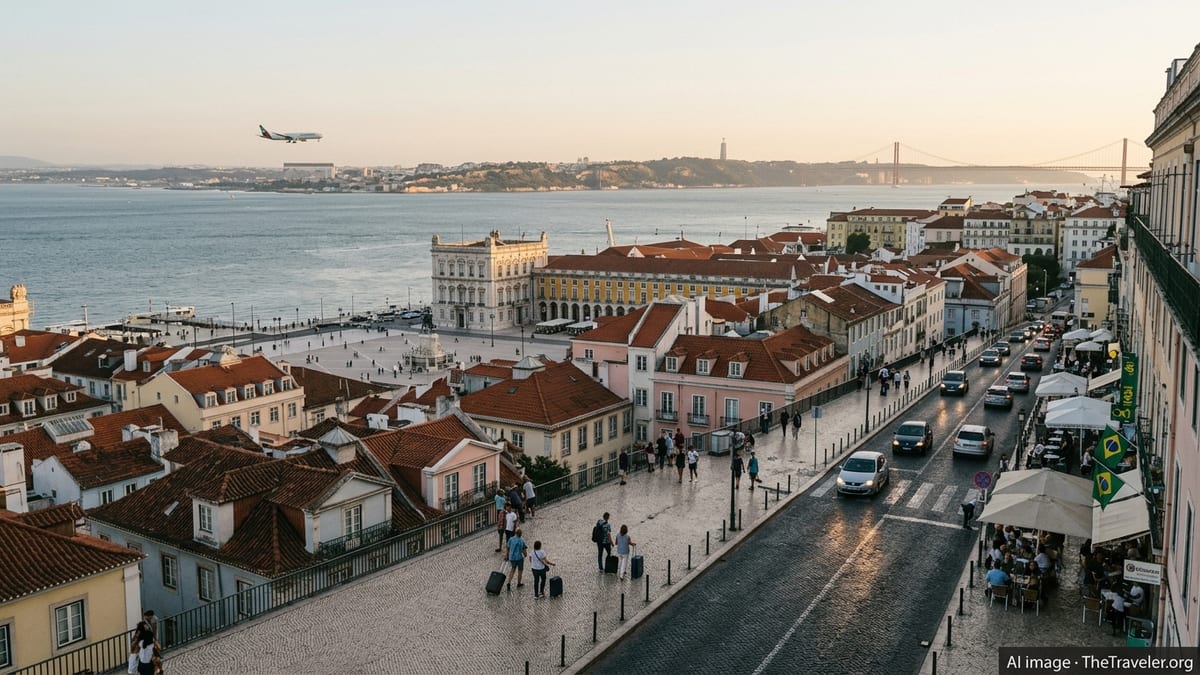
Brazil has surged to the forefront of Portugal’s tourism landscape in January 2026, posting the strongest growth among major source markets and helping to push arrivals and overnight stays in Lisbon, Porto and the Algarve to fresh records, according to newly released statistical data and sector analyses.
Get the latest news straight to your inbox!
Brazil Outpaces Traditional Heavyweights in Early 2026
Recent tourism indicators for January 2026 point to Brazil as Portugal’s standout growth market, with year-on-year increases in Brazilian overnight stays surpassing those of traditional European and North American sources such as the United Kingdom, France, Germany, Spain, Canada and the United States. Sector summaries of official figures highlight Brazil among the top contributors to the overall rise in non-resident demand at the start of the year, contrasting with softer or even negative trends from some long-established markets.
Analysis of Portugal’s tourism performance shows that while the United Kingdom and Spain still account for a significant share of total foreign overnight stays, their growth rates have moderated compared with the double-digit expansion logged by Brazil. Information compiled from recent tourism outlooks indicates that Brazilian demand in January grew by more than 3 percent versus the same month a year earlier, outpacing the aggregate rate for most of Portugal’s key inbound markets.
This shift follows several years during which English, French, Spanish and German travellers dominated Portugal’s arrival tables. Data released in early 2026 on the full year 2025 still places these countries among the leading markets by volume, yet January’s numbers suggest a marked rebalancing in momentum toward Brazil as a driver of incremental growth.
Observers note that the renewed strength of Brazil’s outbound travel coincides with record-breaking tourism indicators inside Brazil itself, where international visitor numbers and sector revenues reached new highs in 2025. That dynamic appears to be feeding into stronger two-way flows with Portugal, helped by deep cultural and linguistic ties.
Record Arrivals and Stays Across Lisbon, Porto and the Algarve
The Brazilian surge arrives in tandem with new peaks for Portugal’s main tourism hubs. Recent overviews of accommodation statistics show that January 2026 brought the highest levels of guests and overnight stays on record for that month in Lisbon, Porto and the Algarve, building on a run of historic highs in 2024 and 2025.
In Lisbon, hotel and short-stay establishments reported robust occupancy supported by both leisure and business segments. Published breakdowns indicate that non-resident guests accounted for the majority of overnights in the capital, with Brazil climbing further up the ranking of foreign markets supplying visitors to the city’s historic neighbourhoods, riverside districts and conference venues.
Porto and the wider North region also registered solid gains. Tourism dashboards summarising official data highlight this part of the country as one of the fastest-growing for overnight stays, with international markets taking a growing share. Brazilian travellers featured prominently in this expansion, drawn to the city’s wine culture, riverfront scenery and increasingly diverse hotel stock.
In the Algarve, long popular with British, Irish and central European holidaymakers, January is traditionally a quieter month. Even so, accommodation statistics point to higher guest numbers and improved occupancy compared with the same period a year earlier, supported in part by Brazilians extending European itineraries with off-season stays on the southern coast.
What Is Driving Brazil’s Rising Demand for Portugal
Several structural and cyclical factors appear to be underpinning the acceleration in Brazilian tourism to Portugal at the start of 2026. Publicly available travel and aviation data show an expansion of direct and one-stop air connections between major Brazilian cities and Portuguese gateways, particularly Lisbon and Porto, following route additions and capacity increases in recent seasons.
Currency trends have also played a role. While exchange rates have fluctuated, Portugal’s relative affordability within the euro area, combined with targeted promotional campaigns in Brazil, has strengthened its position as a value-driven European destination for Brazilian middle-class travellers. Reports on tourism spending patterns suggest that visitors from Brazil are concentrating outlays on urban culture, gastronomy and shopping, sectors in which Lisbon and Porto have invested heavily in recent years.
Demographics and migration links further reinforce demand. Official population and immigration studies show that Brazilians constitute one of the largest foreign communities resident in Portugal, creating a base of family ties and repeat visits. Travel analysts point out that this diaspora effect often supports resilient traffic flows even when broader economic conditions are mixed.
At the same time, Brazil’s own tourism industry has been experiencing record inflows and higher international visibility since 2024 and 2025, increasing overall travel propensity among Brazilian consumers. As outbound travel recovers and diversifies, Portugal’s shared language, historical connections and perceived safety have combined to make it a natural first step into or back to Europe.
Shifting Hierarchies Among Portugal’s Source Markets
The strong start to 2026 for Brazil comes against a backdrop of more varied performances from other major origin countries. Official tourism statistics for 2024 and 2025 identified the United Kingdom, Germany, Spain, France and the United States as among Portugal’s largest markets in absolute terms, but recent monthly comparisons show moderating or declining growth for some of these sources.
Sector summaries of the January 2026 figures highlight that markets such as France and the United Kingdom recorded year-on-year drops in overnight stays, even as overall non-resident demand continued to rise. Canada has emerged as another fast-growing market, yet the rate of expansion from Brazil in the latest monthly data remains among the highest, pushing it ahead of several European peers when ranked by growth.
This reordering is particularly visible in the urban tourism mix. Travel intelligence platforms referencing official data note that in Greater Lisbon and parts of the North region, long-haul markets including Brazil and the United States are now competing closely with European neighbours for share of non-resident overnights. In some submarkets and specific months, Brazilian stays have already exceeded those from traditional leaders such as France, Germany or Spain.
Analysts stress that the trend reflects not a collapse in European demand but a diversification of Portugal’s tourism base. As the country consolidates its reputation as a year-round destination, the composition of visitors is widening, with Latin American and North American markets taking on a more prominent role during off-peak periods.
Implications for Portugal’s Tourism Strategy in 2026
The outperformance of Brazil and the accompanying records in arrivals and overnight stays for January 2026 are feeding into broader conversations about Portugal’s tourism strategy. Publicly available planning documents and investment reports from the sector emphasise goals of balancing growth with sustainability, extending seasonality and spreading benefits beyond the most visited areas.
Within that context, Brazil’s rise as a leading growth market offers both opportunities and challenges. On the one hand, higher demand from a culturally close, long-haul market supports airline connectivity, hotel performance and urban services, particularly in Lisbon, Porto and resort corridors in the Algarve. On the other, it underscores the need to manage pressures on housing, infrastructure and heritage areas that are already under strain from tourism and inward migration.
Destination managers are placing greater emphasis on dispersing visitors to secondary cities and inland regions, while continuing to promote the classic urban and coastal hubs. With Brazilians showing growing interest in wine tourism, nature experiences and cultural routes, there is scope to guide this demand toward lesser-known parts of the country and lengthen average stays.
Looking ahead to the rest of 2026, tourism analysts will be watching whether Brazil can sustain its early-year lead in growth and how traditional European markets respond. For now, the January data signal a notable milestone: Brazil has moved from an important yet secondary source to one of the most dynamic forces reshaping Portugal’s tourism map.