

More news on this day
Brazil’s aviation network is experiencing a fresh spell of turbulence as major carriers Azul, GOL, and LATAM implement sizable flight cancellations and schedule cutbacks, testing the resilience of domestic and regional connectivity.
Get the latest news straight to your inbox!
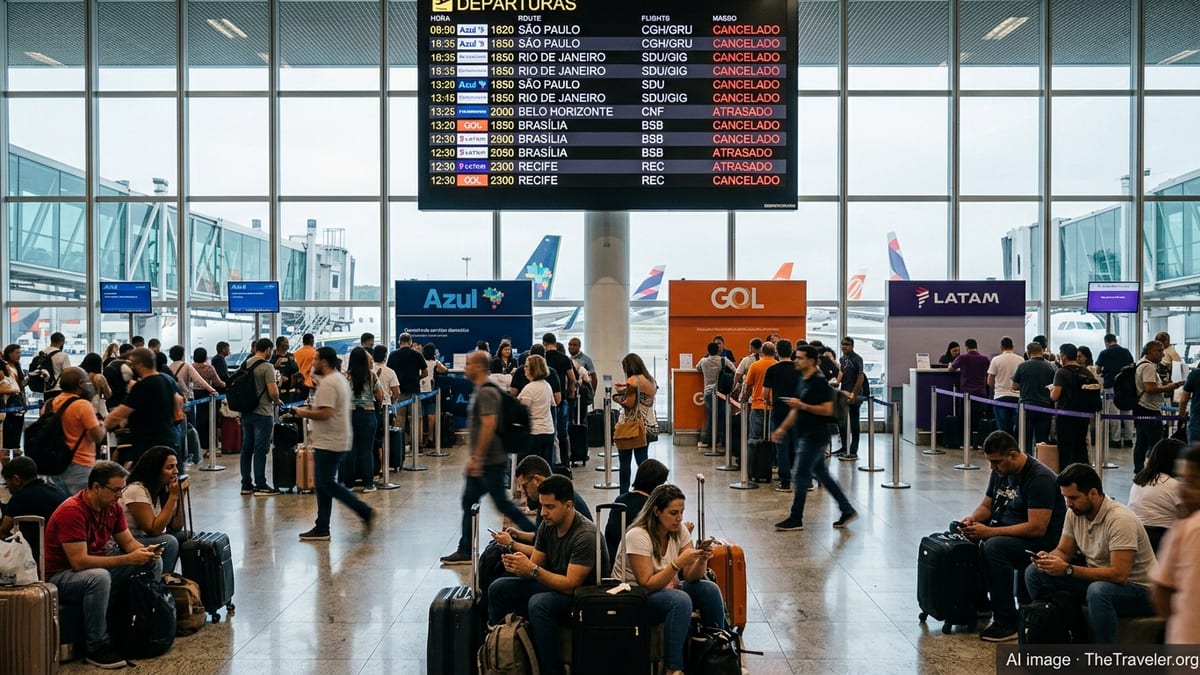
Image by Nomad Lawyer
Azul’s Restructuring Ripples Across Smaller Cities
Azul, Brazil’s largest airline by number of destinations served, is at the center of the current disruption as it pushes through an aggressive financial and fleet restructuring. Public filings and industry analyses indicate that the carrier has been working to trim debt while exiting older aircraft leases and concentrating capacity on its strongest routes. Recent disclosures in early 2026 describe Azul’s efforts to simplify its fleet and return grounded aircraft, leaving less slack to absorb operational shocks.
These strategic shifts have translated into a notable wave of cancellations and suspensions on thinner domestic routes. Earlier decisions to suspend flights to smaller and mid-size Brazilian cities, along with more recent timetable cuts, have reduced options for travelers in interior regions that depend heavily on Azul’s network for access to major hubs. Reports indicate that cancellations have been concentrated at secondary airports as the airline reallocates aircraft toward higher-yield corridors.
Aviation and financial reports suggest that Azul’s route decisions are being driven by a combination of high financing costs, currency pressures, and the lingering impact of earlier fleet grounding and maintenance bottlenecks. With limited backup aircraft and tight schedules, any unplanned maintenance can quickly cascade into multiple cancellations across the day, particularly in Brazil’s congested late-afternoon and evening banks.
Analysts following the carrier note that Azul’s retrenchment underscores a wider structural challenge for Brazil’s air transport system: much of the country’s vast interior now relies on a single primary carrier for regular service. When that airline trims frequencies or cancels flights, there are few alternative options, leaving communities exposed to sudden loss of connectivity.
GOL’s Operational Strain Adds Pressure at Major Hubs
GOL, one of Brazil’s largest low-cost operators, has also contributed to the current wave of cancellations as it manages its own financial and operational headwinds. Recent data from airport and schedule trackers in early 2026 show clusters of canceled GOL flights centered on São Paulo and Rio de Janeiro, with knock-on effects across the wider domestic network. On some days, observers have recorded more than a dozen GOL cancellations layered on top of significant delays.
The cutbacks come as GOL navigates high leverage levels and seeks to streamline its Boeing 737 fleet. Rating agency assessments and corporate disclosures in recent years have emphasized the carrier’s debt load and the pressure of interest costs, which limit its ability to keep spare aircraft on hand. A smaller pool of backup jets means that technical or crew-related issues can quickly translate into route cancellations, particularly on less profitable frequencies.
Travel reports describe passengers at São Paulo’s Guarulhos and Congonhas airports, as well as Rio de Janeiro’s Galeão, facing abrupt same-day cancellations and last-minute rebookings onto later flights or rival carriers. With Brazil’s peak travel periods often operating near capacity, rebooking options can be sparse, forcing some travelers to accept overnight delays or detours through secondary hubs.
Industry watchers view GOL’s current pattern of cancellations as a symptom of a tight operating model with little margin for error. The combination of high utilization, limited standby aircraft, and intense competition on trunk routes has left the airline vulnerable to even minor disruptions, which then ripple through Brazil’s already stretched airport infrastructure.
LATAM Balances Growth Plans With Midweek Disruptions
LATAM, the region’s largest airline group and a dominant player in Brazil, has simultaneously been pursuing ambitious capacity growth while contending with pockets of cancellations and delays. The Brazilian arm of the group outlined plans to expand international capacity from the country into 2026, adding new flights and boosting weekly frequencies on key routes. Yet, operational data and traveler accounts from late 2025 into early 2026 show that LATAM’s Brazilian network has experienced recurring waves of midweek cancellations on both domestic and short-haul regional services.
Publicly available disruption tallies highlight periods when multiple LATAM departures from major Brazilian airports were canceled within tight windows, often around holidays or high-demand stretches. These disruptions have typically affected a mix of business-heavy routes linking São Paulo and Rio to southern Brazil, as well as connections to neighboring countries. The cancellations, combined with delays on other services, have complicated connections with LATAM’s growing long-haul network.
Operational incidents elsewhere in the group, including technical events involving widebody aircraft, have also underscored the sensitivity of LATAM’s schedule to fleet availability. When a long-haul aircraft remains out of service, the resulting rotation changes can reverberate back into the Brazilian domestic system, forcing tactical cancellations to rebalance crews and aircraft.
Analysts note that LATAM’s strategy in Brazil is focused on rebuilding and growing international connectivity after restructuring, but that ambition depends on precise coordination between domestic feed and long-haul departures. Any disruption on either side of that equation can quickly lead to schedule thinning or the cancellation of lower-priority frequencies.
Passengers Face Longer Delays and Shrinking Alternatives
The combined impact of cancellations at Azul, GOL, and LATAM is being felt most sharply by passengers facing longer travel times and fewer alternatives, especially away from Brazil’s largest hubs. Consumer-oriented travel reports and social media accounts describe travelers stranded overnight after back-to-back cancellations, with rebooked itineraries sometimes involving multi-stop routings or departures several days later.
Observers note that Brazil’s domestic market remains concentrated among these three carriers, which limits competition on many routes. When all three airlines trim capacity or cancel flights on similar days, options narrow quickly, particularly on cross-country journeys that require connections. This dynamic has been evident during recent disruption waves, when simultaneous cancellations by more than one carrier have pushed remaining flights to full or near-full loads.
Passenger rights frameworks in Brazil provide for assistance in cases of significant delay or cancellation, but practical access to compensation or rerouting can be uneven in crowded terminals. Traveler accounts frequently highlight long lines at service desks and difficulties contacting call centers when widespread disruption is underway. In some instances, passengers have turned to third-party travel agencies or online intermediaries to secure workable rebookings.
Travel advisors monitoring the situation recommend that passengers build extra buffers into itineraries within Brazil, particularly when connecting to international flights. They also suggest checking flight status multiple times on the day of travel and being prepared with backup options, such as alternative airports or overnight stays, when flying with any of the three major carriers during peak periods.
Regulatory Scrutiny and Market Outlook for Brazil’s Skies
Brazil’s aviation regulators and competition authorities are watching the evolving situation as the country’s three dominant carriers reshape their networks. Official documents and policy discussions in recent years have emphasized the importance of maintaining connectivity to smaller cities and regional capitals, even as airlines pursue commercial restructuring and cost-cutting. The latest cancellation waves are intensifying debate over how to balance financial sustainability for carriers with reliable service for passengers.
Industry reports indicate that policymakers are weighing tools such as targeted subsidies, public service obligations on critical routes, and incentives for new entrants, including regional or low-cost competitors. However, high operating costs, currency volatility, and infrastructure constraints have historically limited the willingness of new airlines to challenge established players at scale in Brazil’s vast domestic market.
At the same time, global aviation outlooks for 2026 identify Brazil as a growth market, with rising demand for both leisure and business travel as the broader economy stabilizes. Azul, GOL, and LATAM all have medium-term plans that hinge on a more profitable and efficient network, suggesting that the current patchwork of cancellations may be part of a transition toward leaner, more focused operations.
For now, travelers and industry observers see an aviation sector caught between recovery and restructuring. While Brazil’s skies remain busy and key corridors are still well served, the recent pattern of cancellations from Azul, GOL, and LATAM highlights how vulnerable the system is to financial and operational stress, and how quickly those pressures can spill over into the travel plans of millions of passengers.