

More news on this day
More than 50 commercial flights across Brazil have been cancelled in a fresh wave of travel disruption affecting major routes to São Paulo, Brasília, Rio de Janeiro, Salvador and other key cities, according to airline operation data and local media reports.
Get the latest news straight to your inbox!
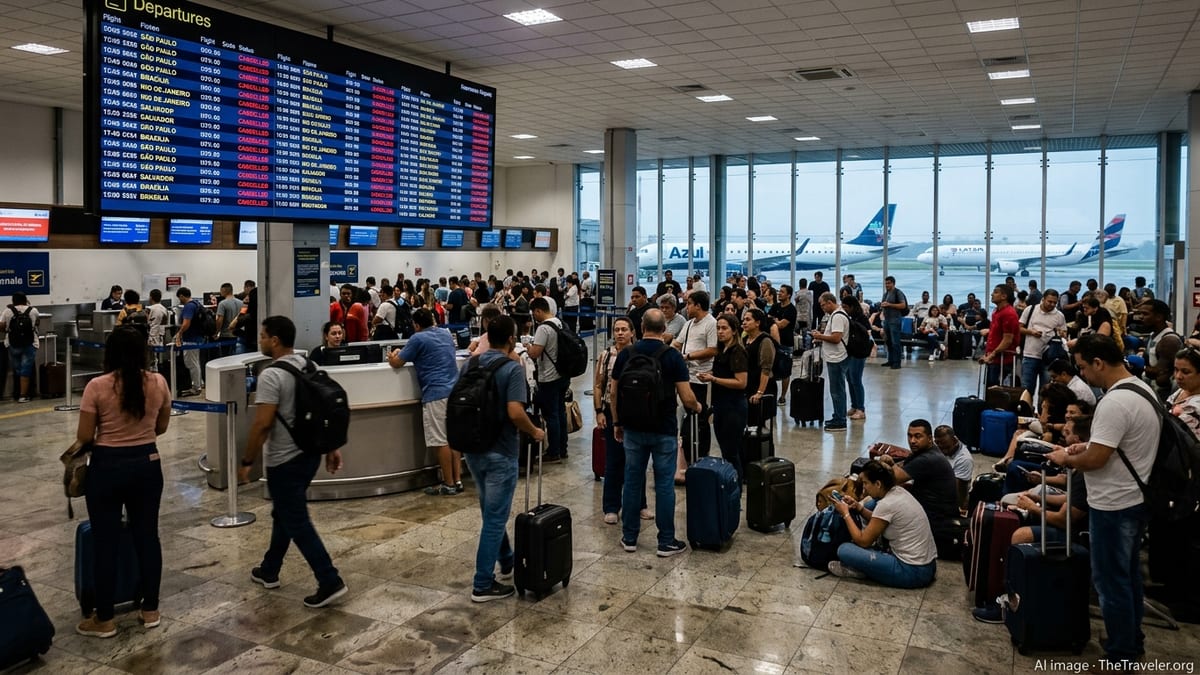
Wide-Ranging Cancellations Hit Brazil’s Air Network
Publicly available tracking data and Brazilian news coverage indicate that dozens of flights were cancelled in a short period, disrupting both domestic and regional links. The cancellations span multiple carriers, including TAM, Azul, LAN and ACN, and are concentrated on high-traffic corridors connecting Brazil’s largest metropolitan areas.
The affected services include routes to São Paulo’s main gateways, Brasília’s federal capital hub, Rio de Janeiro’s airports and the northeastern city of Salvador. Disruptions have also been reported on links to secondary cities that depend on these hubs for onward connections, resulting in missed itineraries and extended layovers for many travelers.
Early assessments point to a combination of operational and weather-related factors, along with knock-on effects from earlier delays that left aircraft and crews out of position. Airline schedules in Brazil are heavily interlinked, and problems on a small number of flights can quickly cascade across the network, especially on popular business and leisure routes.
While the total number of cancelled flights remains fluid as schedules adjust, current tallies indicate that the figure has passed 50 sector-wide. This level of disruption is significant for a single operational period in Brazil’s competitive domestic aviation market and is being closely watched by travel industry observers.
Major Routes to São Paulo, Brasília, Rio and Salvador Affected
São Paulo, which is served by Guarulhos and Congonhas airports, has experienced a sizeable share of the cancellations. These facilities function as primary gateways for both domestic and international travel, so schedule changes on services to and from the city often have amplified consequences for connecting passengers.
Brasília, the country’s political center and an important domestic hub, has also seen multiple flights removed from schedules. Cancellations on Brasília routes can be particularly disruptive for business travelers and government-related journeys, as many same-day round trips rely on tightly timed departures and arrivals.
In Rio de Janeiro, disruptions have been reported at the city’s key airports, affecting links with São Paulo, the northeast and the interior. These corridors are central to both corporate itineraries and tourism, and cancellations can force passengers to rebook through alternative cities or accept longer travel times.
Salvador and other northeastern destinations are likewise feeling the impact of the cancellations, with some travelers facing overnight delays or re-routing through distant hubs. For long-haul visitors using São Paulo or Rio de Janeiro as entry points before continuing to the northeast, these network adjustments can significantly complicate trip planning.
Multiple Carriers Confront Operational Strain
The involvement of several major carriers, including TAM, Azul, LAN and ACN, underscores how widespread the disruption has become. Publicly accessible data suggests that no single airline is solely responsible for the cancellations, indicating that shared external factors and tight operational margins are playing a role.
TAM and LAN, which handle a substantial share of Brazil’s scheduled traffic on trunk routes, are prominent on the list of affected services. Their cancellations on dense city pairs such as São Paulo to Brasília and Rio de Janeiro can rapidly ripple through schedules when aircraft rotations and crew duties are pushed out of sequence.
Azul, known for its extensive domestic network and service to secondary airports, is also facing adjustments across several routes. Because many smaller cities rely on Azul connections to reach major hubs, the impact can be especially acute for travelers with limited alternative options or fixed onward connections.
ACN-operated flights contribute a further layer of complexity to the situation, particularly where code-share and interline agreements are involved. When one carrier adjusts its schedule, partner airlines can be forced to modify their own operations, leading to additional cancellations or equipment changes beyond the initial disruption.
Passenger Experience and Airport Conditions
Reports from Brazilian airports indicate that the wave of cancellations has led to longer queues at check-in counters and rebooking desks, as passengers seek alternative flights. Crowded gate areas, busy customer service lines and increased demand for last-minute hotel rooms near airports have all been noted as immediate consequences.
Travelers caught in the disruption are experiencing a range of outcomes, from relatively minor schedule shifts to full-day delays. Those on multi-segment itineraries, especially involving connections through São Paulo or Brasília, are particularly vulnerable to missed onward flights when earlier legs are cancelled or significantly delayed.
Airport operations teams are working within the constraints of available runway slots and terminal capacity, which can limit how quickly cancelled flights are replaced or consolidated. When aircraft and crew availability are already tight, options for rapid recovery are reduced, prolonging the period of disruption for both airlines and passengers.
Travel forums and social media posts suggest that some travelers have been able to rebook with rival carriers or reroute via alternative hubs, albeit sometimes at additional expense or with longer travel times. Others have opted to delay non-essential trips entirely, underscoring how short-term volatility in airline operations can quickly influence broader travel decisions.
Guidance for Travelers Heading to or Within Brazil
Travel industry commentators are advising passengers with upcoming flights to or within Brazil to monitor their bookings closely and to check for schedule updates frequently on the day of travel. Same-day adjustments remain possible as airlines rebalance fleets, crew schedules and demand.
Passengers planning connections through São Paulo, Brasília, Rio de Janeiro or Salvador are being encouraged to allow generous minimum connection times where possible, particularly when itineraries involve separate tickets or different carriers. Longer layovers can reduce the risk of missed onward flights if cancellations or delays occur on earlier segments.
Publicly available consumer guidance in Brazil emphasizes that affected travelers should retain documentation such as boarding passes and cancellation notices, which may be relevant when seeking refunds, rebookings or other forms of assistance from airlines. While specific entitlements vary by situation, clear records of disrupted services can support subsequent claims processes.
Travel planners expect airlines to continue adjusting schedules as they work to restore normal operations across Brazil’s major routes. For now, passengers headed to São Paulo, Brasília, Rio de Janeiro, Salvador and other key destinations are being urged to stay flexible, verify flight status before heading to the airport and be prepared for potential last-minute changes.