

More news on this day
Hundreds of travelers in Brazil and abroad faced unexpected disruption this week as cancellations by American Airlines, Gol, Azul and TAM affected a series of high-demand routes linking major Brazilian cities with each other and with international hubs such as Miami, New York and Santiago.
Get the latest news straight to your inbox!
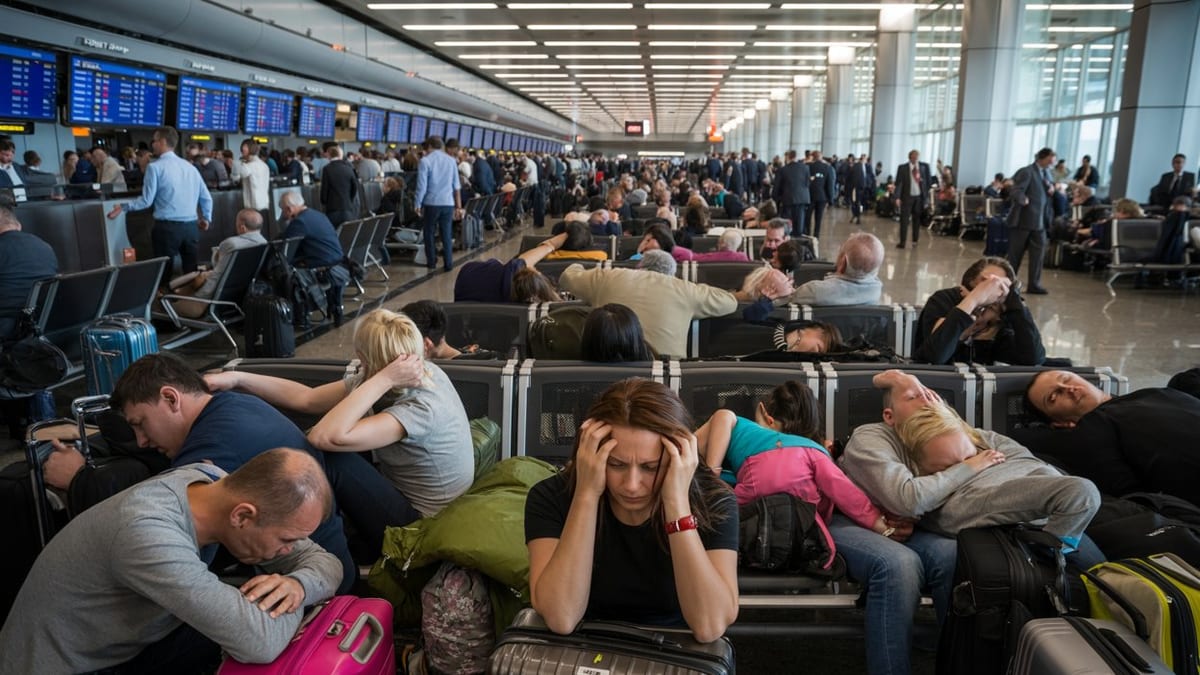
Image by travelandtourworld.com
Multiple Carriers, Concentrated Disruption
Publicly available flight tracking data and media coverage indicate that more than a dozen flights operated by American Airlines, Gol, Azul and TAM were cancelled over a short time frame, creating ripple effects across Brazil’s already busy aviation network. The disruptions centered on Brazil’s largest markets, including São Paulo, Rio de Janeiro and Brasília, but extended to coastal cities such as Recife and international destinations in North and South America.
The cancellations hit routes that are crucial for both business and leisure travel. Services to and from São Paulo’s main international gateway, Rio de Janeiro’s primary airports and the federal capital in Brasília saw schedules trimmed, while long haul links to Miami and New York and regional connections to Santiago also appeared among the affected services.
Preliminary tallies suggest that the number of cancelled flights remains small compared with the hundreds of daily operations handled by the four airlines combined. However, the concentration of cancellations on trunk routes and long haul services means that the impact was felt more acutely by travelers relying on tight connections and limited onward options.
The situation also underscores how intertwined Brazil’s domestic and international air networks have become. Disruptions on a single long haul flight between Brazil and the United States, for example, can cascade into missed domestic connections the following day, amplifying the number of passengers affected despite the relatively limited number of cancellations.
Pressure Points at São Paulo, Rio de Janeiro and Brasília
Brazil’s core aviation hubs bore the brunt of the disruption. At São Paulo, a key gateway for American Airlines as well as Gol, Azul and TAM, cancelled departures and arrivals strained airport resources and left passengers competing for scarce rebooking options on remaining flights. Crowded departure halls and reconfigured departure boards signaled a challenging travel day for those passing through the city.
Rio de Janeiro, which has been working to strengthen its position as an international hub, was also affected. Reduced frequencies and same day cancellations on select domestic and international services disrupted plans for travelers using the city as a transit point to the country’s northeast and south, as well as those connecting onto flights to North America and Chile.
Brasília, the country’s political center and an important domestic connector, saw particular pressure on flights arriving from and departing to other state capitals. The city’s role as a transfer point for passengers connecting between the north, northeast and southeast of Brazil meant that cancellations quickly translated into queues at service counters and mounting demand for alternative itineraries.
Secondary but strategically important airports such as Recife, a major gateway to Brazil’s northeast, also reported cancellations on flights that feed longer haul services. When these links are disrupted, travelers not only lose a point to point option but may also miss onward connections to international destinations, magnifying overall disruption.
Impact on International Links to the United States and Chile
The cancellations were notable for their reach beyond Brazil’s borders. According to airline schedules and tracking services, flights connecting Brazilian hubs to Miami and New York were among those cancelled or re-timed, complicating travel plans for passengers shuttling between South and North America. These routes are heavily used by both tourists and corporate travelers, particularly on weekends and during peak holiday periods.
Miami, long established as a preferred entry point to the United States for Brazilian travelers, is a key station for American Airlines and a connection point for onward flights across North America and the Caribbean. When Brazil bound or US bound services on this corridor are cancelled, many passengers find that same day rebooking options are limited, especially during busy seasons.
New York, another high demand destination, faces similar constraints, with most Brazil services operating at high load factors. A single cancellation can displace hundreds of passengers, who may then be rebooked on indirect routings or delayed until the next available service.
Regional travel within South America was not spared. Routes linking Brazilian hubs to Santiago are important both for leisure travelers exploring the Andes and for business passengers moving between financial centers. The removal of even a handful of frequencies can complicate travel itineraries that rely on carefully timed connections at both ends.
Travelers Face Rebooking Challenges and Longer Journeys
For affected passengers, the most immediate consequence of the cancellations has been the challenge of securing alternative flights in a constrained market. Reports from travelers on social media describe long waits at airline counters, limited same day options and complex rebookings that add extra stops or significant hours to the journey.
Some passengers found themselves rerouted from one Brazilian hub to another before finally boarding a long haul service to the United States, turning what is normally a straightforward overnight flight into a multi-leg itinerary. Others reported being shifted to flights on different days, forcing last minute changes to hotel bookings, ground transportation and work commitments.
On domestic routes, Brazil’s vast geography amplifies the impact of any disruption. Travelers attempting to move between northern and southern regions often rely on hub connections through São Paulo, Rio de Janeiro or Brasília. When a single domestic segment is cancelled, it can leave passengers stranded far from their intended destination with few alternative routes that do not involve significant detours.
Families and leisure travelers, in particular, may find themselves facing out of pocket costs for meals, accommodations or missed prepaid arrangements at their final destination. While each airline has published policies that define when assistance is provided, the process of accessing support can be time consuming during large scale disruptions.
What Passengers Can Do if Their Flight Is Affected
Given the clustered nature of the cancellations and the heavy demand on Brazil’s main air corridors, travelers are being encouraged by consumer advocates to monitor flight status closely and prepare backup plans where possible. Checking airline apps and airport information screens before departure remains one of the most effective ways to stay ahead of last minute schedule changes.
When a cancellation does occur, many airlines allow passengers to rebook through digital channels, which can reduce waiting time compared with queuing at airport counters. However, during periods of widespread disruption, inventory on alternative flights can vanish quickly, making it important to act as soon as updated information becomes available.
Travelers with time sensitive commitments, such as international connections in Miami, New York or Santiago, may benefit from building additional buffer time into their itineraries when routing through Brazilian hubs with high traffic levels. Opting for earlier departures on the same day, when available, can provide more options should delays or cancellations occur.
Observers note that Brazil’s air travel market has been undergoing structural change, with carriers adjusting fleets, restoring or opening new long haul routes and fine tuning domestic capacity. In this context, occasional clusters of cancellations can arise from a mix of operational, weather related and commercial factors. For passengers, the practical priority remains the same: securing a reliable alternative route and minimizing the knock on effects on the rest of their journey.