

More news on this day
A fresh wave of flight cancellations involving American Airlines, Gol, Azul and LATAM is disrupting travel across Brazil, with over a dozen services reportedly grounded and knock-on delays affecting busy routes linking São Paulo, Rio de Janeiro, Brasília, Miami, New York, Recife, Santiago and other key destinations.
Get the latest news straight to your inbox!
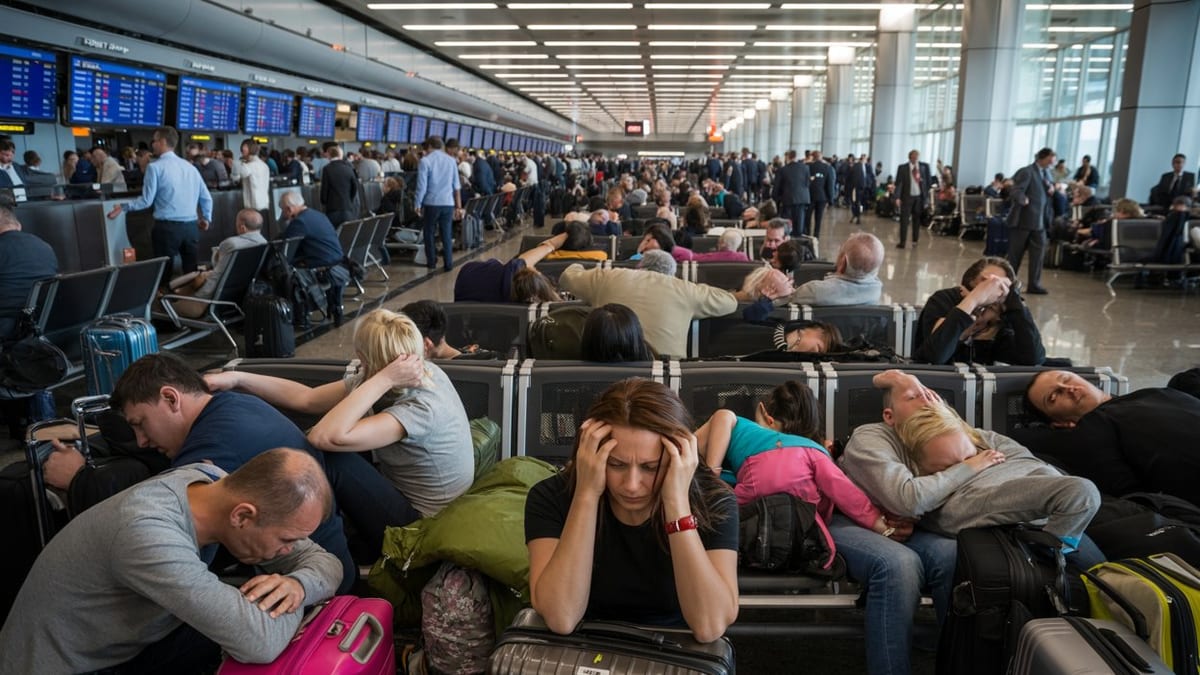
Image by Travel And Tour World
Patchy Operations Across Brazil’s Busiest Hubs
Publicly available flight-tracking data and local media coverage indicate that Brazil’s main aviation hubs, particularly São Paulo and Rio de Janeiro, saw a cluster of cancellations and extended delays as airlines adjusted schedules and rotated aircraft. Disruptions were concentrated at São Paulo–Guarulhos, the country’s principal international gateway, and Rio de Janeiro’s Galeão airport, with additional impacts reported in Brasília and Recife.
Reports indicate that Gol, Azul and LATAM, which together dominate Brazil’s domestic market, each removed multiple flights from their schedules on affected days, forcing passengers onto later departures or alternative routings. The pattern appears uneven rather than a complete shutdown, with certain city pairs seeing several cancellations in quick succession while others continued to operate with limited delays.
International services that feed into these hubs have been hit by the same operational turbulence. According to published schedules, São Paulo–Guarulhos typically handles multiple daily departures to major long haul destinations such as Miami and New York, along with regional links to Santiago and other South American capitals. When aircraft or crews are out of position, even a relatively small number of cancellations can ripple across an already tight timetable.
Passenger accounts shared on social platforms describe long lines at check in, rebooking desks operating at full capacity and aircraft departing with few empty seats as airlines attempt to consolidate travelers from several canceled services onto a smaller number of flights.
American Airlines Cuts Select Brazil and U.S. Services
American Airlines, one of the principal foreign carriers in the Brazil market, has been identified in flight-status reports as canceling a portion of its services linking Brazilian cities with Miami and New York. The airline typically relies on Miami as a primary hub for Brazil traffic, with additional connectivity through New York for both business and leisure travelers.
Available operational summaries suggest that a mix of factors is contributing to the interruptions, including aircraft rotation challenges and broader schedule changes implemented for the current travel season. Some flights between São Paulo and Miami and select services touching Brasília and Rio de Janeiro have appeared as canceled in online status tools, with passengers offered rebooking on later departures where seats are available.
Travel forums and consumer reports point to extended journey times for some travelers as they are routed via alternative U.S. gateways or forced to add extra domestic connections within Brazil. For long haul travelers headed to or from Miami and New York, these changes can turn an overnight transcontinental flight into a multi-stop itinerary spanning more than 24 hours.
Public comments from travelers also highlight instances where flights operated but with significant departure delays after earlier cancellations, reflecting the delicate balance airlines must maintain between recovering disrupted operations and preserving onward connections.
Gol, Azul and LATAM Adjust Domestic and Regional Networks
Within Brazil, Gol, Azul and LATAM have each made tactical withdrawals of flights across their networks, affecting short haul and medium haul routes that underpin national connectivity. These carriers collectively link smaller markets to the country’s main hubs, and sudden cancellations can quickly cascade into missed connections for both domestic and international passengers.
Gol, which maintains a strong presence in Rio de Janeiro and São Paulo, has been associated in recent coverage with operational strains following earlier incidents and schedule overhauls. Adjustments to its timetable, including the cancellation of selected departures, have reportedly affected links to cities such as Brasília and Recife and onward regional routes.
Azul, whose growth strategy is centered on connecting secondary Brazilian cities with larger hubs, has also been named in traveler reports describing last minute cancellations and airport crowding. When Azul removes flights from its schedule, passengers originating in smaller cities often face longer waits for alternative services or must reposition through different hubs to reach their destinations.
LATAM, the largest group in Latin America by network reach, regularly operates high frequency services from São Paulo to Rio de Janeiro, Brasília, Recife and Santiago. On days when over a dozen of these flights are collectively canceled across all major Brazilian airlines, capacity on remaining services can tighten rapidly, especially on trunk routes such as São Paulo to Rio de Janeiro and São Paulo to Santiago.
Knock-on Effects for International and Regional Connectivity
The immediate impact of the cancellations has been felt most acutely by travelers with tight connections in São Paulo, Rio de Janeiro and Brasília. Reports from passengers describe missed onward flights to North America and neighboring South American countries, particularly on routes to Miami, New York and Santiago that rely heavily on timely feeder services from across Brazil.
According to published timetable data, São Paulo–Guarulhos functions as a key connecting point linking dozens of Brazilian cities with long haul services to the United States and Europe. When a feeder flight from a city such as Recife or Brasília is canceled, alternatives are not always available within a convenient window, especially during peak travel days. This can leave travelers facing overnight stays or complete itinerary redesigns.
The current pattern of disruption also has implications for regional links within South America. Flights between Brazilian hubs and Santiago are important for business, tourism and onward connections to the Pacific coast. When airlines cancel or consolidate these services, travelers may find themselves rerouted through alternative gateways or forced to accept lengthy layovers.
Industry analyses note that airlines are operating in a constrained environment, balancing cost control, aircraft availability and crew resources with demand that can surge during holiday periods and major events. In such conditions, even modest schedule changes can produce significant volatility for passengers.
Travelers Face Long Lines, Rebookings and Limited Options
For passengers caught in the middle of the disruption, the experience has been characterized by uncertainty at check in, protracted waits in customer service queues and limited rebooking options on already busy flights. Traveler accounts from Brazilian airports describe screens listing a cluster of canceled departures by American Airlines, Gol, Azul and LATAM alongside remaining flights often marked as “full” or “waitlisted.”
Consumer advocates and travel specialists observing the situation emphasize the importance of monitoring flight status closely, checking in early and maintaining flexible plans when traveling through major Brazilian hubs during periods of irregular operations. They note that same day alternatives may be scarce on trunk routes linking São Paulo, Rio de Janeiro and Brasília with cities like Miami, New York, Recife and Santiago.
Available public information suggests that airlines have been offering standard remedies such as complimentary rebooking on the next available flight, vouchers, or in some cases refunds, subject to individual fare rules and local regulations. However, capacity constraints mean that “next available” can sometimes mean lengthy delays or indirect routings.
As Brazilian carriers and American Airlines work through the current wave of cancellations, travelers connecting through the country’s key hubs are likely to continue experiencing knock-on effects, from crowded terminals to altered itineraries, underscoring the fragility of tightly packed flight schedules across the Brazil and U.S. corridor.