

More news on this day
Travel across Brazil and several key international routes faced fresh disruption on March 31, 2026, as American Airlines, Gol, Azul, and LATAM scrapped more than a dozen flights, affecting passengers bound for major cities including São Paulo, Rio de Janeiro, Brasília, Miami, New York, Recife, and Santiago.
Get the latest news straight to your inbox!
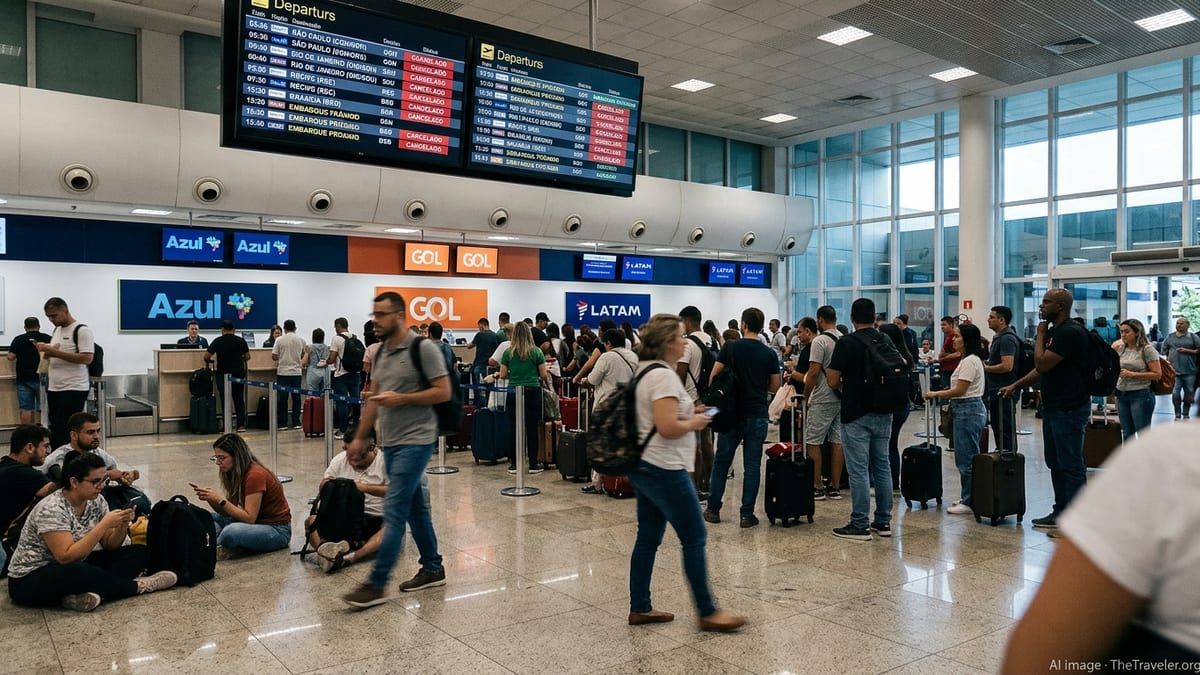
Domestic Hubs in Brazil Bear the Brunt
Publicly available flight-status data and regional aviation coverage indicate that Brazil’s busiest hubs, led by São Paulo–Guarulhos and Rio de Janeiro’s Galeão and Santos Dumont airports, have absorbed much of the latest disruption. Cancellations and rolling delays on March 30 and 31 reduced capacity on trunk routes that link these hubs with Brasília, Recife, Belo Horizonte, and other large metropolitan areas.
São Paulo, which functions as Brazil’s primary domestic and international gateway, saw a cluster of cancellations involving Gol and Azul on high-frequency shuttle routes to Rio de Janeiro and Brasília, according to operational tracking platforms. These corridors are critical for both business and leisure travelers, meaning even a modest percentage of cancelled services can ripple through the national network.
Reports also highlight schedule instability at Rio’s airports, where select Gol and LATAM departures to São Paulo and northeastern cities were removed from timetables or retimed at short notice. Passengers connecting onward from Rio to interior destinations reported missed connections and overnight stays as airlines struggled to rebook on remaining flights that were already heavily booked.
In Brasília, the country’s political capital and a key domestic hub, cancellations of feeder flights from regional centers limited onward options to São Paulo and Rio. Publicly available information shows that some travelers opted to reroute via Belo Horizonte or Salvador when possible, further straining capacity on those alternative links.
International Links to Miami and New York Disrupted
Beyond Brazil’s borders, long haul connections experienced their own wave of disruption. Flight-status portals and recent airline advisories show that American Airlines cancelled or significantly altered multiple services linking São Paulo and Rio de Janeiro with Miami and New York between March 30 and 31. These routes form some of the most heavily used corridors between South America and the United States.
Operational notices circulated in late March point to a combination of aircraft rotation issues and wider North American weather disruption earlier in the month that continued to affect equipment availability. As widebody aircraft remained out of position, American Airlines reduced frequency on select departures, leaving fewer seats for rebooking when individual flights to Miami or New York were cancelled outright.
Gol’s developing long haul network also faced pressure, particularly on flights connecting São Paulo with Miami and other overseas destinations operated through partnerships and codeshare arrangements. Aviation industry briefings note that Gol has been rebuilding its international schedule, and the cancellation of even a single departure can be felt sharply by travelers who have fewer alternative nonstops to choose from on a given day.
For passengers, the repercussions were immediate. Public accounts on social media and consumer-complaint platforms described missed cruise departures in Florida, lost hotel nights in New York, and rebookings that stretched journeys from an overnight flight into multi-day odysseys via secondary hubs in Latin America and the United States.
Azul and LATAM Adjust Regional and Long Haul Operations
Azul and LATAM, both major players in Brazil’s domestic and international markets, undertook their own schedule adjustments that added to the overall disruption pattern. Flight-tracking services showed pockets of cancellations and short-notice retimings on Azul services linking Recife, Rio de Janeiro, and São Paulo, occasionally removing entire frequencies from the day’s schedule.
Regional aviation reports indicate that Azul has been fine-tuning capacity on northern and northeastern routes, where demand can fluctuate sharply outside peak holiday periods. When an individual Recife or Fortaleza flight to São Paulo or Rio is cancelled, passengers often rely on connections through alternative hubs, which can lengthen total travel time and increase the risk of further missed connections.
LATAM, meanwhile, has been managing a busy international portfolio that includes long haul services from Brazilian hubs to Santiago and beyond. On March 31, selected LATAM flights between São Paulo, Rio, and Santiago faced cancellations or operational changes, according to published schedules. Because these flights are commonly used as gateways to wider South American and Pacific networks, their removal from the timetable can strand travelers mid-journey with limited same-day alternatives.
Passengers headed to Chile reported via public forums that rebookings sometimes routed them through Lima or Buenos Aires instead of their original nonstops to Santiago. While these routings kept itineraries technically intact, they often added hours to travel times and introduced new potential points of delay.
Knock-on Effects Across South America
The immediate disruptions in Brazil coincided with broader regional challenges. On the same day, travel media coverage from Argentina highlighted extensive delays and cancellations in Buenos Aires affecting carriers such as Flybondi, Aerolíneas Argentinas, and JetSMART, with spillover impacts on flights to and from São Paulo, Santiago, and Miami. This regional context helps explain why rebooking options for passengers in Brazil were unusually scarce.
With multiple South American hubs under strain at once, airlines across the continent had limited ability to absorb displaced travelers from cancelled Brazilian flights. According to published coverage, some passengers attempting to reroute from São Paulo or Rio through neighboring countries found that onward services were already oversold due to earlier disruptions.
These knock-on effects also touched secondary Brazilian cities. Airports in Recife, Porto Alegre, and Curitiba registered a mix of delayed departures and equipment swaps as airlines repositioned aircraft to cover core trunk routes first. Publicly available airport data and traveler accounts suggest that, in some cases, regional flights were downgraded to smaller aircraft, further tightening seat availability.
Travel analysts monitoring the situation noted that South America’s interconnected air network means local weather, technical issues, or staffing constraints in one country can quickly reverberate across borders. The end-of-March disruptions underscored that structural reality for passengers who suddenly found once-straightforward journeys turning into complex multi-leg itineraries.
What Passengers Are Being Advised to Do
In response to the cancellations, airlines involved have been updating schedules and same-day status information through their official channels and airport displays. Consumer advocacy groups in Brazil recommend that travelers affected by the events of March 30 and 31 document all expenses related to delays, such as hotel stays and meals, and retain boarding passes, booking confirmations, and written communications from the airlines.
Public guidance from travel experts emphasizes the importance of checking flight status repeatedly in the 24 hours before departure, particularly on routes between Brazil and major international gateways like Miami, New York, and Santiago. Because a single cancellation can cascade into further changes, travelers are being urged to monitor not only their first leg but also any onward connections through São Paulo, Rio de Janeiro, or Brasília.
Industry commentary suggests that, when possible, passengers connecting to cruises, tours, or major events should consider arriving a full day earlier than strictly necessary during periods of elevated disruption. This buffer can reduce the risk of missing time-sensitive departures if intermediate flights are cancelled or substantially delayed.
For now, airlines are working through backlogs created by the late-March cancellations, and schedules in early April are expected to stabilize if no further operational shocks emerge. However, the turbulence of the past two days has served as a reminder that Brazil’s domestic and international air corridors, though dense and competitive, remain vulnerable when several major carriers experience disruption at once.