

More news on this day
Hundreds of travelers across Brazil faced extensive disruption as airports in Rio de Janeiro, São Paulo and Florianópolis reported 227 delayed flights and 30 cancellations, unsettling operations for LATAM Brasil, GOL Linhas Aéreas Inteligentes, Azul Brazilian Airlines and other carriers.
Get the latest news straight to your inbox!
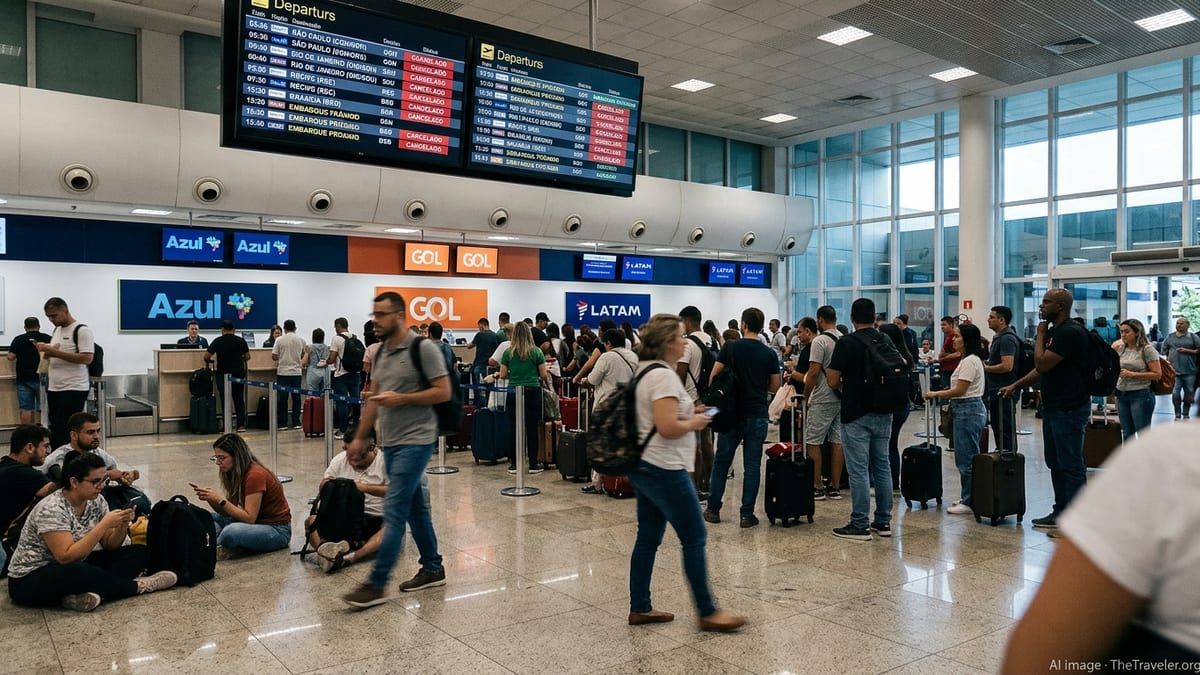
Operational Turbulence at Brazil’s Busiest Airports
The latest disruption struck three of Brazil’s most important coastal gateways, with operational data and local coverage pointing to elevated levels of delays and cancellations concentrated in Rio de Janeiro, São Paulo and Florianópolis. Aggregated figures from airport monitoring platforms show 227 departures or arrivals running late and 30 flights canceled, impacting both peak domestic shuttle routes and selected regional links.
São Paulo, home to Guarulhos, Congonhas and Viracopos, once again emerged as the focal point of the network strain. Publicly available statistics underline how a large share of Brazil’s daily flight program either originates, terminates or connects through the metropolitan area, magnifying the knock-on effect when schedules begin to slip. Shuttle services on the air bridge between São Paulo and Rio de Janeiro, as well as links south to Santa Catarina’s capital Florianópolis, experienced some of the sharpest disruption.
In Rio de Janeiro, disruptions were concentrated at Santos Dumont and Galeão, hubs that handle a mix of high-frequency domestic services and longer routes to Brazil’s interior and selected international destinations. The combination of heavily banked schedules and constrained slots meant that even moderate delays in the morning quickly cascaded into congested departure boards by afternoon.
Florianópolis, a key tourism gateway for Santa Catarina’s beaches and resorts, saw a smaller absolute number of affected flights but felt the impact acutely because of its more limited daily schedule. Delays to São Paulo and Rio rotations reduced connectivity for onward travelers, including those planning to connect to international flights further north.
LATAM, GOL and Azul Bear the Brunt
The three dominant Brazilian carriers bore the majority of the disruption, with LATAM Brasil, GOL Linhas Aéreas Inteligentes and Azul Brazilian Airlines all reporting irregular operations across their networks. Publicly accessible flight-tracking snapshots show elevated delay ratios on core shuttle and trunk routes, particularly between São Paulo and Rio de Janeiro, São Paulo and Florianópolis, and Rio de Janeiro and other southeastern and southern markets.
LATAM Brasil, which concentrates much of its domestic and international traffic at São Paulo Guarulhos, faced pressure as delayed inbound aircraft and crew rotations rippled through the hub. Congested turnarounds and revised departure times reduced slack in the system, leaving limited room to recover as the day progressed. Reports indicate that some services were retimed by more than an hour, with downstream consequences for passengers holding onward connections.
GOL Linhas Aéreas Inteligentes, a key operator on the São Paulo to Rio and São Paulo to Florianópolis corridors, also encountered extensive delays. Performance statistics published by independent analytics platforms already highlight high historical delay percentages on some of these sectors, and the latest operational challenges appear to have exacerbated that pattern, with a higher share of flights arriving outside scheduled windows.
Azul Brazilian Airlines, whose primary base is at Campinas Viracopos but which operates significant capacity through São Paulo and into southern Brazil, experienced its own wave of rescheduling. The combination of late inbound aircraft, tight turnaround times and congested airspace around the southeast corridor limited the carrier’s ability to absorb irregularities, adding further pressure to already busy terminal operations.
Knock-on Effects for Domestic and International Travelers
The imbalance between delayed and canceled flights meant that many services did eventually operate, but often significantly behind schedule. For domestic travelers within Brazil, this translated into extended waits in departure halls, rebooked connections to secondary cities and, in some cases, missed ground transport links such as long-distance buses and regional shuttles timed to flight arrivals.
International passengers connecting through Rio de Janeiro and São Paulo were also affected. According to published coverage and timetable data, both Guarulhos and Galeão function as essential transfer points for long haul services to North America and Europe. Late arrivals from Florianópolis and other domestic origins increased the risk of missed onward flights, adding accommodation and rebooking challenges for those traveling on separate tickets or across multiple airlines.
Publicly available information on Brazil’s air passenger rights framework notes that travelers are entitled to varying levels of assistance in cases of significant delay or cancellation, depending on the circumstances and length of disruption. This can include communication support, meal vouchers, and, in more severe cases, accommodation and rebooking options. Consumer organizations routinely advise passengers to retain receipts for documented expenses such as meals, transportation and lodging when disruption exceeds a few hours.
The broader network effect extended beyond the headline hubs. Secondary airports that rely on feed from São Paulo and Rio faced thinner schedules and altered timings, particularly in southern and southeastern Brazil. Even when services were not canceled outright, missed aircraft rotations and late arrivals compressed ground times, heightening the risk of further delays later in the day.
Weather, Infrastructure Strains and Peak Travel Patterns
While a precise single cause for the latest disruption has not been formally detailed in public sources, recent operational patterns across Brazil suggest a mix of contributing factors. Seasonal weather fronts along the Atlantic coast, intermittent technical constraints in air traffic management and high demand periods around regional holidays have each, at different times, placed additional stress on airline and airport operations.
Earlier this week and in recent days, Brazil’s network has already seen elevated levels of cancellations and delays traced in part to technical issues in air traffic control and infrastructure vulnerabilities around São Paulo. Travel industry reports describe how interruptions at a single major control center can rapidly affect flight flows through multiple states, underlining the sensitivity of the system to localized shocks.
These challenges are intersecting with sustained passenger demand. Tourism and aviation data highlighted by Brazil-focused travel publications show that April often brings strong leisure traffic, amplified when public holidays cluster close together. On days when demand runs high, any reduction in available slots or aircraft quickly translates into crowded departure halls and pressure on airline customer service channels.
Infrastructure specialists have also pointed to structural constraints at older city airports, including runway and taxiway bottlenecks and limited apron space that complicate recovery after storms or technical stoppages. High utilization of aircraft fleets by the major carriers leaves less margin to add backup capacity when incidents arise, meaning that individual delays can linger in the system longer than travelers might expect.
What Travelers Can Do If Their Flight Is Affected
With Brazil’s major hubs experiencing repeated bouts of disruption in recent months, publicly available guidance from consumer groups and travel organizations emphasizes preparation and real-time monitoring. Passengers are encouraged to check their flight status frequently on airline apps and airport information boards, particularly on days when operational data indicates an elevated number of delays and cancellations.
Experts in passenger rights and travel planning typically advise arriving earlier than usual at the airport during known disruption windows, allowing time for longer check-in and security queues. Travelers holding separate tickets for connecting journeys within or beyond Brazil are often urged to leave generous buffers between flights to reduce the risk of missed onward segments if the first leg runs late.
In the event of severe delay or cancellation, publicly accessible consumer guidance recommends that travelers document all interactions with airlines, retain receipts for essential expenses and, where applicable, request written confirmation of the disruption. These records can prove useful when seeking refunds, travel credits or reimbursement under Brazil’s air transport consumer protection framework.
For now, operational data suggests that airlines and airports are working through backlogs as aircraft and crews are repositioned and weather patterns stabilize. However, the latest tally of 227 delayed and 30 canceled flights across Rio de Janeiro, São Paulo and Florianópolis serves as another reminder of the vulnerability of Brazil’s dense southeast air corridor to disruption and of the importance for passengers of building flexibility into their travel plans.