

More news on this day
Hundreds of travelers in Brazil and the United States are facing cascading disruptions this week as flight cancellations and delays by United Airlines, LATAM, American, Delta, GOL, Azul and other carriers snarl key routes linking São Paulo, Rio de Janeiro, Brasília and Salvador with New York and Newark.
Brazil’s Major Hubs Register a Spike in Cancellations
Operations at Brazil’s busiest airports have tightened significantly in recent days, with São Paulo–Guarulhos, Rio de Janeiro, Salvador and Brasília reporting a wave of cancellations and delays that has rippled across domestic and long haul networks. On February 22, 2026, data compiled from these hubs showed 17 flights canceled and 66 delayed in a single day, affecting thousands of passengers moving through the country’s main corridors.
GOL Linhas Aéreas Inteligentes and LATAM Brasil were among the most affected carriers inside Brazil, recording multiple cancellations and dozens of delays at the same time that international partners such as Delta Air Lines and American Airlines adjusted their schedules. Azul Brazilian Airlines and several foreign carriers, including European and North American operators, also reported operational setbacks, underscoring how congestion or disruption at Brazilian hubs quickly reverberates through wider global networks.
The pattern intensified on February 24 at São Paulo–Guarulhos International Airport, Brazil’s largest air gateway. Airport statistics indicated 49 delayed flights and 10 cancellations in just a few hours of operations, once again hitting a mix of domestic shuttle routes and long haul services. For travelers, that translated into missed connections, rerouted itineraries and long queues at rebooking desks.
Knock-on Effects for New York and Newark Connections
The timing of Brazil’s airport woes has coincided with a powerful winter storm in the northeastern United States, creating a perfect storm for itineraries that connect Brazil with New York City and Newark. Airlines including United, American, Delta and LATAM operate key overnight services linking São Paulo and Rio de Janeiro with John F. Kennedy and Newark Liberty airports, and disruptions on either side of the route quickly echo across the Atlantic.
Across the United States, the same winter system has already forced airlines to cancel or delay thousands of flights, with carriers trimming roughly one fifth of their schedules on some days as blizzard conditions disrupted operations at JFK, LaGuardia, Newark and Boston. As a result, aircraft and crew that normally rotate between North and South America have been out of position, leaving Brazilian departures vulnerable to late schedule changes or last minute cancellations.
For passengers booked between Brazil and the New York area, the impact has been particularly severe. Some travelers have reported overnight stays in São Paulo or Rio de Janeiro as they wait for seats on the next available departures, while others have been rerouted via alternative U.S. gateways such as Miami, Orlando or Atlanta when space allows. Even when flights have operated, extended ground holds and de-icing procedures in the United States have translated into late arrivals and missed onward connections for Brazil-bound travelers.
LATAM, GOL, Azul and Global Partners Under Strain
The current disruption comes at a sensitive moment for Brazil’s airline industry, which has been reshaping its finances and route maps since the pandemic. LATAM, GOL and Azul, the country’s three largest carriers, have all been through intensive restructuring processes, with Azul only recently emerging from Chapter 11 protection in the United States after trimming less profitable routes and consolidating capacity.
Despite these efforts to streamline operations, the latest wave of irregularities shows how quickly networks can be thrown off balance by a combination of local congestion and external shocks such as severe weather in key partner markets. LATAM Brasil has repeatedly topped daily cancellation tables at Guarulhos during recent disruption days, while GOL has struggled with punctuality at several hubs. Azul, which serves the most destinations inside Brazil, has also recorded punctuality issues when schedules are compressed or when aircraft must be reassigned at short notice.
Global partners are feeling the strain as well. Codeshare and joint venture arrangements link Brazilian carriers with major North American airlines, meaning that a canceled domestic connection in Brazil can prevent a passenger from reaching a long haul flight operated by United, Delta or American, and vice versa. In practical terms, the shared networks that usually provide more options and smoother connections can temporarily amplify disruption when several partners are affected at once.
Passengers Face Long Queues and Limited Alternatives
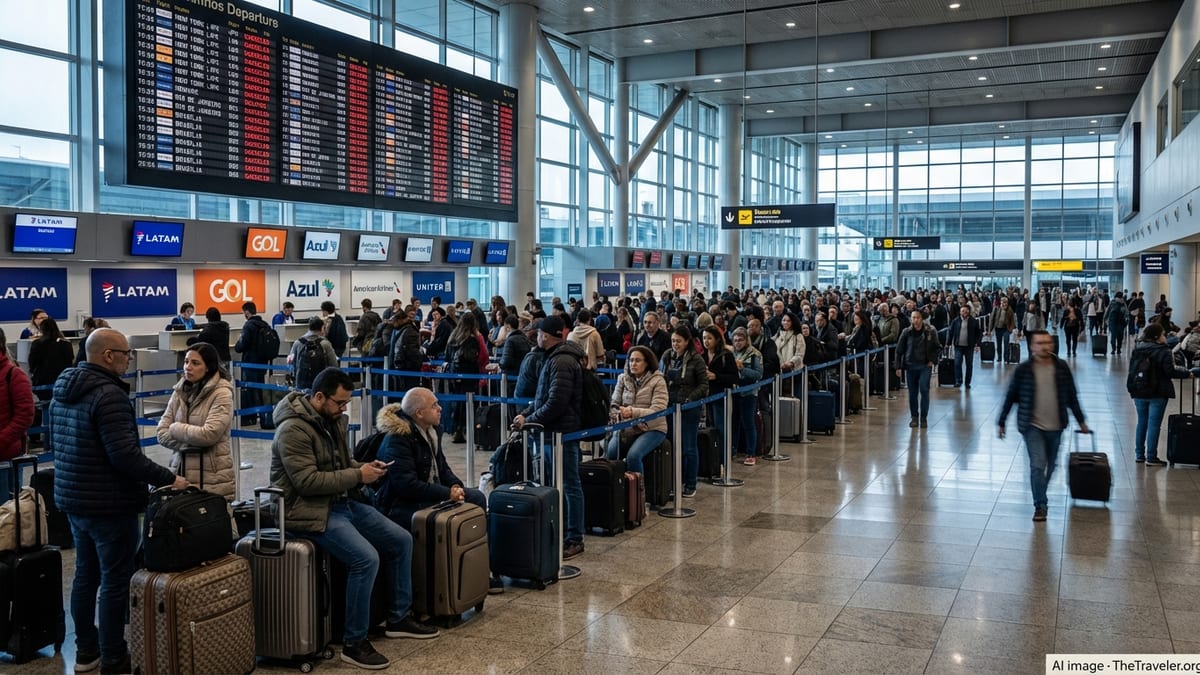
Inside terminals, the disruption has been most visible at check in areas and transfer counters, where lines have stretched across concourses as travelers seek new itineraries. At Guarulhos, airport observers reported passengers queued with luggage carts and backpacks, watching departure boards flicker with fresh delays, while staff worked to rebook customers on later flights or to reroute them through alternative hubs.
Because February is a busy period for both leisure and business travel in Brazil, spare seats have often been limited on remaining services. Families returning from holidays in the Northeast, corporate travelers heading to Brasília and international passengers bound for New York or Newark have all faced narrowed options, sometimes accepting indirect routings or overnight stays to reach their destinations.
Airlines have responded with varying degrees of flexibility, in many cases waiving change fees or fare differences for passengers whose flights have been canceled or heavily delayed. However, travelers have still been advised to monitor their bookings closely, use mobile apps to track gate and schedule changes in real time, and arrive at the airport early in case security queues and check in lines build quickly when multiple flights are re-accommodated.
What Travelers Should Expect in the Coming Days
Aviation analysts caution that even after the worst of the U.S. winter storm passes and Brazilian airport operations stabilize, it may take several days for schedules to normalize fully. Aircraft and crews remain out of position on both continents, and some airlines are likely to keep trimmed timetables or proactive cancellations in place while they work through backlogs.
Passengers traveling between Brazil and the United States over the next week, particularly those flying to or from New York and Newark, should be prepared for potential last minute schedule changes and allow extra time for connections. Booking longer layovers, avoiding tight self made connections across different tickets and keeping accommodation plans flexible can help soften the impact if flights are rescheduled.
For Brazil’s aviation sector, the episode is a reminder of the fragility of long haul connectivity when domestic infrastructure, regional weather and international partner operations collide. As LATAM, GOL, Azul and their North American partners continue to refine their networks in 2026, travelers can expect more resilient schedules over the long term, but in the short term, days like these remain a stark test of the system’s limits.