

More news on this day
Hundreds of air travelers were left stranded this week as LATAM Brasil, Azul, United Airlines and other major carriers canceled more than 20 flights across São Paulo, Rio de Janeiro, Brasília and other key Brazilian hubs, squeezing both domestic shuttles and long haul links to the United States.
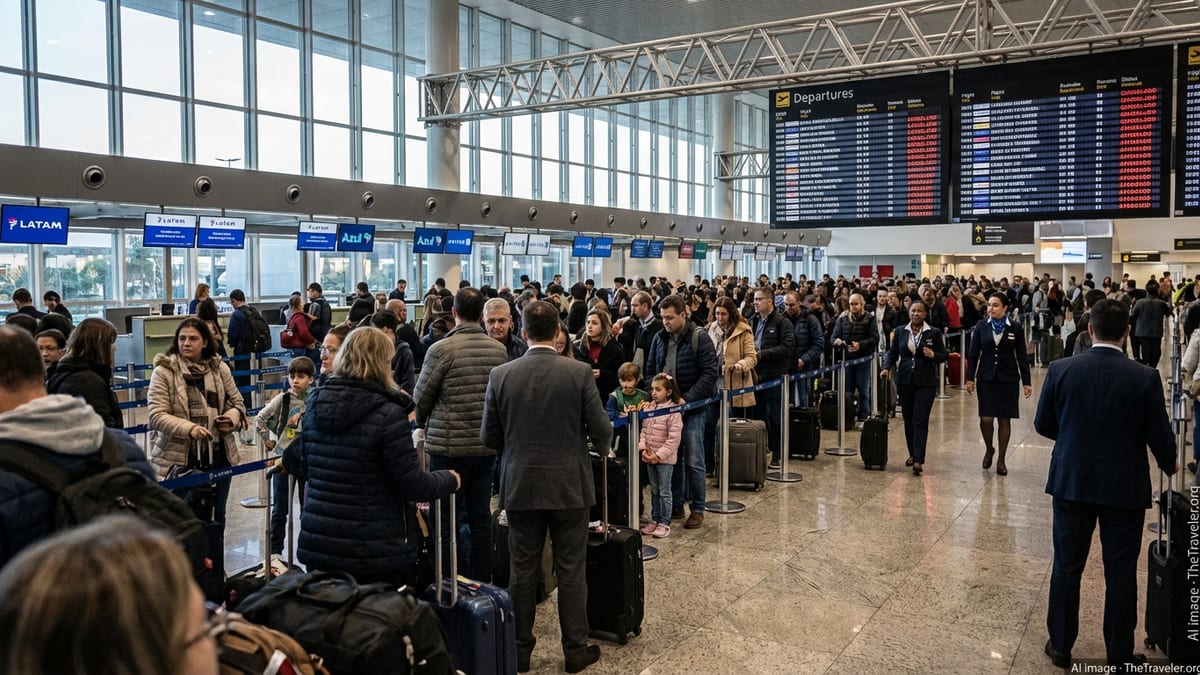
Fresh Wave of Cancellations Hits Brazil’s Busiest Corridors
Operational data from Brazilian airports over recent days points to a new wave of targeted cancellations rather than a complete shutdown, but the impact on passengers has been intense. On February 25 alone, Brazil logged 24 confirmed flight cancellations, many clustered at São Paulo–Guarulhos, Rio de Janeiro–Galeão, Campinas–Viracopos, Brasília and Belo Horizonte, according to airport and airline reports.
United Airlines, LATAM, American Airlines, Delta and Azul were among the carriers trimming services, with a particular concentration on overnight and early morning departures that connect Brazil’s largest cities to North American gateways. These cuts have come on top of a month of recurring disruptions in January and February, during which LATAM, GOL and Azul had already scrubbed more than a dozen flights linking São Paulo, Rio, Brasília and Belo Horizonte to destinations such as Orlando, Porto Alegre and Santos Dumont.
The pattern has left travelers facing a patchwork of cancellations across what are normally some of South America’s most reliable and frequent routes. Even when the total number of affected flights remains in the dozens rather than the hundreds, the concentration on trunk corridors means aircraft go out full, rebooking options vanish quickly and delays cascade through the network.
For international passengers, the timing is particularly sensitive. The end of the Southern Hemisphere summer peak, Carnival-related traffic and mounting demand tied to major conferences and events have pushed load factors higher, leaving airlines with less slack when they are forced to pull flights from the schedule at short notice.
Key Routes to Newark, JFK and Orlando Scrubbed
The most visible sign of the disruption has been on high-profile long haul services linking Brazil to the United States. At São Paulo–Guarulhos, United canceled a late-night departure to Newark, while LATAM, American and Delta each cut scheduled flights to New York’s John F. Kennedy International Airport. These services typically feed a web of onward connections across North America and Europe, magnifying the fallout from each cancellation.
In Rio de Janeiro, Galeão International Airport recorded further cancellations of transcontinental flights, including additional Delta and American departures to New York. At the same time, the domestic shuttle between Brasília and Rio’s Santos Dumont Airport, a key corridor for government and corporate travelers, was interrupted by a LATAM cancellation that removed one of the busiest rotations of the day.
Earlier in the season, LATAM, GOL and Azul had already axed a series of flights touching major leisure and business markets. Those cancellations hit routes to Orlando and Porto Alegre as well as dense shuttle links between São Paulo–Congonhas, Santos Dumont and Porto Seguro. Taken together, the sequence of decisions by multiple airlines has raised questions among frequent flyers about the resilience of Brazil’s long haul connectivity when hub operations come under stress.
So far, airlines have framed the latest cuts as tactical responses to operational constraints and soft spots in demand on specific days, rather than a structural reduction in capacity. However, with corridor traffic already running near capacity, any individual cancellation has an outsized effect on travelers who may be relying on a single daily flight to reach their final destination.
Domestic Networks in São Paulo, Rio and Brasília Under Strain
While international routes have drawn the most attention, domestic passengers have felt the brunt of the disruption. At Brasília’s Juscelino Kubitschek International Airport, the cancellation of high-frequency services to Rio and São Paulo has forced airlines to consolidate passengers onto fewer remaining flights, leading to packed departure lounges and extended queues at customer service desks.
In São Paulo, both Guarulhos and Congonhas have seen selective cancellations and a far greater number of delays, especially at peak times when weather, air traffic control restrictions or technical issues elsewhere in the network ripple into the city’s already congested airspace. Campinas–Viracopos, a major base for Azul and Azul Conecta, has also been affected by pulled services on regional routes to Jacarepaguá and other secondary airports, leaving travelers with limited ground transport alternatives.
Rio’s two main airports have faced similar pressures. Galeão, the city’s long haul gateway, has lost both domestic and international rotations on busy days, while Santos Dumont, which handles shuttle flights to São Paulo and Brasília, has had to absorb stranded passengers rebooked from canceled services. For many travelers, that has meant being shifted between airports in the same metropolitan area, often at their own expense and with minimal advance notice.
Industry analysts note that, although the absolute number of cancellations remains modest compared with global disruption seen at the height of the pandemic, Brazil’s heavy reliance on a handful of metropolitan hubs amplifies the effect of each lost departure. Even a small cut in frequency on a core business route can undermine same-day return plans, connecting itineraries and carefully timed corporate travel schedules.
What Is Driving the Latest Round of Disruptions
Airlines have cited a mix of factors behind the recent turmoil, ranging from adverse weather in southeastern Brazil and temporary air traffic control limits to overnight technical glitches in flight planning systems. In some cases, aircraft and crews arriving late from other parts of the region have triggered knock-on delays, making it impossible to turn planes around in time for their next leg to or from São Paulo, Rio or Brasília.
Brazil’s main carriers have also been recalibrating capacity after a busy holiday and Carnival period, adjusting schedules to match shoulder-season demand while trying to keep key corporate contracts and international partnerships intact. That fine balancing act leaves little margin when storms, maintenance issues or congestion hit, leading to last-minute cancellations on routes where spare aircraft are not readily available.
Operational data this week shows that LATAM Brasil and Azul in particular have borne a significant share of delays and cancellations, given their large domestic footprints and role in feeding foreign partners such as United, Delta and American at Brazilian hubs. When one of these carriers pares back service for even a day, the effect can be felt across alliance and codeshare networks, forcing passengers to reroute through alternative gateways or accept overnight stops.
Regulators have so far referred broadly to “operational constraints” when asked about the root causes of the disruption, while industry sources point to infrastructure bottlenecks and aging systems that struggle to cope with surging peak traffic. With major events on the calendar and preparations underway for future global summits in Brazil, pressure is mounting on both airlines and authorities to bolster resilience before the next wave of demand.
What Travelers Should Do If Their Flight Is Affected
Passenger experiences this week have underscored the importance of preparation and flexibility when flying through Brazil’s major hubs. Travelers stranded in São Paulo, Rio, Brasília and Belo Horizonte reported long waits at check in and ticket counters, but faster responses via airline mobile apps and customer service hotlines, where rebooking options sometimes appeared before they were announced in the terminal.
Travel advisers recommend checking flight status repeatedly in the 24 hours before departure and again on the way to the airport, as many of the latest cancellations have been loaded into systems only a few hours before takeoff. Where possible, passengers are being urged to travel with carry on bags only, giving them a better chance of being shifted to alternative flights or rerouted via different hubs without the risk of checked luggage going astray.
For those with tight international connections, particularly on routes to Newark, New York or Orlando, building extra time into itineraries has become essential. Choosing earlier departures, even on the same day, can provide a buffer if initial segments face delays or schedule changes. Frequent travelers are also reminded to review their rights under Brazilian aviation rules, which set out compensation and care obligations when flights are canceled or heavily delayed for reasons within an airline’s control.
With no immediate end in sight to sporadic disruptions, airlines operating in Brazil are encouraging passengers to stay plugged into real time notifications, consider flexible tickets where budgets allow and be prepared for the possibility of overnight stays in key hubs. For now, the message from carriers and airports alike is clear: Brazil’s skies remain open, but travelers should be ready for a less predictable journey than the timetable might suggest.