

More news on this day
Travelers across Brazil faced another day of uncertainty as nine flight delays and two cancellations involving LATAM, Gol and Azul disrupted operations on key routes linking São Paulo, Rio de Janeiro, Belo Horizonte, Curitiba and international destinations.
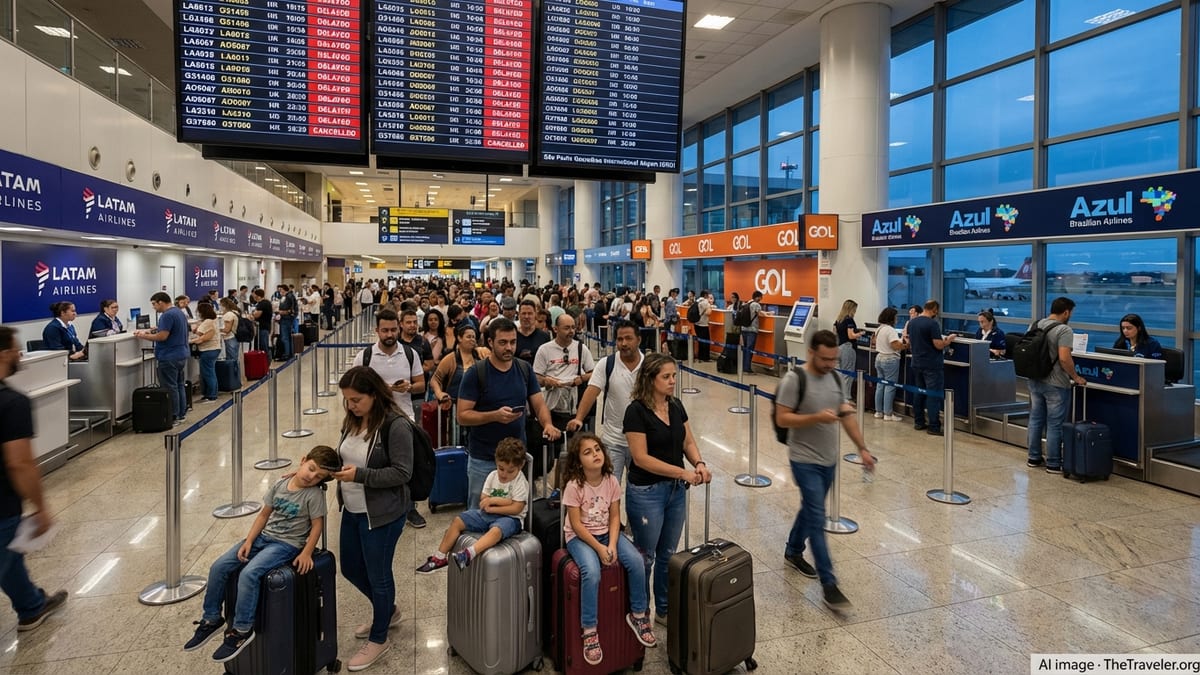
Fresh Wave of Disruptions Across Brazil’s Air Network
The latest operational turbulence in Brazil’s aviation sector on February 21 adds to a growing pattern of irregularities that has unsettled domestic and international travelers in recent months. While the day’s tally of nine delays and two cancellations may appear modest compared with earlier episodes of mass disruption, the impact is amplified by the importance of the routes and airports involved.
Passengers flying LATAM, Gol and Azul on trunk routes into São Paulo, Rio de Janeiro, Belo Horizonte and Curitiba experienced extended waits, missed connections and hurried rebookings. Some international passengers found themselves stranded or forced into overnight stays after missed long haul departures in São Paulo and Rio, underscoring how even a small cluster of irregular flights at major hubs can ripple outward through the global network.
The disruptions come on the heels of repeated days of heavy delay and cancellation volumes reported this southern summer, including several instances in which Brazil’s main airports recorded hundreds of affected flights in a single day. That backdrop has heightened frustration among travelers, who are increasingly wary of tight connections and late evening departures through Guarulhos, Congonhas, Galeão and other key terminals.
Key Hubs Under Strain in São Paulo and Rio de Janeiro
São Paulo’s Guarulhos International Airport remains the epicenter of Brazil’s air traffic, averaging more than 600 flights a day in recent weeks and regularly posting double digit percentages of delayed departures. On February 21, live operational data once again showed a notable share of flights leaving late, even as cancellation levels remained comparatively low. For LATAM, Gol and Azul, Guarulhos is the primary gateway for long haul services to Europe and North America, meaning any disruption there can compound quickly as missed connections cascade into later banks of departures.
Congonhas, São Paulo’s busy in city domestic airport, has also been a recurring flashpoint. Previous operational reports this season have documented days with dozens of delays and multiple cancellations at Congonhas, particularly affecting shuttle style flights to Rio de Janeiro, Belo Horizonte, Brasília and southern Brazil. Travelers using Congonhas on February 21 again reported knock on effects from earlier delays, with some mid afternoon departures pushed back as airlines worked to reposition aircraft and crews.
In Rio de Janeiro, Galeão International and Santos Dumont airports have alternated as trouble spots when weather, congestion or aircraft rotations falter. Earlier in the summer, Santos Dumont registered a string of cancellations and delays that disrupted coastal tourism flows and business travel alike. Against that recent history, even a small number of off schedule flights involving LATAM, Gol and Azul on February 21 raised anxiety among passengers wary of being caught in another extended episode of disruption.
How LATAM, Gol and Azul Are Being Affected
The three leading Brazilian carriers each play distinct roles in the country’s domestic and international network, yet all have been caught up in the current cycle of operational turbulence. LATAM, the largest player by capacity on many trunk routes, has repeatedly recorded high delay counts on peak travel days this month, particularly at Guarulhos and Congonhas. A recent rejected takeoff incident involving a LATAM Boeing 777 at Guarulhos on a Lisbon bound service heightened scrutiny of its long haul operations, although regulators subsequently classified the occurrence as an incident without launching a full investigation.
Gol, with its strong focus on domestic point to point routes and shuttle style services, has similarly seen days with dozens of delays and a handful of cancellations concentrated at Guarulhos, Congonhas and Rio’s Galeão. The carrier’s performance is closely watched by business travelers on the highly competitive São Paulo Rio shuttles and on key corporate corridors linking São Paulo with Brasília and southern Brazil, where even short delays can trigger missed meetings and costly itinerary changes.
Azul, whose network is anchored by Campinas Viracopos but extends deeply into secondary and regional markets, has experienced both cancellations and persistent delays during the season’s heaviest travel days. Previous operational snapshots have shown Azul contending with multiple cancelled departures from Viracopos and delays at Rio and other hubs. On February 21, its services into São Paulo, Belo Horizonte and Curitiba were again part of the broader patchwork of disruptions, leaving passengers in smaller cities particularly vulnerable when aircraft rotations slipped behind schedule.
Domestic Routes to Belo Horizonte and Curitiba Under Pressure
The disruptions have been felt acutely on domestic routes connecting São Paulo to Belo Horizonte and Curitiba, two of Brazil’s most important regional capitals. Both cities serve as critical feeders for connecting traffic and as major business centers in their own right, meaning that irregular operations quickly translate into missed connections, rescheduled meetings and overnight stays for travelers.
In Belo Horizonte, Tancredo Neves International Airport has previously recorded days with substantial numbers of affected flights as part of wider disruption across the Brazilian network. Operational data show that services linking Belo Horizonte to São Paulo’s Congonhas and Guarulhos airports are particularly sensitive to knock on delays. Even when individual flights complete their journeys relatively close to schedule, patterns of minor late departures can accumulate across the day, stretching crew duty limits and creating tight turnarounds that increase the risk of subsequent slippages.
Curitiba’s Afonso Pena International Airport has also featured prominently in recent disruption tallies, including days when multiple cancellations and more than twenty delays were recorded. Given Curitiba’s role as a southern hub, late departures from there into São Paulo can endanger onward connections to Rio, Brasília and international services from Guarulhos. On February 21, passengers watching even modest schedule changes on Curitiba São Paulo flights were conscious of how quickly a minor delay could cascade into missed evening departures out of São Paulo’s long haul terminals.
International Connections Feel the Knock On Effects
Although the majority of Brazil’s flight irregularities this season have occurred on domestic legs, the implications for international travel are significant. Guarulhos in São Paulo and Galeão in Rio de Janeiro act as primary gateways for long haul services to Europe, North America and other parts of Latin America. When LATAM, Gol and Azul aircraft arrive late from domestic feeders in Belo Horizonte, Curitiba and other cities, passengers with onward tickets to Lisbon, Miami or Buenos Aires often find themselves racing through terminals to make connections or facing rebooking if the onward flight has already closed.
Travel data from earlier weeks in February illustrate the scale of potential disruption. On several days, Guarulhos alone registered well over 200 delayed flights, with international carriers such as American Airlines, Delta Air Lines and United Airlines among those reporting late departures or cancellations. In that context, even a smaller cluster of nine delays and two cancellations on February 21 carried outsized consequences, as tight connection windows left little room for error at already busy hubs.
For travelers heading to or from Europe, recent operational issues have compounded the lingering sensitivity following the rejected takeoff incident involving a LATAM Boeing 777 at Guarulhos. While authorities have emphasized that the incident did not result in injuries and that the aircraft taxied clear of the runway under its own power, some passengers remain wary of late evening long haul departures that depend on punctual domestic feeds from across Brazil’s vast interior.
Patterns Behind the Numbers: Weather, Congestion and Operational Strain
A closer look at recent weeks reveals that the disruptions are not the result of a single cause but rather a combination of seasonal weather, infrastructure constraints and operational strain as airlines push high utilization rates across their fleets. Summer storms and low visibility have periodically affected operations at coastal airports such as Rio de Janeiro and Santos Dumont, forcing temporary runway closures or reduced arrival rates that quickly translate into departure delays.
At the same time, heavy demand at São Paulo Guarulhos and Congonhas has highlighted the limits of existing runway, taxiway and terminal capacity. With more than a quarter of flights on some days experiencing delays, airlines have little slack in aircraft rotations. A technical issue or minor maintenance finding on a single aircraft can ripple across multiple routes in a single afternoon, particularly for carriers like LATAM, Gol and Azul that run dense schedules on short and medium haul sectors.
Operational analysts note that Brazil’s carriers are also managing complex crew rostering challenges as they respond to strong demand while maintaining regulatory duty time limits. When early morning flights run late, crews may hit their maximum hours earlier than planned, forcing last minute substitutions or even cancellations if no replacement crews are available. This dynamic has contributed to several of the high cancellation days reported over the last three months and remains a persistent risk factor whenever delays begin to accumulate.
Passenger Experience: Long Queues, Missed Plans and Limited Information
For passengers, the practical reality of Brazil’s current pattern of disruptions is measured not only in statistics but in long queues at check in, crowded boarding areas and uncertainty at departure gates. Travelers at Guarulhos and Congonhas on February 21 again reported lines stretching across departure halls as ground staff attempted to rebook those affected by cancellations and provide updated information to those whose flights were delayed.
Families returning from holidays, business travelers commuting between São Paulo and regional capitals, and international tourists transiting through Brazil have all described a similar mix of frustration and resignation. Many have taken to arriving at airports earlier than usual, selecting longer connection windows and avoiding the last flights of the day on routes that have repeatedly shown high delay rates during this southern summer.
Communication remains a key point of criticism. While airlines have expanded the use of mobile notifications and airport display updates, passengers continue to report last minute gate changes, shifting estimated departure times and difficulty in accessing clear information about rebooking options and compensation. The widespread reliance on online travel agencies and third party booking platforms can further complicate the process of securing timely assistance when irregular operations strike.
Airlines and Authorities Under Pressure to Improve Reliability
The recurring disruptions have increased pressure on both airlines and aviation authorities in Brazil to deliver a more resilient network. Carriers including LATAM, Gol and Azul have publicly emphasized investments in fleet renewal, enhanced operational control centers and improved digital communication tools for passengers. Nevertheless, the persistence of days with high delay counts and strings of cancellations has raised questions about whether current capacity and contingency planning are sufficient for peak demand periods.
Regulatory bodies are closely monitoring on time performance and cancellation rates at major airports, with particular focus on São Paulo and Rio de Janeiro. Recent data showing that average delays at Guarulhos can exceed two hours for a significant share of flights highlight the scale of the challenge. Discussions around longer term infrastructure improvements, including runway optimization, terminal expansions and enhanced air traffic management, have gained urgency as airlines seek predictable operating environments for future growth.
In the short term, travel advisers are urging passengers to build additional flexibility into their plans, especially when itineraries involve connections in São Paulo or Rio or rely on evening departures after a same day domestic feed. As the latest wave of nine delays and two cancellations on February 21 demonstrates, even a relatively small number of irregular flights can disrupt hundreds of journeys when they occur on the busiest arteries of Brazil’s aviation system.