

More news on this day
Azul, LATAM, American, Delta and other major airlines have triggered fresh travel disruptions across Brazil this week, as a targeted wave of cancellations on ten key flights linking São Paulo, Rio de Janeiro, Brasília and other major hubs squeezes both domestic shuttles and long haul routes to the United States.
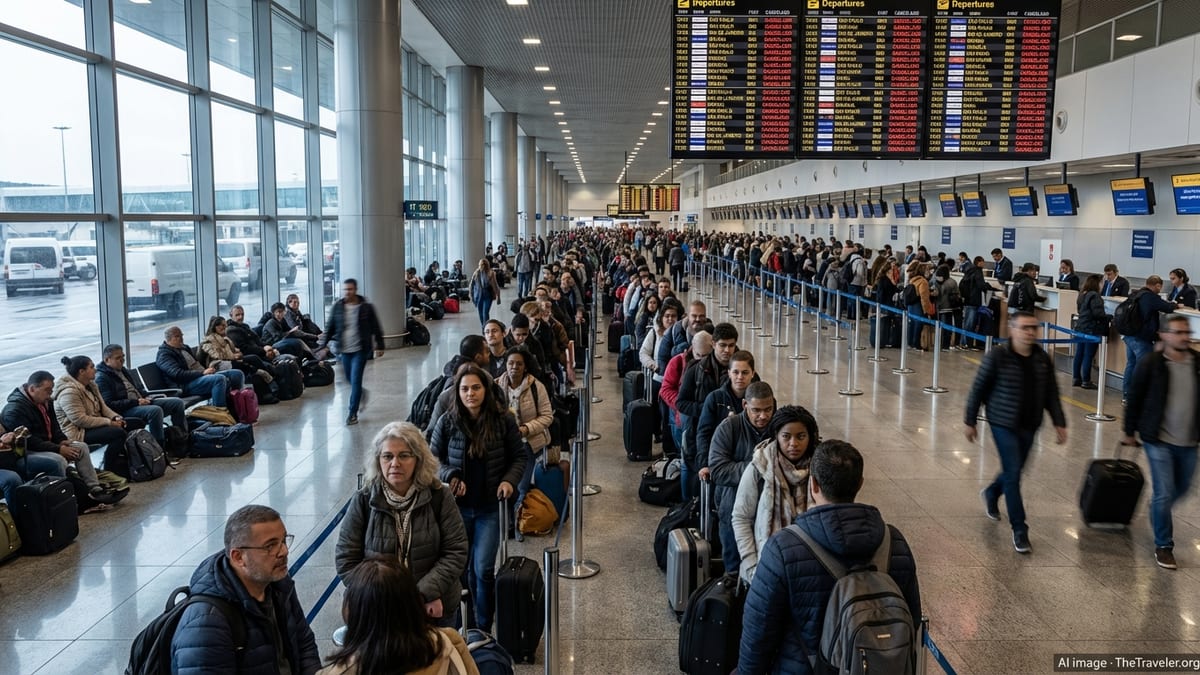
Brazil’s Busy Corridors Face a New Round of Targeted Cancellations
Operational data from Brazilian airports in recent days shows a pattern of selective but impactful cancellations rather than mass groundings, concentrating the disruption on the country’s busiest corridors. Across São Paulo–Guarulhos, Rio de Janeiro’s Galeão and Santos Dumont, Brasília and Belo Horizonte, at least ten core flights were scrubbed on peak travel days, reducing capacity exactly where demand remains strongest.
The cancellations follow weeks of elevated disruption during February, when Brazil’s main hubs repeatedly reported clusters of delays and scrubbed departures. Industry trackers and airport reports highlight that even when total cancellations measure in the dozens rather than the hundreds, concentrating them on trunk routes can quickly overload remaining services. Aircraft depart full, standby lists swell and rebooking options vanish in a matter of hours.
This latest wave is particularly painful coming on the heels of Carnival traffic and the tail end of the Southern Hemisphere summer holiday season, when leisure demand overlaps with resurgent corporate and government travel. With little slack left in schedules and aircraft utilization already high, airlines have had limited flexibility to absorb operational hiccups without resorting to cancellations on key rotations.
Brazil’s reliance on a small number of mega hubs magnifies the impact. When a Guarulhos departure to New York or a Brasília shuttle to Rio’s Santos Dumont is canceled, the knock-on effects are felt not only in Brazil’s largest metropolitan areas but also in secondary markets that depend on those flights for onward connections.
US-Bound Links to Newark, JFK and Orlando Cut Back
The most visible casualties of the disruption have been long haul services linking Brazil to the United States, especially from São Paulo–Guarulhos, the country’s primary international gateway. Among the ten key cancellations reported in recent days were late-night and overnight departures to Newark and New York’s John F. Kennedy International Airport, as carriers trimmed high-profile services traditionally used by both business travelers and long haul leisure passengers.
United Airlines withdrew a late departure from Guarulhos to Newark, while LATAM, American Airlines and Delta each scrubbed scheduled JFK-bound flights from São Paulo and Rio. These services normally feed extensive networks of onward connections into North America and Europe, meaning a single cancellation can disrupt hundreds of itineraries beyond the immediate city pair.
Further pressure has fallen on Brazil to Florida links, which are critical to both tourism and visiting-friends-and-relatives traffic. Azul, which has been rebuilding its international network after completing a court-supervised restructuring, has adjusted selected Orlando and Fort Lauderdale operations from São Paulo and Belo Horizonte, tightening capacity on routes that only recently returned to pre-pandemic demand levels.
With key US-bound rotations removed from the schedule on short notice, passengers have reported crowded ticket counters late into the night, along with long waits to secure hotel vouchers or confirm seats on alternative flights. In many cases, travelers have had to accept rerouting through other South American or US hubs, adding significant time and complexity to their journeys.
Domestic Shuttles Between São Paulo, Rio and Brasília Also Hit
While transcontinental links have drawn much of the attention, domestic business corridors have also seen targeted cancellations that punch above their weight in terms of impact. The air shuttle between São Paulo and Rio de Janeiro, often described as one of South America’s busiest city pairs, has experienced selective cuts from carriers including LATAM and Azul, particularly on early morning and late evening frequencies favored by corporate travelers.
At Santos Dumont in central Rio, cancellations on shuttle flights to São Paulo–Congonhas and Brasília have disrupted carefully timed day trips for government officials, lawyers, consultants and financial professionals. A single lost rotation on these routes can erase the ability to complete a round trip in a single working day, pushing travelers to reschedule meetings or switch to virtual formats.
Brasília, the federal capital, has not been spared either. Reports of canceled departures to both Rio and São Paulo have forced last-minute changes to itineraries linked to congressional sessions, regulatory hearings and corporate board meetings. Airlines have prioritized maintaining a skeleton of high-frequency services, but with less backup capacity than usual, any further operational issue quickly cascades into cancellations or rolling delays.
Regional connectivity has been squeezed as well. Campinas–Viracopos, a major base for Azul and its regional arm Azul Conecta, has seen pulled flights on short-haul routes to secondary airports such as Rio’s Jacarepaguá, leaving travelers in smaller cities with fewer options and longer travel days as they are rerouted through larger hubs.
Why Airlines Say They Are Cutting Flights Now
Carriers have pointed to a mix of operational and financial factors behind the recent cancellations. Periods of intense summer thunderstorms and low visibility at key airports have triggered air traffic control restrictions, spreading knock-on delays throughout already busy schedules. With limited spare aircraft and crews available at short notice, airlines have in some cases opted to proactively cancel selected flights rather than allow rolling delays to destabilize entire networks.
At the same time, Brazil’s airline industry is still adjusting to new financial realities after several years of pandemic-related turbulence and restructuring. Azul only recently emerged from Chapter 11 proceedings in the United States, having reshaped its balance sheet and fleet plan with the help of new investment from global partners. While the carrier has stressed its commitment to maintaining network breadth, it has also signaled a sharper focus on profitability and operational resilience, which can mean trimming vulnerable or marginally profitable rotations during periods of stress.
LATAM and GOL have likewise spent the past two years optimizing capacity, concentrating aircraft on routes and time bands where demand is strongest and yields are highest. When weather, technical issues or staffing constraints intersect with full seasonal demand, selective cancellations on even flagship routes can become a short-term tool to protect broader schedule reliability.
International partners such as American and Delta have been calibrating their Brazilian operations within larger global networks that are also under pressure from aircraft delivery delays and maintenance backlogs. With long haul fleets stretched thin worldwide, pulling a single Brazil rotation on a difficult operational day can free up aircraft and crew to protect other high-revenue routes, even if it means short-term pain for travelers in and out of São Paulo or Rio.
What Travelers Flying Through Brazil Should Do Now
For passengers planning to fly through Brazil’s main hubs in the coming days, travel advisers recommend assuming that schedules may still shift and building extra resilience into itineraries. That includes favoring earlier departures on the same day, allowing longer connection windows at Guarulhos, Galeão or Brasília, and avoiding tight same-day links with cruises, tours or onward international flights where possible.
Experts also stress the importance of closely monitoring airline communications. Many carriers are now pushing real-time updates via mobile apps, text messages and social media, sometimes offering voluntary rebooking or travel credits even before a formal cancellation appears on airport departure boards. Travelers who respond quickly to these alerts generally have better chances of securing remaining seats on alternative flights.
On the ground, Brazil’s consumer protection rules provide certain rights to passengers facing cancellations, including assistance with meals, communication and, in some circumstances, accommodation. However, in practice, travelers have reported long queues at service counters and inconsistent information when disruption peaks, particularly late at night when staffing levels are lower.
Looking ahead, analysts expect Brazilian airlines to continue fine-tuning schedules as the high-summer peak gives way to steadier business demand in March. While the current bout of cancellations around São Paulo, Rio and Brasília is not on the scale of a systemwide meltdown, it serves as a reminder that even a small number of targeted cuts on strategic routes can ripple widely across Brazil’s interconnected aviation network and far beyond its borders.