

More news on this day
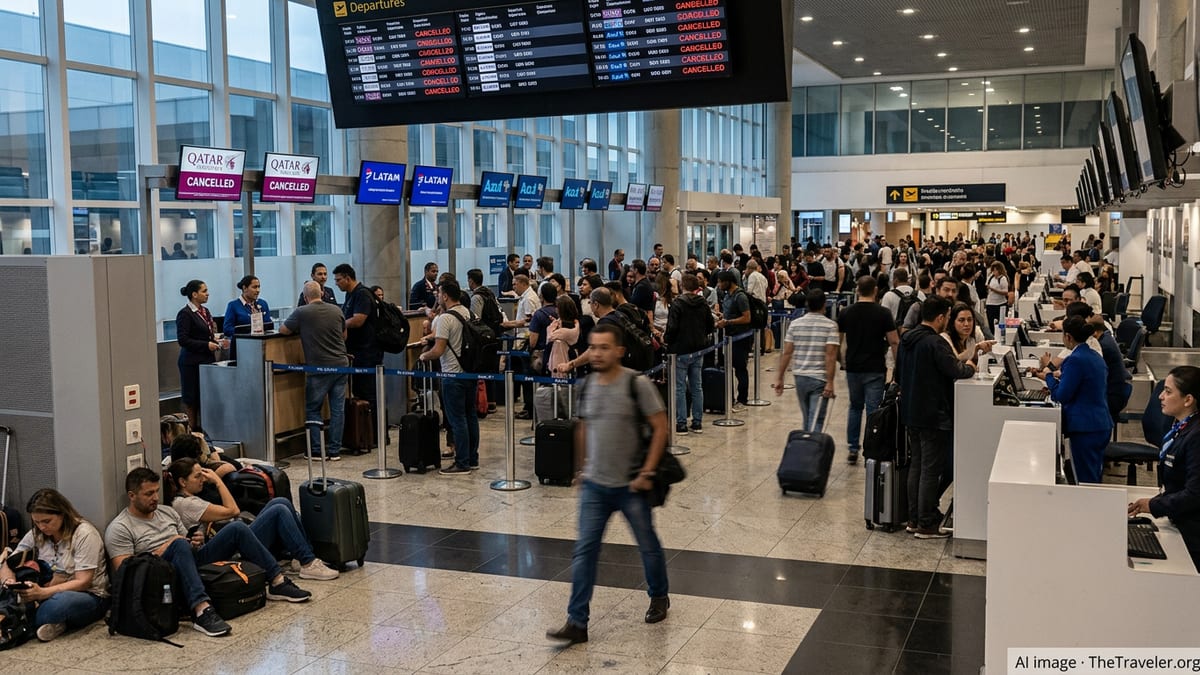
Over a dozen flights operated by Qatar Airways, LATAM and Azul were cancelled out of São Paulo on March 10, triggering fresh disruption across Brazil’s busiest air corridors and severing key links to Doha, Brasília, Rio de Janeiro’s Santos Dumont and other domestic destinations.
Wave of Cancellations Hits São Paulo Hubs
Monday’s disruption centered on São Paulo’s international gateway, with a cluster of long-haul and domestic departures scrubbed as airlines adjusted to a volatile operational environment. Qatar Airways’ service between São Paulo and Doha, a key connector for Brazilian travelers heading to the Middle East, Asia and Africa, was among the most visible cancellations, cascading delays and missed connections across multiple regions.
At the same time, Brazilian carriers LATAM and Azul cancelled a series of departures from both São Paulo/Guarulhos and São Paulo/Congonhas, affecting flights to Brasília, Rio de Janeiro’s Santos Dumont Airport and secondary cities. Passengers arriving at terminals reported last-minute notifications, long queues at service desks and limited same-day rebooking options as aircraft and crews were repositioned.
Airport operations teams in São Paulo were forced to juggle gate assignments and manage bottlenecks at check-in and security as passengers from cancelled services were consolidated onto remaining flights. While most other international carriers continued operating, the loss of multiple departures within a short time frame created patchy schedules and uncertainty across peak travel periods.
Qatar Airways Adjusts Brazil Operations Amid Wider Airspace Disruption
Qatar Airways’ cancellation of its São Paulo to Doha rotation formed part of a broader reduction in service as the airline continues to operate under constrained airspace conditions. In recent days the carrier has maintained only a limited schedule to and from Doha, with many regular routes suspended or thinned out while authorities manage the security situation and available corridors.
For Brazilian travelers, the loss of the Qatar Airways link from São Paulo means fewer one-stop options to destinations in Asia and the Gulf, and tighter competition for seats on alternative carriers. Travel agents reported that some passengers were being reprotected on other airlines where possible, but others were offered date changes, vouchers or refunds instead of immediate onward travel.
Industry analysts note that the Middle East airspace disruption has had a knock-on effect far beyond the region, stranding aircraft and crews and complicating long-haul scheduling. For a country like Brazil, where direct non-stop links to Asia remain limited, the temporary loss or reduction of a major hub carrier such as Qatar Airways can quickly narrow choices and push fares higher on remaining routes.
Domestic Networks Strain as LATAM and Azul Trim Schedules
Within Brazil, the cancellations by LATAM and Azul underscored how quickly domestic networks can be disrupted when long-haul operations shift. Both carriers are key players in shuttle-style routes linking São Paulo with Brasília and Rio de Janeiro’s Santos Dumont Airport, corridors heavily used by business travelers and government officials.
According to airport sources, multiple rotations on these trunk routes were withdrawn or consolidated, with some passengers moved to later flights and others left with no same-day options. The decision to trim frequencies came amid tighter aircraft utilization and efforts to absorb passengers displaced from international and connecting services.
While both LATAM and Azul continued to operate the majority of their Brazilian schedules, the targeted cancellations translated into crowding on remaining flights, particularly during morning and late-afternoon peaks. Travelers reported longer standby lists and fewer available seats for last-minute bookings, especially between São Paulo, Brasília and Rio.
The disruption also rippled into secondary destinations served from São Paulo, as aircraft were reassigned to protect core business routes. Smaller cities saw isolated cancellations or equipment changes, complicating travel plans for passengers relying on tight domestic connections.
Passengers Face Queues, Rebookings and Limited Alternatives
At Guarulhos and Congonhas, the immediate impact for travelers was felt in long lines at airline counters and customer service points. Many passengers learned of their cancellations only after arriving at the terminal, despite carriers pushing status updates through mobile apps and email. Those relying on third-party bookings or older contact details were among the last to be notified.
Rebooking proved challenging on several affected routes, as remaining flights were already heavily booked at the start of the business week. Some Qatar Airways passengers were re-routed via other hubs when space was available, while domestic travelers on LATAM and Azul were offered travel on later departures or alternative airports, such as shifting between Rio’s Santos Dumont and Galeão.
Brazil’s current passenger-protection framework obliges airlines to offer re-accommodation, refunds or credits in the event of cancellations, with additional assistance such as meals or lodging depending on the cause and length of disruption. Yet in practice, travelers reported uneven experiences, with some quickly rebooked and others facing extended waits or being asked to manage changes through call centers overwhelmed by high demand.
Travel advisors in São Paulo recommended that passengers holding tickets in the coming days check flight status repeatedly in the 24 hours before departure and arrive at the airport with flexible expectations, especially if their journey involves a connection through Doha or onward links on domestic feeders.
What Travelers Should Do Next
With schedules still in flux, frequent flyers and travel agencies are urging passengers to stay proactive. Checking airline apps, signing up for real-time alerts and monitoring departures on airport information boards can help reduce the risk of arriving at the terminal for a flight that has already been cancelled or significantly delayed.
Experts advise that travelers whose flights are cancelled should first seek written confirmation of the disruption and proposed options from the airline, either via email or app notifications. This documentation can be important when pursuing refunds, travel insurance claims or compensation for additional expenses such as hotels and alternate tickets.
For upcoming trips involving Qatar Airways, passengers are being encouraged to verify not only the status of their São Paulo departure but also any onward sectors via Doha, as limited corridors and rolling operational updates continue to reshape the long-haul network. Domestic passengers on LATAM and Azul, particularly those bound for Brasília and Santos Dumont, are similarly urged to confirm schedules close to departure time as aircraft allocations are adjusted.
Industry watchers expect Brazilian airlines to continue making tactical schedule changes as they respond to evolving international constraints and local demand. For now, travelers departing from São Paulo and other major Brazilian cities face a more fragile network, where a single cancellation can quickly cascade across multiple routes in a tightly interconnected system.