

More news on this day
A fast-developing winter storm in the northeastern United States is sending shockwaves through international aviation networks this weekend, triggering more than a dozen cancellations on routes linking Brazil to major hubs such as New York, Boston, Madrid and Orlando and disrupting operations by American Airlines, Delta Air Lines, LATAM, Air Canada, United Airlines and other carriers.
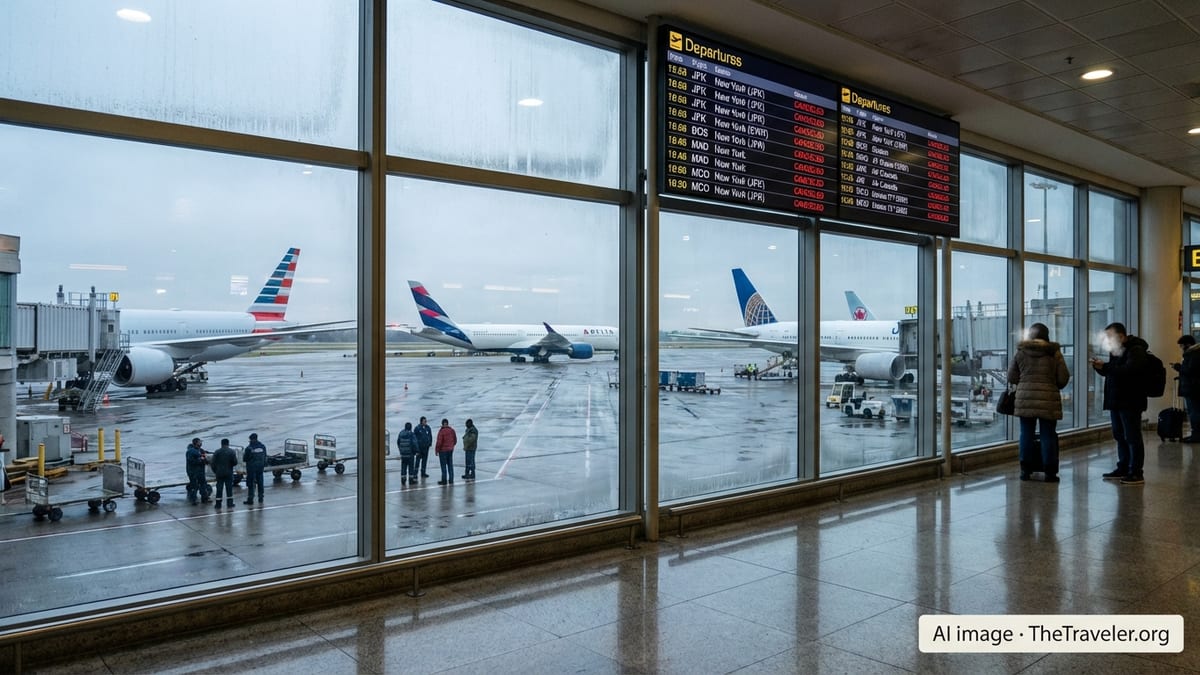
US Nor’easter Sends Disruption Cascading Into Brazil
The latest bout of severe winter weather sweeping across the northeastern United States has rapidly escalated into a global air travel problem, with ripple effects now clearly visible in Brazil’s long-haul flight schedules. As airlines ground or consolidate services to and from New York, Boston and other storm-affected airports, outbound and inbound flights connecting Brazilian cities to North America and Europe are among those caught in the crossfire.
Major full-service carriers including American Airlines, Delta, United, LATAM and Air Canada have all been forced to adjust timetables or cancel departures outright as conditions deteriorate at key East Coast hubs. Services that typically operate as overnight or daylight links between Brazil and cities such as New York, Orlando and Madrid are especially vulnerable, given their dependence on aircraft and crew rotations that originate in the United States or Europe.
While Brazilian airports themselves are not experiencing adverse weather, they are grappling with the consequences of aircraft and crews being out of position due to earlier cancellations in the United States. This combination of grounded aircraft, disrupted rotations and passenger backlogs is complicating recovery efforts and stretching airline operations teams across multiple continents.
The result for travelers is a patchwork of cancellations, rolling delays and last-minute rebookings that can be difficult to track in real time. With the storm still unfolding through the weekend, operations managers are warning that further adjustments to Brazil-bound schedules remain likely.
Key Routes Hit: New York, Boston, Orlando and Madrid
The most immediate impact has been felt on routes linking Brazil to major gateways in the northeastern United States, where the storm has forced steep reductions in flight capacity. New York’s John F. Kennedy International, LaGuardia and Newark Liberty airports, together with Boston Logan, are central nodes in transcontinental and transatlantic travel and act as primary entry points for Brazilian traffic headed to North America and beyond.
Flights between Brazil and New York, including services operated by American Airlines, Delta, LATAM and United, have been among the first to see cancellations and schedule cuts as airlines prioritize safety and attempt to maintain some network integrity. Connections that rely on these flights to feed onward services across the United States, Canada and Europe are facing additional strain as passengers attempt to rebook through alternative hubs.
Orlando, a major leisure destination for Brazilian travelers, has also been affected. Delta’s network, for example, illustrates the challenge: services from Orlando to Boston and New York that often carry Brazil-bound passengers on connecting itineraries have faced cancellations or long delays, constraining the number of available seats for travelers trying to make it home or continue their journeys south.
On the transatlantic side, flights linking Brazil with Madrid and other European hubs have come under pressure as aircraft and crews scheduled to operate from storm-hit US airports are delayed or grounded. Codeshare arrangements that see LATAM, American and European partners jointly market services mean that a disruption at one end of the network can reverberate quickly through to South America.
American, Delta, United and LATAM Lead Cancellations
Among the carriers most visibly affected are American Airlines, Delta Air Lines, United Airlines and LATAM, which together operate a significant share of long-haul capacity between Brazil and North America, as well as onward connections to Europe. As the storm gathered strength, operational control centers at these airlines moved to preemptively cut frequencies and consolidate flights in an attempt to avoid leaving passengers and crews stranded at intermediate points.
American Airlines, with its strong presence in Miami, New York and other East Coast gateways, has had to rebalance its Brazil schedule as departures to and from storm-affected airports were curtailed. While Miami remains a crucial bypass for some traffic, the knock-on effect of cancellations at New York area airports has constrained the airline’s flexibility to reposition aircraft quickly for Brazil-bound services.
Delta has seen multiple cancellations on services feeding into its northeastern network, including routes from Orlando and the Caribbean into New York, some of which carry LATAM codes. When these flights fail to operate, the impact ripples into the broader joint venture between Delta and LATAM, forcing the alliance partners to consolidate or cancel certain long-haul segments linking Brazil to the United States.
United, with a strong hub at Newark, is facing similar challenges. Cancellations and significant delays at its primary New York-area base have disrupted aircraft rotations that typically support services into Latin America. As with its rivals, United has issued broad travel waivers and is working to rebook affected passengers on remaining flights, but constrained capacity into and out of Brazil has made that process more complex and time-consuming.
Air Canada and Other International Carriers Also Affected
The wave of disruption is not limited to US-headquartered airlines. Air Canada, which operates key transcontinental and transborder services feeding into the northeastern United States, has also reported delays and cancellations tied to the storm. While Canada’s largest carrier runs direct services to Brazil from its own hubs, many Brazilian travelers rely on US connections as part of wider itineraries that include Canadian cities.
When flights into New York, Boston and other US gateways are cut, itineraries that link Brazil with Canadian destinations via those hubs can quickly unravel. Air Canada and its partners have been forced to re-accommodate passengers through alternative routings, often via Toronto or Montreal, placing additional demand on already busy north-south corridors.
Other international airlines operating into Brazil, including European and regional Latin American carriers, are feeling secondary effects as shared airports, codeshares and interline agreements tie their schedules indirectly to those of American, Delta, United and LATAM. A canceled transatlantic sector from a European hub to New York, for example, can cause misalignments in onward Brazil-bound flights the following day.
As a result, some Brazilian travelers who are not directly flying with US or Canadian airlines are nevertheless experiencing delays, missed connections and last-minute itinerary changes. This interconnectedness highlights how vulnerable global aviation remains to major weather events that strike key hub regions.
Brazilian Airports Manage Knock-on Effects on the Ground
In Brazil itself, airports remain operational under largely normal weather conditions, but they are managing the logistical consequences of the overseas storm. Terminals in major cities such as São Paulo, Rio de Janeiro and Brasília are seeing waves of stranded or delayed passengers whose flights have been canceled upstream, creating uneven peaks in demand for customer service, hotel vouchers and rebooking assistance.
Ground handling teams are working to accommodate aircraft arriving well behind schedule, juggling gate assignments and maintenance windows to keep turnaround times within safe limits. In some cases, flights that do arrive from the United States or Europe are landing with fewer passengers than expected, as travelers are rebooked onto alternative services or choose to delay their trips altogether.
Airlines are also contending with crew duty-time restrictions, which can force additional cancellations even after the worst of the weather has passed. Long-haul crews operating Brazil routes often depend on precise timing for rest periods between flights. When those schedules are thrown off by extended delays or diversions in the United States, carriers may have no choice but to cancel or delay subsequent sectors from Brazil in order to remain compliant with safety regulations.
Airport authorities in Brazil are urging passengers to maintain close contact with their airlines and to arrive early for international departures, warning that long lines at check-in and customer service counters are likely to persist as the recovery unfolds.
Travel Waivers, Rebookings and Limited Options for Passengers
To manage the fallout, American, Delta, United, LATAM, Air Canada and several partner airlines have issued flexible travel waivers covering flights to and from the most heavily affected northeastern US airports. These waivers typically allow passengers to change their travel dates without incurring change fees, and in some cases without paying fare differences, provided that rebooked travel falls within a specified window.
For Brazil-bound travelers, these policies can provide some relief, but options remain constrained by the finite number of seats available on remaining flights. With multiple days of cancellations compressing demand into a smaller number of departures, premium cabins and even economy seats on Brazil routes are filling quickly, particularly on peak days and overnight services popular with business travelers.
Passengers holding complex itineraries that combine Brazil with other South American countries, the United States and Europe face an even more challenging situation. Rebuilding such journeys often requires coordinating inventory across multiple airlines and alliance partners, a process that can take hours on the phone or at airport counters, especially when large numbers of customers are seeking assistance at the same time.
Airlines are encouraging travelers to use digital channels where possible, including mobile apps and websites, to monitor flight status, request changes or place themselves on standby lists. However, many Brazil-bound passengers, especially those traveling with families or in large groups, still prefer to deal with agents in person, contributing to congestion at airport service points.
Economic and Tourism Impact on Brazil’s Key Markets
The disruption comes at a sensitive time for Brazil’s tourism and business travel sectors, which rely heavily on consistent connectivity with major North American and European gateways. New York, Boston and Orlando are all critical source markets for inbound tourists, as well as important destinations for Brazilian leisure travelers and expatriate communities.
Short-term shocks like this weekend’s storm-related cancellations can translate into lost hotel nights, missed meetings and deferred trips, particularly for passengers who decide to abandon or postpone travel plans rather than endure prolonged uncertainty. Travel agencies and tour operators that package Brazil with US city breaks or theme park holidays in Orlando are already bracing for a wave of itinerary changes and refund requests.
On the corporate side, companies with cross-border operations linking Brazil to the United States and Europe may face delays in closing deals, holding in-person meetings or moving personnel between offices. While videoconferencing and remote work have softened the blow of such disruptions in recent years, sectors that still depend on physical presence, such as aviation, energy and large-scale infrastructure, remain vulnerable to sudden breaks in connectivity.
Over the longer term, the episode is likely to reignite discussions around network resilience, including whether Brazil should diversify its portfolio of international gateways to reduce dependence on a handful of northeastern US hubs that are periodically exposed to intense winter storms.
What Travelers Should Expect in the Coming Days
With the storm system still working its way through the northeastern United States, aviation analysts and airline executives alike caution that the disruption to Brazil-linked routes is unlikely to resolve immediately. Even after conditions improve at New York, Boston and other affected airports, it may take several days for aircraft and crews to return to their normal rotations and for backlogged passengers to be accommodated.
Travelers booked on flights between Brazil and North America, particularly those connecting through New York area airports or Boston, are being advised to monitor their itineraries closely and to consider accepting alternative routings via Miami, Atlanta, Dallas or other hubs if offered. Flexibility on travel dates and willingness to accept overnight connections can significantly improve the chances of securing a seat.
Airlines are expected to continue operating larger aircraft on certain trunk routes where possible, in order to clear the backlog more quickly. However, with many long-haul fleets already operating near capacity on busy days, there are limits to how quickly the system can absorb several days’ worth of displaced passengers.
For now, Brazil’s role as a major long-haul market means it will remain a high priority in airline recovery plans once the storm passes. But until the weather stabilizes and operations normalize across the northeastern United States, travelers on routes linking Brazil with New York, Boston, Madrid, Orlando and other major hubs should be prepared for continued delays, last-minute changes and a level of uncertainty that has become an all-too-familiar feature of modern air travel.