

More news on this day
Brazil’s rapidly improving passport strength and Croatia’s ascent into the top tier of global travel freedom, with visa-free or visa-on-arrival access to 182 destinations, are combining to reshape how tourists, students, and business travelers move around the world in 2026.
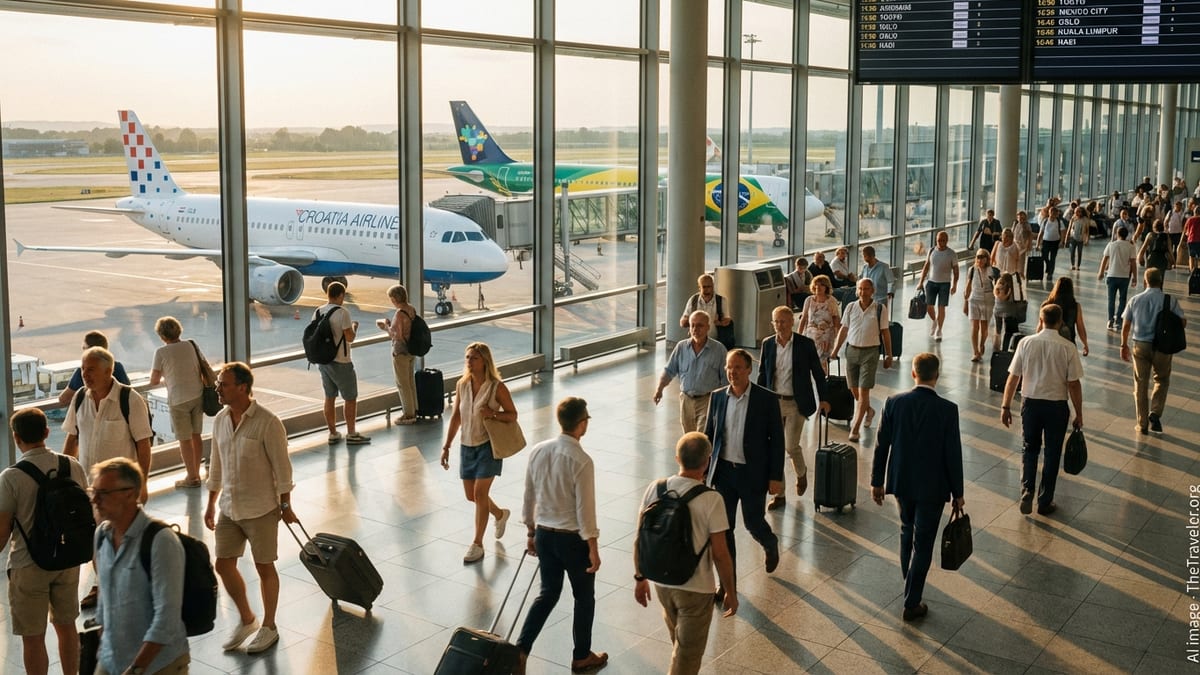
Croatia’s 182-Destination Reach Puts It in the Global Elite
Croatia has quietly emerged as one of the world’s most mobile nationalities. According to the latest Henley-style global mobility rankings, Croatian citizens now enjoy visa-free or visa-on-arrival access to 182 destinations worldwide, placing the country firmly within the top 10 of the most powerful passports on the planet. This marks a dramatic rise over the last decade, driven by European Union membership, Schengen integration and a series of bilateral deals with key long-haul markets.
In late 2025, Croatia’s passport was already being reported among the world’s strongest, sitting alongside established mobility leaders in Europe and the Gulf. By early 2026, updated figures show Croatia stabilising around the seventh spot globally, tied with or just behind other high-performing European and Asia-Pacific states. For travellers, this translates into fewer consular visits, more spontaneous trips and an easier path to multi-country itineraries that span regions.
The jump to 182 destinations is more than a symbolic threshold. It reflects inclusion in a dense web of reciprocal arrangements with partners in Asia, the Americas, the Middle East and Oceania. From Japan and South Korea to Mexico and the United Arab Emirates, Croatian travellers are now entering many of the world’s most visited tourism and business hubs without traditional pre-departure visas.
For Croatia’s domestic tourism industry, which relies heavily on outbound connections feeding inbound flows, this mobility milestone reinforces the country’s position as both a gateway to Europe and a confident exporter of travellers to the rest of the world.
Brazil Climbs the Rankings and Joins the New Mobility Leaders
Brazil is one of the latest major economies to benefit from this global shift toward easier cross-border travel. Recent mobility indices place the Brazilian passport around 16th worldwide, with roughly 169 to 170 destinations offering visa-free or visa-on-arrival entry to Brazilian citizens. This is Brazil’s strongest performance in years and reflects a concerted diplomatic push to deepen ties with both traditional and emerging partners.
Key changes have underpinned Brazil’s rise. China’s decision in mid-2025 to offer short-stay visa-free access to Brazilian nationals and the European Union’s renewal of visa-free travel under broader Latin America agreements have expanded options across two of the most important long-haul regions for Brazilian travellers. The result is that Brazilians can now move more freely through major manufacturing, educational and tourism hubs without cumbersome entry procedures.
Brazil is increasingly mentioned alongside countries such as Japan, Malaysia, Mexico and Norway as part of a core group of states that are benefiting from, and contributing to, a worldwide loosening of short-stay entry rules. These nations, in various ways, are aligning their visa policies, digital travel authorisations and border technologies to create what mobility analysts describe as a “new normal” of near-frictionless travel for millions of passport holders.
For Brazil’s outbound tourism sector, this expanding reach means more than just holiday convenience. It supports the country’s global business footprint, accelerates student exchanges and opens the door to more diversified travel patterns beyond traditional routes to the United States and Western Europe.
How Croatia’s Visa-Free Network Is Reshaping Global Tourism
Croatia’s access to 182 destinations places it in the same strategic conversation as other high-ranking European passports that have long defined global travel flows. The scale of its network now covers most of Europe, much of the Americas, a broad swath of Asia-Pacific and a growing cluster of Middle Eastern and African states that are courting European visitors with relaxed entry regimes.
In Europe, Croatian citizens benefit from full participation in the Schengen Area, enabling passport-free travel across almost all neighbouring EU states. Beyond the continent, the country’s inclusion in multiple visa waiver agreements means that Croatian travellers can enter markets such as Japan, Malaysia, Mexico and Norway under simplified or visa-free rules. This mirrors the advantages enjoyed by holders of Belgian, Austrian or French passports, and it is narrowing the gap between long-established and newer EU members in mobility terms.
Tourism operators report that such broad access encourages multi-stop itineraries that combine Croatia with destinations in Asia and the Americas. A traveller might, for example, fly from Zagreb to Tokyo and continue on to Mexico City or São Paulo without encountering major visa barriers. For airlines and tour companies, this kind of flexibility supports new route planning and packaged products that link Adriatic beaches with Pacific mega-cities and Latin American cultural capitals.
Crucially, the mobility upgrade also enhances inbound tourism to Croatia itself. As the country becomes better integrated into global travel networks, it is featured more prominently in dynamic booking platforms, cruise schedules and multi-country tours that rely on smooth cross-border movement. The same systems that enable Croatian citizens to roam more freely are helping foreign visitors slot Croatia into their own intercontinental journeys.
Japan, Malaysia, Mexico, Norway and Others Ride the Same Mobility Wave
The surge in Croatia’s passport power is part of a broader reordering of the global mobility hierarchy. According to early 2026 rankings, Japan retains a place near the very top, with around 188 visa-free destinations, while Malaysia has climbed into the global top 10 with access to about 180. Belgium and Norway each hover around 185 destinations, reflecting the enduring strength of European Union and Schengen-linked mobility, even for non-EU states such as Norway.
Mexico and Albania illustrate how middle and smaller economies can also leverage smarter visa policies to enhance their international reach. Mexico remains a key gateway between North and Latin America and participates in a growing web of reciprocal arrangements. Albania, which shares similar access levels with regional peers, has seen its passport steadily improve, reflecting deepening ties with the EU and a concerted effort to streamline short-term travel rules.
Fiji and other Pacific states, including Samoa and Tonga, have been integrating into this mobility wave by offering visa-free or short-stay access to selected partners, often in connection with tourism-led growth strategies. Their policies are heavily influenced by the need to attract long-haul visitors from Europe and Asia who are increasingly mobile thanks to stronger passports and simplified digital border processes.
Together, these countries form a loose coalition of states that see strategic value in lowering barriers for short visits. The overlap between their visa-free networks and Croatia’s 182-destination reach creates a dense matrix of routes where travellers can move relatively seamlessly between Europe, the Americas, Asia and Oceania.
The Brazil–Croatia Connection: New Opportunities for Two-Way Travel
Brazil’s inclusion among the countries responding dynamically to Croatia’s expanded reach is opening new opportunities in both directions. For Croatian travellers, Brazil is part of a wider Latin American circuit that now includes strong links to Argentina, Chile, Peru and Colombia, many of which feature in the higher tiers of global mobility rankings. Thanks to growing airline capacity and more predictable entry conditions, multi-country tours across South America are easier to plan than in the past.
On the Brazilian side, Croatia represents a compelling European entry point beyond the traditional hubs in Portugal, Spain, France and Italy. With visa-free access increasingly standardised and low-cost carriers expanding across the continent, Brazilian tourists can land in a major European gateway and continue on to Croatia without additional administrative hurdles. The country’s combination of Adriatic coastline, medieval cities and festival culture is helping it emerge as a new favourite among South American travellers looking for less crowded alternatives to Western Europe’s most famous hotspots.
Business and educational links are also benefitting. Brazilian companies in sectors such as agribusiness, manufacturing and technology are making greater use of simplified travel regimes to send staff to conferences, trade fairs and training programmes in Central and Eastern Europe, including Croatia. Universities are broadening exchange schemes that rely on students being able to cross borders quickly and affordably, particularly within the Schengen Zone.
In practice, this means that a Brazilian executive or student can now build multi-country European itineraries that incorporate Croatia with far less lead time for visa processing. For both countries, this is translating into deeper tourism ties, more diversified visitor profiles and a higher profile in each other’s outbound travel marketing.
Digital Authorisations and Smarter Borders Behind the Mobility Shift
The acceleration in visa-free and simplified entry that is boosting passports like those of Croatia and Brazil is underpinned by an equally important technological transformation. Many of the 182 destinations open to Croatian citizens, and the roughly 170 that welcome Brazilians, rely on electronic travel authorisations, online pre-clearance systems and automated border controls rather than traditional ink-and-paper visas.
Across Europe, the Americas and Asia-Pacific, governments are rolling out or expanding electronic systems that allow authorities to screen travellers before they arrive, while still offering them a relatively frictionless experience at the border. These systems often count as “visa-free” or “visa-on-arrival” within global indices, even though travellers must complete online forms or pay small processing fees in advance.
For travellers from Brazil, Croatia, Japan, Malaysia, Mexico and Norway, the spread of these tools means that previously complex trips now involve little more than an online application and a biometric passport scan at arrival. Border queues are shorter, risk management is more targeted and travel planning is less constrained by consulate appointment slots or lengthy documentation requirements.
This technological layer is also enabling destinations, from Fiji to Albania, to participate in global mobility networks without compromising security priorities. As more countries adopt interoperable digital systems, analysts expect the gap between highly mobile and less mobile nationalities to narrow gradually, even if significant disparities remain.
Implications for Travellers: What You Need to Know Now
For individual travellers, the combination of Croatia’s 182-destination reach and Brazil’s improving passport strength changes how trips are planned and booked. Tourism experts note that more travellers are stitching together “grand circuits” that link multiple continents, confident that short-stay entry will be permitted at each stop. A Croatian backpacker might route a trip from Europe through Japan, on to Mexico and down to Brazil, while a Brazilian traveller might connect Europe, the Balkans and the South Pacific in a single extended journey.
However, mobility specialists emphasise that visa-free access is not absolute freedom. Each destination still applies its own rules on permitted length of stay, work restrictions and documentation requirements such as proof of funds or onward travel. Travellers are advised to check official government sources before departure, paying particular attention to whether a trip requires a formal visa, an electronic travel authorisation or simple passport presentation on arrival.
Another practical implication is insurance and risk management. As more destinations become accessible without formal visas, some travellers may underestimate health, security or cancellation risks. Industry bodies recommend treating visa-free travel with the same level of preparation as visa-required trips, especially for long-haul journeys that cross several jurisdictions and climatic zones.
Travel agencies report a rise in demand for personalised mobility advice, with clients asking not only where they can go without a visa, but how changing rules might affect multi-year plans such as digital nomadism or repeat seasonal work. For now, the key message from experts is that the expanding networks enjoyed by passports such as those of Croatia, Brazil, Japan, Malaysia, Belgium, Albania, Fiji, Mexico and Norway are best leveraged by informed and well-prepared travellers.
A New Geography of Travel Freedom Takes Shape
The convergence of Croatia’s 182 visa-free destinations, Brazil’s upward mobility trajectory and similar advances by countries from Japan and Malaysia to Mexico and Norway signals a new geography of travel freedom. Rather than being dominated by a handful of traditional powers, the top tiers of global mobility now include a wider mix of European, Asian, Middle Eastern and Latin American states.
This diversification has tangible consequences for tourism flows. As more passports gain access to a broad spread of destinations, demand becomes less concentrated on a few classic hubs. Secondary cities, emerging coastal regions and inland cultural centres are attracting visitors who might once have focused only on New York, Paris or Tokyo. For Croatia, that means more travellers discovering inland regions beyond the Adriatic coast. For Brazil, it can translate into growing interest in lesser-known destinations beyond Rio de Janeiro and São Paulo.
Industry analysts expect this trend to continue through 2026 and beyond, with further incremental gains for countries that invest in diplomatic relationships, digital border systems and visitor-friendly policies. While geopolitical tensions and security concerns will continue to shape individual decisions, the broader trajectory remains one of expanding, rather than contracting, mobility for a growing share of the world’s travellers.
For now, Croatia’s position with 182 visa-free destinations and Brazil’s accelerated rise into the upper ranks of passport power encapsulate a pivotal moment in global tourism. Together with partners such as Japan, Malaysia, Belgium, Albania, Fiji, Mexico and Norway, they are helping to redefine what is possible for travellers planning their next journey across borders.