

More news on this day
Brazil has emerged as the world’s fastest-growing air travel market at the start of 2026, posting a 10.9% jump in passenger demand in January and outpacing larger aviation powers such as China, the United States and Australia, even as global traffic growth eased to 3.8% amid calendar distortions and geopolitical uncertainty.
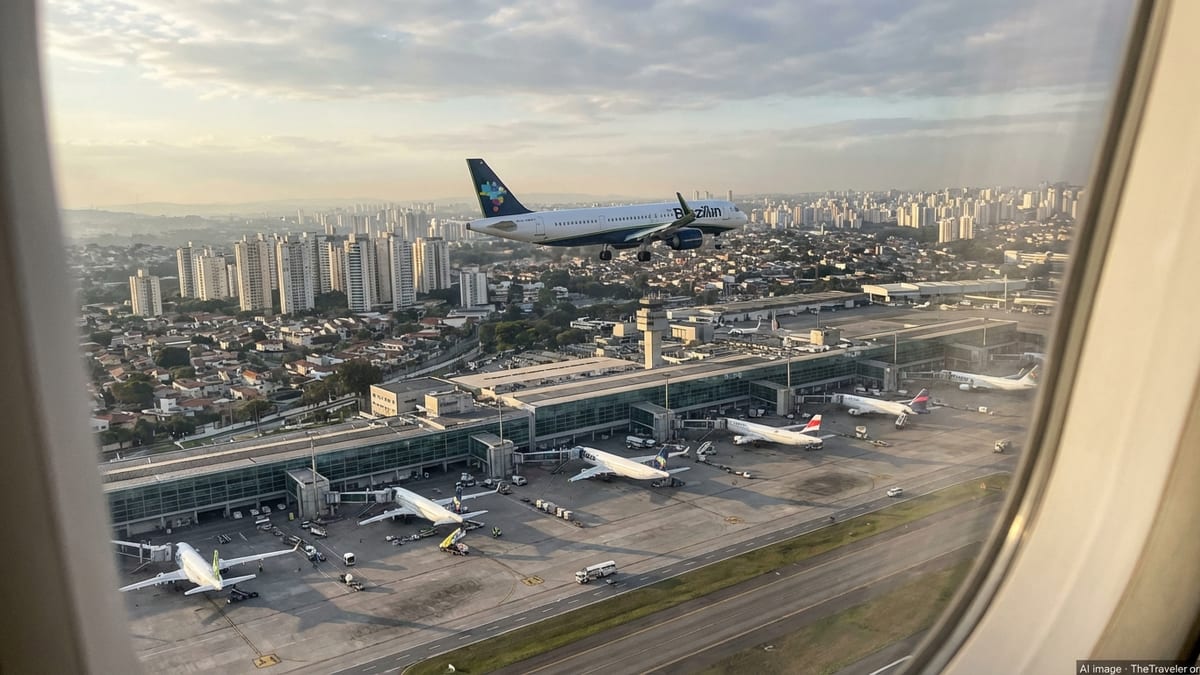
Brazil Outpaces Major Aviation Powers
Fresh figures from the International Air Transport Association show Brazil leading the global pack in air travel demand growth, with revenue passenger kilometres in its market rising 10.9% in January compared with a year earlier. That rate was more than double the pace of overall domestic market growth and comfortably ahead of major markets including China, the United States and Australia, which all recorded more moderate single-digit gains.
The performance extends a trend that became visible in late 2025, when Brazil was already among the fastest-growing domestic markets. Analysts say the South American giant is benefiting from a broad-based revival in business travel, resilient leisure demand and still-strong appetite for “visiting friends and relatives” journeys after years of pandemic-era disruption. Airlines have been rebuilding networks and frequency on key trunk routes such as São Paulo–Rio de Janeiro and expanding service to secondary cities.
At the same time, Brazil’s growth is being amplified by a relatively low comparison base and by ongoing fleet and capacity constraints in more mature markets. Carriers in the United States are contending with aircraft delivery delays, labour cost pressures and a cooling domestic economy, while Australia’s growth is being tempered by high fares and infrastructure bottlenecks at major gateways.
Industry observers note that Brazil’s outperformance underscores the shifting geography of aviation demand. While the United States and China remain the largest markets by total passenger numbers, incremental growth is increasingly being driven by emerging economies, where rising incomes and expanding low-cost carrier networks are pulling millions of first-time flyers into the system.
Global Demand Cools to 3.8% Amid Calendar Effects
Globally, air passenger demand expanded 3.8% year on year in January 2026, according to IATA’s latest monthly snapshot. That marks a slower start compared with much of 2025, when monthly gains frequently ran in the mid to high single digits as the industry continued its post-pandemic recovery and international tourism surged.
A key factor behind the softer headline growth was the timing of the Lunar New Year holiday, which fell in February this year rather than January as it did in 2025. The shift pulled a significant volume of intra-Asia and long-haul traffic out of the January comparison, creating what IATA described as an “artificially weak” reading that does not fully reflect the underlying strength of demand.
Despite the calendar drag, airlines worldwide continued to operate at historically high load factors, supported by a combination of robust bookings and constrained seat capacity. Supply chain challenges affecting aircraft and engine deliveries persist, limiting the ability of some carriers to add seats even as travelers remain eager to fly. IATA’s schedule data indicate that airlines are planning a 5.2% increase in global seat capacity by March, which would be the fastest expansion since April 2024.
Executives and analysts caution, however, that geopolitical tensions and fuel price volatility add a layer of uncertainty to the outlook. Recent hostilities in key regions have prompted some rerouting and raised concerns over potential impacts on jet fuel costs, though there has been no sign so far of a broad-based hit to demand.
International Markets Surge 5.9% as Tourism Stays Strong
While overall global demand growth eased, international routes remained a bright spot, with traffic on cross-border flights rising 5.9% in January compared with a year earlier. That expansion outpaced domestic markets and highlighted the enduring strength of international tourism and business travel as borders remain fully open and corporate travel budgets continue to normalize.
Carriers in the Middle East and Asia Pacific reported some of the sharpest increases in international demand, leveraging their roles as global connecting hubs and beneficiaries of resurgent long-haul tourism flows. Travel corridors linking Europe with the Indian Ocean, Southeast Asia and the Gulf states stayed busy, while transatlantic traffic remained resilient despite slower economic growth in North America and parts of Europe.
In Brazil’s case, the 10.9% surge in overall air travel demand was driven primarily by its domestic market, but international traffic to and from the country also strengthened in January. Routes to North America and Europe in particular recorded healthy load factors, helped by strong demand from outbound Brazilian leisure travelers and rising inbound tourism tied to events and the country’s growing profile as a year-round destination.
Industry data show that premium cabins on many long-haul routes continued to see solid bookings, reflecting a mix of corporate travelers and high-spending leisure passengers. Even so, the bulk of the 5.9% international growth came from economy class, where competitive fares and expanded low-cost long-haul offerings are drawing price-sensitive travelers back into the skies.
Why Brazil Is Pulling Ahead
Several structural and cyclical forces are helping Brazil stand out in the latest global traffic figures. On the structural side, the ongoing expansion of low-cost and hybrid carriers has lowered average fares on key domestic routes, opening air travel to a broader swath of the population. Secondary airports around major cities such as São Paulo and Belo Horizonte are seeing more point-to-point services, reducing travel times and stimulating new demand.
Economically, Brazil has benefited from relatively stable employment levels and improving consumer confidence, supporting discretionary spending on travel. The country’s large internal tourism market, spanning beach destinations in the Northeast, the Amazon basin and cultural centres in the Southeast and South, provides airlines with a diversified demand base that is less dependent on any single region or customer segment.
Policy developments have also played a role. Efforts to reduce taxes and charges on aviation fuel in some states, alongside initiatives to improve airport infrastructure, have helped restrain cost pressures and improve reliability. While challenges remain around regulatory complexity and currency volatility, carriers have been able to deploy capacity more efficiently and restore routes that were cut during the pandemic.
By contrast, growth in China, the United States and Australia has been more constrained by capacity limitations and a higher starting base. In China, domestic traffic surged as borders reopened in 2023 and 2024, making the year-on-year comparisons for 2026 less dramatic. In the United States and Australia, airlines face higher labour and infrastructure costs, as well as a more mature market where most consumers already fly regularly.
What Rising Brazilian Demand Means for Travelers
For travelers, Brazil’s rapid air traffic growth is translating into more choice and, in many cases, more competitive pricing on both domestic and international routes. Airlines have been adding frequencies on core city pairs, increasing options for same-day returns for business passengers and better connecting itineraries for leisure travelers heading to beach resorts or nature destinations.
The surge is also prompting further investment in airport infrastructure. Major hubs such as São Paulo/Guarulhos, Rio de Janeiro/Galeão and Brasília are pursuing projects to expand terminals, enhance security and streamline passenger flows. Regional airports in tourism hotspots are upgrading runways and passenger facilities to accommodate larger aircraft and higher traffic volumes, which could reduce congestion at primary gateways over time.
However, the rapid pace of growth carries risks. Slot constraints at busy airports, limited airspace capacity around major metropolitan areas and lingering supply chain issues could pressure punctuality as airlines push their fleets and crews harder. Environmental groups are also calling for faster adoption of sustainable aviation fuels and more efficient flight operations to keep emissions in check as traffic climbs.
Still, for now, the combination of strong domestic demand, expanding international links and supportive fundamentals has put Brazil in an enviable position at the start of 2026. With global air travel demand continuing to rise, even at a moderated 3.8% pace, the country’s 10.9% surge has cemented its status as one of the most dynamic aviation markets to watch this year.