

More news on this day
Brazil is emerging as one of the world’s fastest-rising tourism powerhouses, recording historic visitor numbers and outpacing traditional heavyweights such as Canada, Mexico, Italy, the United States, Poland and Spain in growth momentum, according to newly released data and international tourism benchmarks.
Get the latest news straight to your inbox!
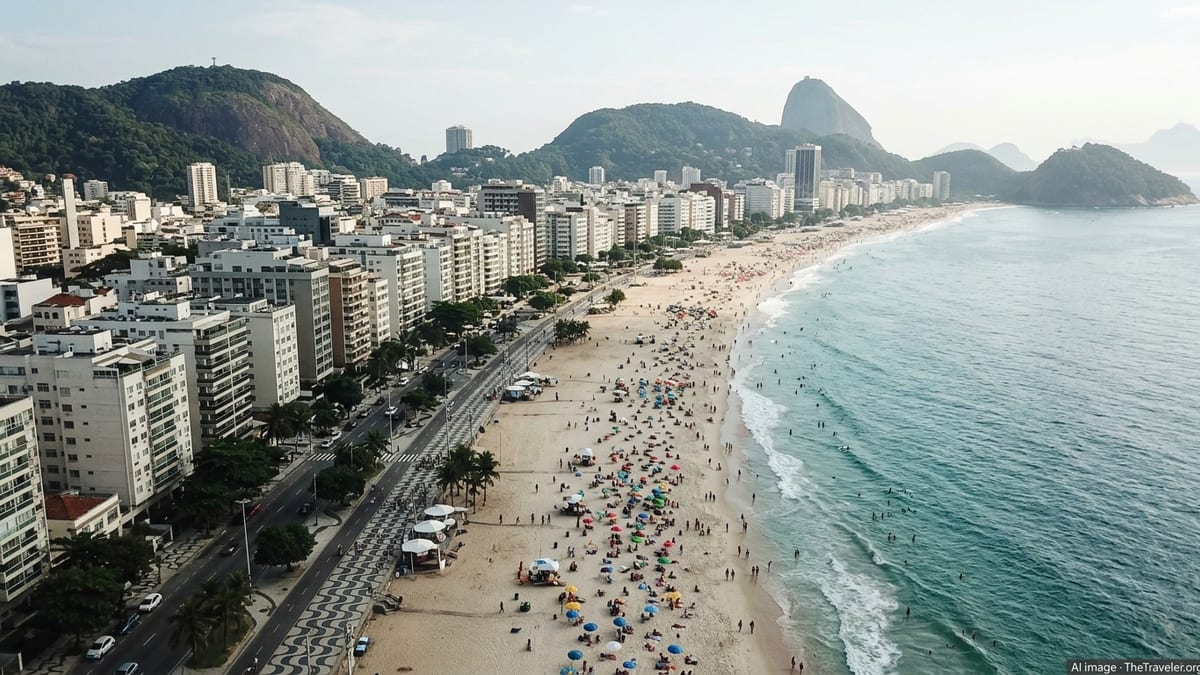
Record-Breaking Arrivals Signal a New Era for Brazil
Brazil closed 2024 with about 6.6 million international visitors, the country’s best historical mark and higher than benchmark years like 2014 and 2016, when it hosted the FIFA World Cup and the Rio de Janeiro Olympic Games. Publicly available government data indicate that the 2024 total represented a clear break from the post-pandemic recovery phase and marked a transition into a phase of structural expansion for inbound tourism.
The surge has accelerated further. Updated statistics compiled by Brazilian tourism bodies and summarized in recent reference material show that the country received more than 9.2 million foreign visitors in 2025, a jump of more than one third compared with 2024 and a new all-time record for international arrivals. This expansion has pushed Brazil into a higher bracket of global destinations and significantly narrowed the gap with established leaders in the Americas and Europe.
While Brazil still trails traditional volume giants like Spain, the United States, Mexico and Italy in absolute visitor numbers, global rankings and analytical compendiums note that its growth rate from the pre-pandemic period to the most recent year now outpaces many of these mature markets. In other words, Brazil is moving from a primarily regional player into a country whose trajectory is reshaping tourism flows across the Americas.
This rapid acceleration is particularly striking when seen against longer-term baselines produced by organizations such as UN Tourism and the World Bank, where Brazil previously appeared with modest annual growth figures and limited global market share. The new data indicate that the country has decisively broken out of that pattern, with international arrivals and receipts both reaching their highest levels on record.
Outperforming Mature Markets in Tourism Growth
Recent global tourism tables still place destinations like France, Spain, the United States, Italy and Mexico among the most visited countries in the world, with tens of millions of international arrivals a year. However, compiled rankings and expert commentary point out that many of these large and mature markets are now growing at low single-digit annual rates, characteristic of destinations that have already reached a high saturation point.
Brazil’s recent performance contrasts sharply with this pattern. The more than 37 percent increase in visitors between 2024 and 2025 places the country among the world’s fastest-growing sizable destinations, overtaking the growth pace recorded by Canada, Mexico, Italy, the United States, Poland and Spain in the most recent comparative datasets. Analysts tracking the UN Tourism World Tourism Barometer have highlighted that, while global arrivals expanded by single digits in 2024 and 2025, Brazil’s percentage gains were several times higher.
In practical terms, this means Brazil is capturing a larger share of a global tourism pie that itself is returning to and surpassing pre-pandemic levels. In the Americas, regional overviews show that total arrivals have nearly recovered to 2019 volumes, yet Brazil’s individual recovery and expansion have pushed it beyond its previous historical ceiling. This performance places the country alongside a select group of emerging winners that are reshaping tourist flows within their respective regions.
For markets like Canada and Poland, where inbound tourism is now growing from already elevated baselines in Europe and North America, incremental increases are more modest. Brazil, by contrast, is coming off a smaller initial base and leveraging new connectivity, branding and product diversification to achieve multi-year double-digit growth that stands out in cross-country comparisons.
Strategic Investments, Air Connectivity and Branding
Brazil’s tourism upswing is closely tied to deliberate efforts to reconnect the country with global travel markets. Publicly available government releases highlight the expansion of international air capacity for the 2024–2025 Southern Hemisphere summer, with scheduled seats on overseas routes rising by close to 20 percent compared with the prior season. This increase has translated into more direct routes to major source markets in Europe and North America and improved links within South America.
At the same time, Brazil has stepped up its presence at leading international travel trade events, positioning destinations such as Rio de Janeiro, São Paulo, Bahia, the Amazon and the Northeast coast more prominently in tour operator catalogs and consumer campaigns. The relaunch of a unified national tourism brand has sought to present Brazil as a year-round destination, emphasizing its mix of nature, culture, gastronomy and urban experiences rather than relying solely on marquee events.
These initiatives have coincided with a broader reshaping of traveler preferences worldwide. Surveys and market analyses show sustained interest in open-air experiences, biodiversity, and culturally rich city breaks, areas where Brazil has both scale and authenticity. By aligning new air routes and promotion with these trends, the country has been able to convert interest into actual arrivals at a faster clip than many long-established destinations.
Industry observers also point to the expansion of mid-range and upscale accommodation in secondary cities, as well as the growing role of digital platforms in distributing Brazilian tourism products. This infrastructure has supported the rapid inflow of visitors without the same degree of overcrowding pressures facing some European hotspots, further strengthening Brazil’s appeal among travelers seeking less saturated alternatives.
Economic Impact and Regional Leadership in the Americas
The tourism boom is already delivering measurable economic benefits. Central bank figures published for 2023 showed foreign visitors spending roughly 6.9 billion US dollars in Brazil, a record level at the time. With international arrivals rising sharply in 2024 and 2025, analysts anticipate that tourism receipts have climbed substantially further, reinforcing the sector’s role as a generator of foreign exchange and employment.
Within South America and the wider Latin American region, Brazil’s latest numbers reposition it as a leading destination by both arrivals and spending. While Mexico remains the top Latin American country in absolute visitor counts, regional overviews and comparative analyses now place Brazil among the most dynamic markets in the hemisphere, often outpacing not only Mexico but also the United States and Canada in percentage growth terms.
This pattern is particularly notable because the Americas overall have been recovering more slowly than Europe and parts of the Middle East. Yet Brazil’s recent performance shows that individual destinations within the region can accelerate far beyond the aggregate trend when policy, connectivity and market demand align. As a result, Brazil is increasingly cited in international tourism commentary as a case study in rapid post-crisis expansion.
The country’s scale also gives its tourism surge wider economic relevance. Unlike many small island or boutique destinations that can grow quickly from a low base, Brazil’s size means that sustained double-digit growth in arrivals translates into large absolute gains in spending, job creation and infrastructure investment, amplifying its weight in regional tourism statistics.
Poised to Lead Future Growth in Global Tourism
Looking ahead, projections assembled from national planning documents and international tourism outlooks suggest that Brazil is well placed to sustain above-average growth in the second half of the decade. The country’s current National Tourism Plan sets ambitious arrival targets, and early data from 2025 indicate that actual performance is tracking ahead of schedule, with several million visitors recorded in just the first months of the year.
On the supply side, airlines are announcing additional routes and frequencies into major Brazilian gateways, while local authorities in key cities report continued investment in airports, cruise terminals and urban mobility projects designed to accommodate rising visitor volumes. Industry briefings also highlight new resort and hotel developments in coastal regions and interior cultural hubs, expanding the country’s capacity to welcome more international guests.
At the global level, UN Tourism expects international arrivals to keep increasing at a moderate pace, with many mature markets constrained by infrastructure and sustainability pressures. In that environment, Brazil’s combination of untapped capacity, diversified attractions and improving connectivity positions it as a likely frontrunner in incremental tourism growth, especially relative to countries like Canada, Mexico, Italy, the United States, Poland and Spain that are already near or above historic peaks.
For travelers, tour operators and investors, the latest data point to a structural shift rather than a one-off rebound: Brazil is moving into a new league of global tourism destinations, with momentum that could see it play a leading role in shaping where and how international visitors explore the Americas in the years ahead.