

More news on this day
Brazil’s tourism sector is entering a new phase of expansion, with a surge in jobs from coastal resorts to Amazonian eco-lodges signaling how travel is reshaping the country’s economy and visitor experience.
Get the latest news straight to your inbox!
Tourism Employment Surges Across a Rebounding Sector
Recent economic research and government data point to a rapid rise in tourism-related employment in Brazil, confirming the sector’s role as one of the country’s most dynamic job creators. Estimates compiled from national labor statistics indicate that the tourism workforce reached just over 8 million people in 2024, the highest level recorded and around 3 to 4 percent higher than the previous year. Projections by international tourism bodies suggest that travel and tourism could support close to 9 million jobs nationwide in 2025, reflecting continued growth in visitor arrivals and spending.
Brazil’s federal authorities describe tourism as a fundamental pillar for national development, and recent policy briefs show why. Documents from the Ministry of Tourism note that approximately 6.8 million people were directly employed in tourism-related activities in 2023, with more than 110,000 additional jobs created in the first seven months of 2024 alone. Separate analyses by the World Travel & Tourism Council highlight that the wider travel economy, including indirect and induced employment, is on track to hit record contributions to Brazil’s gross domestic product by 2025.
The composition of these new jobs is diverse, ranging from hotel and restaurant roles in major cities to guiding, transport, and cultural services in smaller destinations. Travel industry observers describe a shift toward more formal employment contracts, particularly in accommodation and food services, as demand strengthens and operators seek to professionalize their workforces.
Record Visitor Numbers Fuel Beach Destinations
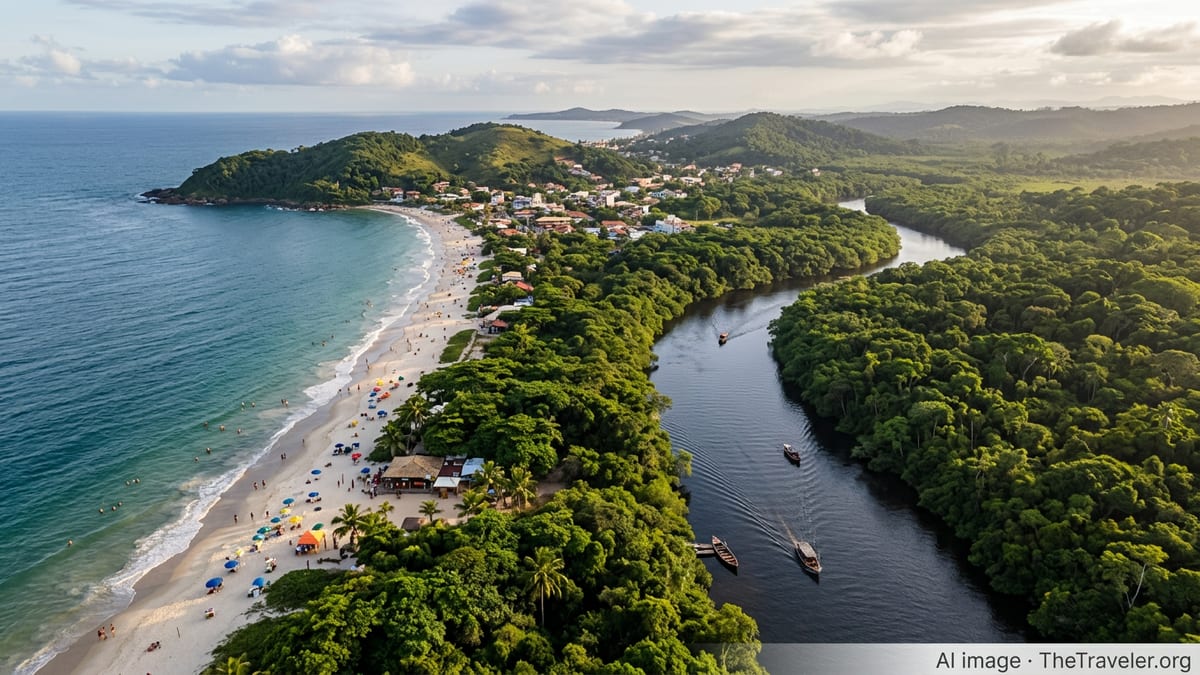
On Brazil’s famous coastline, the tourism jobs boom is most visible in the surge of visitors returning to classic “sun and beach” destinations. Official communication from the federal government reported that Brazil welcomed 6.6 million international tourists in 2024, the highest figure ever recorded and above levels seen during the 2014 World Cup and the 2016 Olympic Games. Additional government and central bank data for 2025 show international tourism revenues at historic highs, with the first quarter alone bringing in billions of dollars in foreign spending.
Brazil’s beach portfolio is also gaining new international recognition for environmental quality. Industry coverage of the Blue Flag certification program notes that the country has steadily increased its number of recognized beaches and marinas, moving from just over 30 certified sites in 2023 to around 50 for the 2025 to 2026 season. Tourism promotion agencies describe the “sun and beach” segment as strategic for Brazil’s image abroad, with clean-water labels and conservation credentials helping attract higher-spending visitors and lengthier stays.
These trends are translating into employment growth along the coast. Regional tourism observatories, such as those monitoring São Paulo state, report billions of dollars in tourism-driven economic activity and tens of thousands of temporary jobs linked to major events and holiday periods. Industry reports emphasize that hotel expansions, new guesthouse openings, and upgraded waterfront facilities are all hiring aggressively, from front-desk staff and chefs to lifeguards and tour operators.
At the same time, local authorities in beach cities are highlighting the need to balance growth with sustainability, pointing to stricter zoning, waste management, and shoreline protection rules intended to safeguard the very landscapes that draw visitors and support jobs.
Amazon Rainforest Tourism Creates New Opportunities
Far from the surf, rainforest tourism is also emerging as a powerful job generator, particularly in the northern states of Amazonas and Pará. Publicly available information on conservation areas such as the Juma Sustainable Development Reserve and other protected zones within the Central Amazon Ecological Corridor illustrates how community-based tourism is being integrated into broader environmental and social policies. These reserves are designed to support sustainable resource use while opening paths for local residents to earn income as guides, boat drivers, cooks, and lodge staff.
Industry reports and traveler accounts describe a growing market for small-scale jungle lodges and river cruises departing hubs like Manaus. Many operators emphasize low-impact experiences, wildlife observation, and cultural exchanges with traditional and riverine communities. As this model expands, more families are finding alternatives to logging or extractive activities, with tourism income supporting education, health, and local entrepreneurship.
Research on state parks and extractive reserves in the central Amazon shows that tourism-related employment, while still modest compared with the big coastal markets, is rising steadily. Jobs often require specific skills such as language proficiency, navigation in complex river systems, and knowledge of local biodiversity. Training programs supported by state agencies and non-governmental organizations are helping residents build these competencies, making it easier for international operators to work with local partners rather than bringing in outside staff.
Observers note that this shift has broader implications: as more visitors choose eco-lodges and guided rainforest experiences, local communities gain a financial stake in conservation, reinforcing arguments that preserved forest can generate more long-term value than cleared land.
National Strategies Push Sustainable and Inclusive Growth
The current wave of job creation is closely linked to Brazil’s new policy agenda for tourism. The National Tourism Plan for 2024 to 2027, validated by the National Tourism Council, sets ambitious targets for both international and domestic travel. According to the Organisation for Economic Co-operation and Development’s most recent tourism review, the plan aims for 8.1 million international visitors and around 150 million domestic tourist movements by 2027, framing tourism as a driver of social inclusion, environmental sustainability, and regional development.
Publicly available program documents detail investment initiatives intended to support these goals. One flagship measure, the International Tourism Acceleration Program, earmarks tens of millions of reais to stimulate new air routes, with the expectation of adding hundreds of thousands of seats on domestic and international flights within a year. More recent updates from Brazil’s tourism investment portal outline a pipeline of projects in accommodation, transport, and attractions, which are projected to create additional direct and indirect jobs through 2026.
Policy briefings also describe an institutional reorganization designed to strengthen tourism’s governing framework. Since 2023, a reinstated Ministry of Culture has taken over cultural policy, allowing the Ministry of Tourism to focus more tightly on destination development, infrastructure, and promotion. Analysts argue that this clearer division of responsibilities may help accelerate approvals for tourism projects and channel resources more efficiently into priority regions, from coastal hubs to interior ecotourism corridors.
At the same time, international organizations such as the World Tourism Organization and the World Travel & Tourism Council highlight Brazil’s potential to capture a larger share of global tourism flows as worldwide travel returns to and surpasses pre-pandemic levels. Their latest outlooks suggest that if current policies and investments are sustained, tourism’s contribution to Brazil’s gross domestic product could reach well over 7 percent in the near term, with employment following a similar upward path.
Balancing Job Growth With Environmental and Community Concerns
As tourism employment expands from beaches to rainforests, debate is intensifying over how to ensure that growth remains both sustainable and inclusive. Environmental advocates frequently point to the Amazon rainforest as a test case. Corridors of protected areas, including state parks and extractive reserves, are designed to reconcile ecological preservation with livelihoods, but rising visitor numbers can strain fragile ecosystems if not carefully managed. Management plans for these areas increasingly incorporate visitor caps, zoning rules, and requirements that operators work with local communities.
On the coast, similar questions surround high-density beach destinations undergoing rapid hotel and infrastructure development. Urbanists and coastal researchers warn that unchecked construction can damage dunes, mangroves, and marine habitats, ultimately undermining the natural appeal that tourism depends on. Municipal governments are responding with environmental licensing requirements, water and waste standards, and efforts to expand public transportation so that tourism growth does not simply translate into congestion and pollution.
Social considerations are also central to current discussions. Labor economists and civil-society organizations underscore that many tourism jobs are still seasonal or low-paid, particularly in informal street vending and casual services. To address this, federal and state programs are placing renewed emphasis on professional training, language courses, and entrepreneurship support, seeking to move more tourism workers into formal, better-protected employment. Reports on pilot initiatives in community-based tourism show that when residents have a say in how tourism is developed, income is more widely shared and cultural traditions are better preserved.
For travelers, these dynamics are reshaping what it means to “discover Brazil.” From certified beaches that meet international environmental standards to rainforest lodges embedded in sustainable development reserves, the country’s tourism boom is creating new jobs while gradually redefining the visitor experience. How effectively Brazil manages this balancing act in the coming years will determine whether the current employment surge becomes a long-term engine of prosperity for people and places across its vast coastline and forest interior.