

More news on this day
New nonstop service from Tampa to Costa Rica on Breeze Airways, slated for late 2026, is set to reshape short-haul leisure travel between the United States and Central America by tying a fast-growing Florida hub to one of the region’s most in-demand eco-tourism gateways.
Get the latest news straight to your inbox!
Details of Breeze’s New Tampa–Costa Rica Connection
Publicly available schedule data and network summaries indicate that Breeze Airways plans to add San José, Costa Rica, to its route map in 2026, with Tampa International Airport expected to be among the first U.S. gateways linked to the Central American capital. The services are projected to begin in the final quarter of the year, ahead of the 2026–27 dry season that typically drives peak tourism demand to Costa Rica’s Pacific and central highlands.
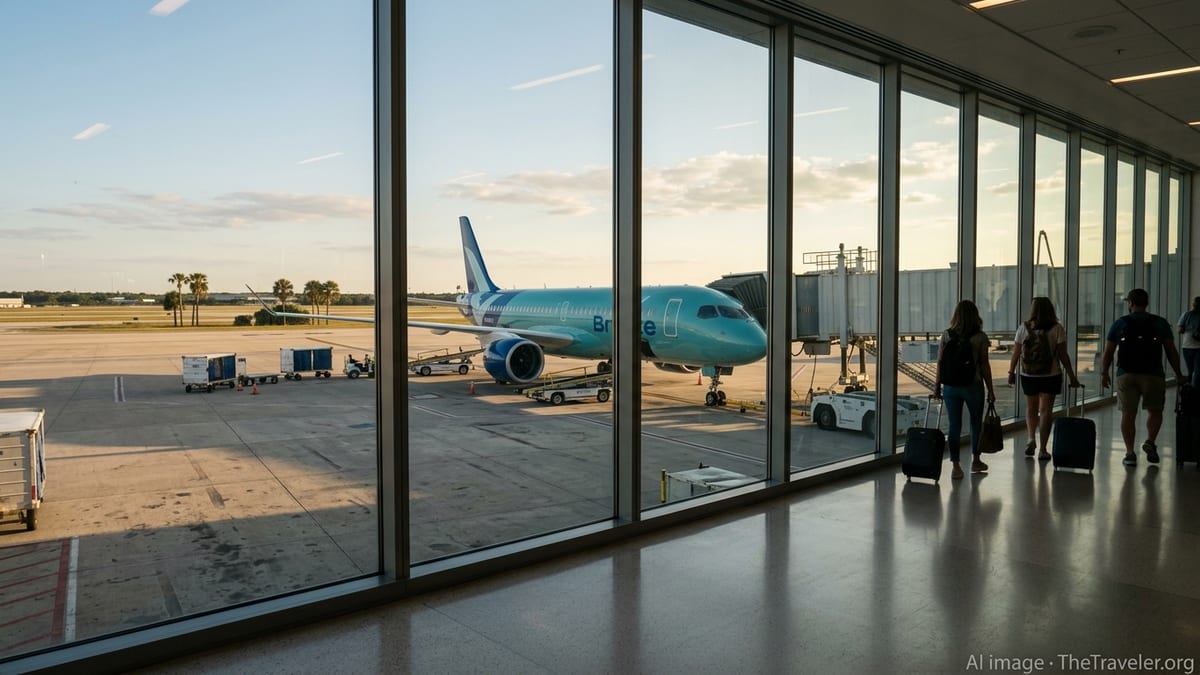
The route is expected to operate with Breeze’s Airbus A220-300 aircraft, the same jet the carrier is using for its first international expansion into Mexico and the Caribbean. That choice positions the airline to offer a mix of lower operating costs and a more comfortable cabin than many older single-aisle aircraft currently flying between the United States and Central America.
Early filings and schedule snapshots suggest that Breeze will follow its now-familiar pattern of launching international services at low weekly frequencies, likely one or two round trips per week between Tampa and San José. That approach allows the carrier to test demand on a new cross-border market without committing a large share of its still-growing fleet.
For Tampa International Airport, the addition of Costa Rica would extend a wave of international growth that already includes new links to Mexico and the Caribbean. Airport data and incentive-program documents show that Breeze has quickly become one of Tampa’s key carriers, holding a notable share of local traffic and leading the field in unique nonstop destinations.
Why Costa Rica Fits Breeze’s Network Strategy
Costa Rica has long been one of Central America’s strongest tourism performers, drawing visitors with national parks, wildlife reserves, surf beaches, and adventure travel. Industry reports show that U.S. travelers, particularly from the Southeast, are fueling steady growth in arrivals, especially during the Northern Hemisphere winter when demand for warm-weather escapes peaks.
Breeze’s model focuses on point-to-point routes between midsize cities and leisure destinations, often avoiding large legacy-carrier hubs. In this context, Tampa–San José aligns closely with the airline’s broader 2026 expansion, which includes new international routes from secondary and emerging focus cities to Cancun, Montego Bay, and Punta Cana.
By connecting Tampa directly to San José, Breeze is tapping into a market that has historically required connections through major hubs such as Miami, Atlanta, or Houston. Public schedule information suggests relatively limited existing nonstop competition from Florida’s Gulf Coast to Costa Rica, giving Breeze an opportunity to position itself as the only or primary nonstop option from the Tampa Bay region.
The choice of San José as the Costa Rican gateway also reflects practical network considerations. The capital’s Juan Santamaría International Airport serves as the country’s main international hub, with established ground connections onward to beach destinations in Guanacaste, the central Pacific coast, and the Arenal region. That makes it attractive both for short city breaks and as a springboard for longer eco-tourism itineraries.
Implications for U.S.–Central America Travel in 2026
The Tampa–Costa Rica launch forms part of a wider trend in which newer U.S. carriers are pushing into near-international leisure markets. Aviation industry coverage notes that 2026 already marks Breeze’s first year of international operations, with its initial cross-border flights from other U.S. cities to Mexico and the Caribbean now underway.
Adding Costa Rica from Tampa broadens the geographic reach of that strategy into Central America, an area that has traditionally been dominated by legacy airlines and Latin American network carriers. Travelers in the southeastern United States are likely to see lower entry-level fares and more nonstop choices as a result, particularly for long weekend trips and seven-night vacations aligned with Breeze’s limited weekly frequencies.
For the broader U.S.–Central America market, the move underscores how newer aircraft and a point-to-point model can make thinner leisure routes viable. The A220’s combination of range and fuel efficiency allows Breeze to connect a city like Tampa to San José without the scale of a traditional hub, while still maintaining competitive seat costs.
Travel analysts also point out that additional low-cost capacity on routes like Tampa–San José could push rival airlines to respond with their own fare promotions or added frequencies on overlapping city pairs. Even without daily service, the mere presence of a new competitor often influences pricing and schedule decisions across the region.
What Tampa and Costa Rica Travelers Can Expect
For travelers based in the Tampa Bay area, the new Costa Rica flights promise shorter total journey times and fewer connections. Instead of transiting through congested hubs, passengers will be able to fly directly to San José, arrive mid-day or in the afternoon depending on the final timetable, and connect by road to key tourism zones the same day.
Breeze markets itself as a “nice low-cost carrier,” offering a tiered product structure that ranges from basic economy-style fares to roomier seating with added amenities. On the A220, travelers can expect a 2–3 seating configuration, larger windows, and quieter cabin acoustics than many older narrowbodies, features that are likely to appeal on a flight of roughly three hours’ duration.
In Costa Rica, the new service is expected to feed demand into established tourism regions rather than opening entirely new destinations. Industry observers note that U.S. arrivals are increasingly interested in sustainable stays, wildlife watching, and small-group adventure tours, and a nonstop link from Tampa should fit neatly into that pattern. Tour operators and hotels that already rely heavily on U.S. markets may look to tailor packages around Breeze’s specific operating days.
On the Tampa side, airport marketing materials highlight leisure-driven international growth as a key priority. Recent incentives and route announcements indicate that the airport views niche international services as a way to differentiate itself within Florida, especially as central and south Florida hubs become more crowded and competitive.
A Test Case for Future U.S.–Central America Expansion
Industry coverage of Breeze’s international roll-out suggests that each new cross-border route effectively serves as a test case for whether underserved city pairs can support sustainable low-frequency operations. Tampa–Costa Rica is likely to be closely watched within the airline’s network planning group, particularly regarding seasonal demand patterns and the mix of leisure and visiting-friends-and-relatives traffic.
If the route performs well, analysts say the model could be replicated with additional nonstop links between secondary U.S. cities and Central American destinations, using the same small-hub, leisure-focused template. Other airports with growing Breeze operations may look to Costa Rica, or to neighboring markets such as Panama or Belize, as potential next steps.
Conversely, if demand proves highly seasonal or sensitive to fare levels, the Tampa–San José experiment may reinforce the importance of flexible scheduling, with the airline fine-tuning frequencies or operating only during peak winter and spring months. Breeze has already demonstrated a willingness to adjust domestic routes quickly based on performance, and observers expect the same nimbleness in its international network.
Either way, the addition of Costa Rica to Breeze’s Tampa schedule in 2026 signals a new phase in U.S.–Central America travel, in which nimble, leisure-focused carriers play a much larger role alongside the traditional hub-and-spoke giants.