

More news on this day
Breeze Airways will launch daily nonstop service between Jacksonville and Fort Lauderdale on July 1, a new in-state link that tourism leaders say could amplify Florida’s appeal for international visitors from Canada, Brazil, the United Kingdom, Colombia and Mexico.
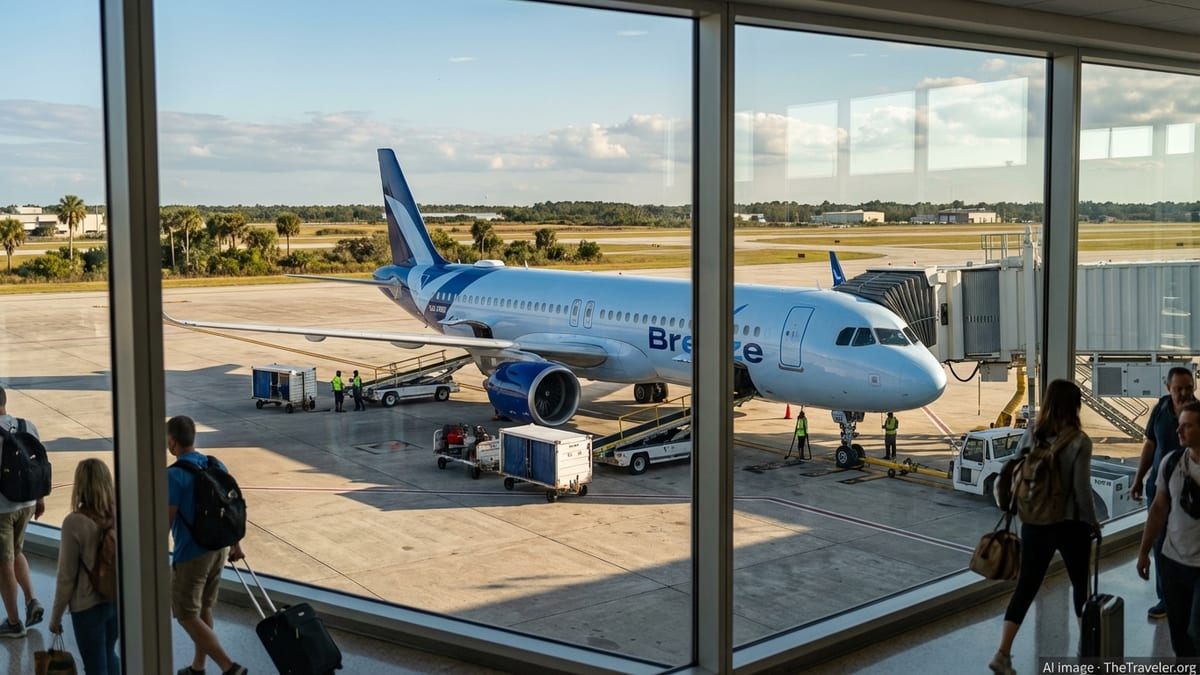
New Daily Link Restores a Key Florida Corridor
The new Breeze Airways service will operate daily between Jacksonville International Airport and Fort Lauderdale-Hollywood International Airport beginning July 1, with introductory one-way fares advertised from 49 dollars. The route gives Northeast Florida travelers a fresh nonstop option to South Florida after a period of cutbacks that saw other carriers scale back or end service on the corridor in recent years.
Breeze will operate the flights with its Airbus A220-300 aircraft, offering a mix of low-cost and upgraded seating products. The airline highlights family-friendly policies such as free family seating, fast onboard Wi‑Fi, and no change or cancel fees, features designed to appeal to both leisure travelers and visiting friends-and-relatives traffic moving within Florida.
Airport officials in Jacksonville describe Fort Lauderdale as one of the most requested destinations from local passengers, underscoring pent-up demand for a nonstop alternative to driving or connecting through other hubs. With a daily schedule rather than a limited seasonal pattern, the new route is expected to support year-round travel patterns, from beach getaways and cruise departures to business trips and sports tourism.
Gateway to International Visitors via Fort Lauderdale
While the new flight is a domestic hop, industry analysts say its broader significance lies in connectivity. Fort Lauderdale-Hollywood International Airport has grown into a major North American and Latin American gateway, with dense schedules operated by U.S. and foreign carriers to Canada, Brazil, the United Kingdom, Colombia and Mexico. For those inbound visitors, a simple same-day connection into Jacksonville can open up new itineraries across North Florida and coastal Georgia.
Tourism officials note that travelers from Quebec and Ontario already view South Florida as a winter mainstay, and are increasingly looking to pair longer stays with road trips or regional hops to new parts of the state. Similarly, rising middle-class demand from Brazil, Colombia and Mexico has supported expanded Florida capacity in recent years, much of it flowing through Fort Lauderdale, Miami and Orlando. The added Jacksonville link gives tour operators another building block for multi-city packages.
For UK visitors, who rank among Florida’s most lucrative long-haul markets, Fort Lauderdale’s growing international schedule offers alternatives to the state’s traditional gateways. Travel planners say British and European travelers often seek more than one region on a Florida trip, combining major theme parks or South Florida beaches with less crowded coastal towns or historic cities. In that context, a quick domestic connection from Fort Lauderdale to Jacksonville can reposition visitors toward the state’s northeast shoreline in under an hour.
Jacksonville Tourism Looks North, South and Overseas
Jacksonville and the surrounding First Coast region are already seeing record hotel performance and rising visitor numbers, bolstered by a mix of sports, military, medical and beach-driven leisure travel. The new Breeze route is expected to layer in demand from both domestic and international markets, particularly as travel advisors and online booking platforms begin to surface Jacksonville as a convenient add-on to South Florida-centric itineraries.
Local tourism advocates point to the area’s long Atlantic beaches, growing restaurant scene, and revitalized downtown riverfront as selling points for overseas travelers who have already “done” Miami or Orlando. Jacksonville’s relative affordability compared with South Florida is another advantage at a time when exchange rates and inflation remain front of mind for Canadian, British and Latin American visitors.
Convention and event planners are also watching the new service closely. Easy one-stop access from major overseas hubs via Fort Lauderdale can strengthen Jacksonville’s pitch for international conferences, sports events and cultural festivals that draw participants from across the Americas and Europe. With Breeze positioning itself as a “premium leisure” carrier, industry leaders say the onboard product could appeal to small business travelers as well as vacationers.
Breeze’s Florida Growth Strategy Centers on Fort Lauderdale
The Jacksonville addition comes as Breeze accelerates its broader Florida expansion, particularly through Fort Lauderdale. The carrier is layering in multiple new or expanded links from the South Florida airport this summer, including added service to Charleston, Greenville-Spartanburg, Tallahassee, Myrtle Beach, Pensacola and Salisbury, alongside increased frequencies to Tampa and other markets. The Jacksonville nonstop slots into a growing intra-Florida and Southeast network built around Fort Lauderdale as a central node.
By focusing on point-to-point routes that larger legacy airlines have trimmed or abandoned, Breeze aims to capture price-sensitive leisure travelers without sacrificing onboard comfort. Its A220-300 fleet allows the airline to serve medium-haul markets with lower operating costs and cabin features that more closely resemble mainline jets than traditional regional aircraft.
For Florida’s tourism ecosystem, that strategy translates into a thicker web of secondary and tertiary routes that feed major international gateways. As Fort Lauderdale continues to attract additional cross-border and long-haul service, every new domestic spoke increases the range of Florida destinations easily reachable for overseas visitors. Industry observers expect that to benefit markets like Jacksonville that are not yet served by regular transatlantic or Latin American flights of their own.
Competitive Dynamics and Outlook for Summer Travel
The timing of Breeze’s move is notable. After a cycle of route rationalizations and capacity cuts that affected several Jacksonville nonstop services in 2024 and 2025, the new Jacksonville–Fort Lauderdale daily flight signals a measured return of competition on key Florida corridors. For travelers, that could mean more choice and downward pressure on fares during the busy summer season, particularly as other low-cost carriers adjust their networks across the state.
Travel agencies report strong advanced interest in Florida itineraries for the upcoming summer, with repeat visitors from Canada and the UK in particular looking beyond traditional hotspots for new experiences. Cruise bookings from South Florida ports are also robust, and the Breeze schedule opens the possibility for Northeast Florida residents to fly to Fort Lauderdale for cruise departures while international passengers can invert the pattern, flying into Fort Lauderdale and tagging on a Jacksonville stay before or after sailing.
If the route performs as expected, analysts say Breeze could consider layering additional Jacksonville frequencies or new city pairs that further connect the market to its growing network. For now, tourism leaders on both ends of the route are focused on marketing the July 1 launch as a fresh, convenient bridge between two of Florida’s fastest-growing metropolitan regions, with ripple effects that could be felt from Toronto and London to Sao Paulo, Bogota and Mexico City.