

More news on this day
Brisbane Airport is preparing to turn Lunar New Year 2026 into a major celebration of Asian culture and connectivity, using the peak travel period to spotlight new and expanded routes into key Asian markets and position Queensland as one of the region’s most dynamic tourism gateways.
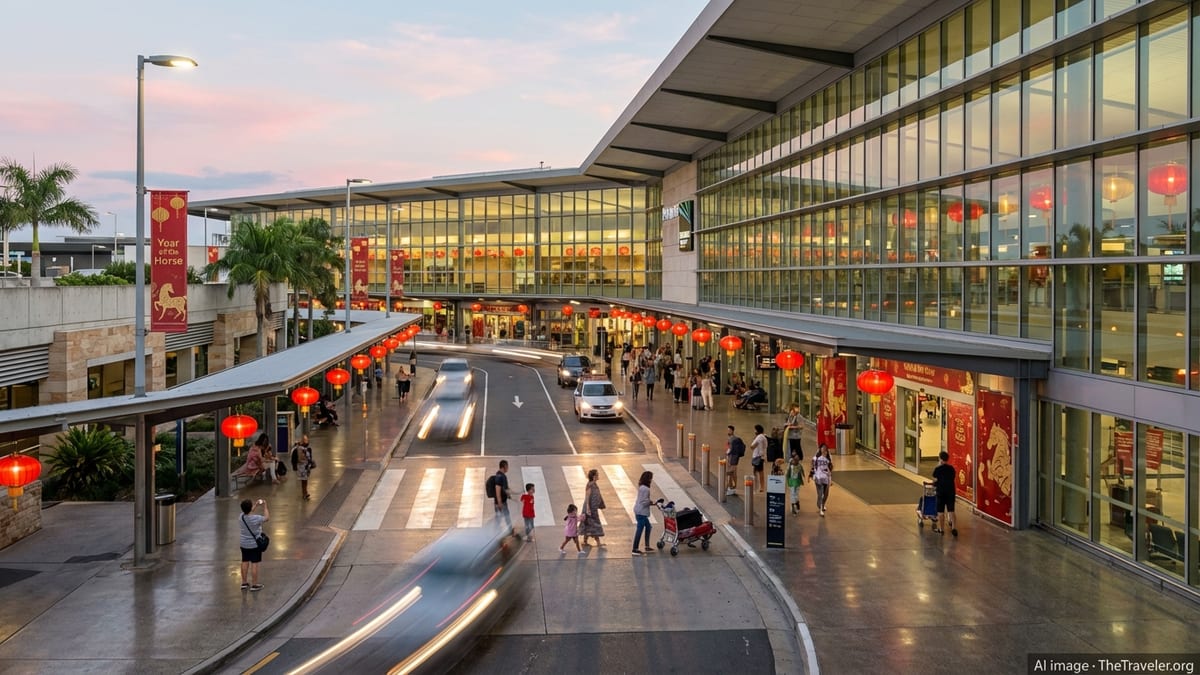
Lunar New Year Takes Centre Stage at Brisbane Airport
Lunar New Year 2026 will arrive at Brisbane Airport at a pivotal moment for Queensland’s tourism recovery, with international passenger numbers already back above pre pandemic levels and Asia once again driving growth. Airport executives see the upcoming Year of the Horse festivities as an opportunity not only to decorate terminals in red and gold, but to send a clear signal to airlines and travellers that Brisbane is firmly plugged back into the Asian travel network.
Activations planned across the international terminal are expected to coincide with the traditional peak in two way travel between Queensland and key Asian hubs, as overseas visitors arrive for summer holidays and local residents head abroad to reunite with family. The airport, which welcomed 22.6 million passengers in the 2023 24 financial year and has since gone on to record its busiest day on record, is forecasting another strong surge in February 2026 as Lunar New Year drives demand on routes to China, Japan, Singapore and Southeast Asia.
Brisbane Airport Corporation is using the seasonal focus on Asian destinations to highlight the breadth of its current network, which already includes direct services to more than 30 international ports and a dense domestic schedule feeding in visitors from across Queensland and other Australian states. Executives argue that when the airport is busy, tourism operators from the Gold Coast to the Great Barrier Reef feel the benefits, making cultural moments like Lunar New Year economically significant as well as symbolic.
Asia Routes Expand Ahead of the Year of the Horse
Lunar New Year 2026 will be underpinned by some of the most extensive scheduling Brisbane has seen on its Asian routes. China Southern Airlines is ramping up Brisbane Guangzhou to a double daily service across the peak Southern Hemisphere summer, with up to 14 weekly flights operating between mid December 2025 and late February 2026 before settling back to 11 per week in early March. The expansion adds more than 53,000 extra seats over the season, creating critical mass for both Chinese inbound tourism and Queenslanders travelling deeper into mainland China and beyond.
Industry analysts note that Guangzhou functions as a powerful one stop gateway into secondary Chinese cities such as Chengdu, Xian and Wuhan and further into emerging Southeast Asian markets including Vietnam. Adding Lunar New Year capacity through Brisbane not only makes it easier for Chinese families to visit Queensland for holidays and study tours, it also positions the airport as a convenient alternative to Sydney and Melbourne for Australians bound for Asia. Airport management has framed the upgauge as a vote of confidence in Queensland’s role in the broader Australia Asia corridor.
The China Southern uplift is part of a broader international build up at Brisbane that will carry into 2026. Qantas has confirmed additional weekly frequencies to Pacific hubs and has reversed earlier plans to cut services to Singapore and Manila in the first half of the year, preserving capacity on two key Asian connecting markets precisely as Lunar New Year travel peaks. Jetstar’s ongoing push into North Asia, with services to Tokyo and Osaka, further deepens the airport’s Japanese footprint in time for the New Year holidays and late season ski traffic coming back through Queensland.
Chinese and Japanese Travellers Drive Queensland Tourism Recovery
The timing of Brisbane Airport’s Lunar New Year push comes as Chinese visitor numbers roar back nationally and Japanese tourism to Queensland surges beyond pre pandemic baselines. National statistics for early 2025 showed China once again emerging as Australia’s largest source of short term visitors, overtaking New Zealand on the back of pent up demand and increased flight capacity. Chinese travellers typically spend more per trip than other markets, making their return crucial for tourism operators and retail precincts across Queensland.
At the same time, Queenslanders have re embraced Japan in record numbers. Recent data highlighted a steep increase in two way traffic between Brisbane and Japanese destinations, fuelled by a growing network of direct services and competitive fares. For Brisbane Airport, Lunar New Year offers an opportunity to match this enthusiasm with targeted marketing that encourages Japanese and Chinese visitors to use the city as a springboard to the Gold Coast, Sunshine Coast and Tropical North Queensland, while also nudging locals to explore lesser known parts of Asia.
Airport executives argue that the rebound underlines Brisbane’s shift from primarily a domestic hub to a fully fledged international gateway. With more than six million passengers passing through the international terminal in the past year and fewer locals choosing to route through other Australian airports, Brisbane is capturing a larger share of long haul outbound and inbound traffic. Lunar New Year 2026 is expected to reinforce that trend, showcasing the city’s growing connectivity to Asia at precisely the moment families and tour groups are planning their first big overseas trips of the year.
BrisAsia Festival Links Terminal to Citywide Celebrations
Brisbane Airport’s campaign will dovetail with the wider BrisAsia Festival, which returns from 13 to 22 February 2026 as the city’s flagship celebration of Lunar New Year and contemporary Asian culture. Produced by Brisbane City Council, the ten day program brings together live music, street food, visual arts and performance across venues from the inner city to the multicultural suburbs, with the Year of the Horse theme promising a focus on energy, movement and momentum.
Airport officials are working with festival organisers and tourism bodies to align messaging, encouraging visitors who land in Brisbane for Lunar New Year to extend their stay and explore events such as Lunar New Year in the Gardens, Southside by Night and a new KPOP showcase. The airport’s own activations are expected to draw inspiration from these citywide highlights, creating a seamless narrative that starts at the arrival gate and continues through the streets of Fortitude Valley, Sunnybank and South Bank.
The collaboration reflects a broader strategy to transform Brisbane’s role from transit point to cultural destination in its own right. By integrating airport messaging with the BrisAsia calendar, tourism agencies hope to entice travellers to book stopovers rather than immediate onward connections, particularly those flying in from China, Japan and Southeast Asia. The airport’s visibility in festival promotions, both in terminal and online, underscores how transport infrastructure and cultural programming are being woven together to grow visitor nights and spending.
On the Ground: Terminal Experiences and Community Partnerships
Inside the international terminal, Brisbane Airport plans to mirror the vibrancy of local neighbourhood celebrations with a program of performances and pop up experiences across the Lunar New Year period. Travellers can expect lion dances in departure halls, calligraphy demonstrations, and seasonal food offerings from Asian concessionaires, providing a first taste of the region even before leaving the airport precinct. Retailers are preparing themed window displays and special promotions targeting both outbound and inbound passengers.
These efforts build on Brisbane Airport Corporation’s ongoing work with diaspora communities, particularly in suburbs such as Sunnybank, which has long been recognised as one of the city’s epicentres of Lunar New Year events. Local business associations there have hosted multi day programs of fireworks, dragon dances and food tours in recent years, drawing visitors from across southeast Queensland. By highlighting these neighbourhood celebrations in terminal signage and digital channels, the airport hopes to disperse New Year visitors beyond the city centre and into local dining and shopping districts.
Staff from diverse cultural backgrounds are also being brought into the spotlight as informal ambassadors, sharing personal stories of how Lunar New Year is celebrated in their home countries. This human centred approach is intended to make the terminal atmosphere more welcoming for first time visitors who may be travelling long haul from Asia, while reinforcing to Queenslanders that their airport is deeply linked to the communities it serves. The result is a holiday period that feels as much about connection and belonging as it does about flight schedules.
Record Passenger Volumes Test Airport Capacity
While the focus is on cultural celebration, Lunar New Year will also test the operational resilience of an airport already running near record volumes. In late 2025 Brisbane set a new benchmark with more than 82,000 passengers passing through its terminals in a single day, driven by a mix of school holidays, major sporting events and robust international demand. With additional Asia capacity layered on for the 2025 26 summer, planners anticipate similarly heavy days across the New Year period.
To manage the surge, Brisbane Airport is continuing with a multibillion dollar transformation program known as Future BNE, which includes upgrades to terminal facilities, security screening and passenger processing systems. Incremental improvements introduced over the past year, from smarter queuing layouts to additional self service bag drops, are designed to keep people moving even during peak waves associated with long haul departures to China and evening banks of arrivals from Japan and Southeast Asia.
Airlines and ground handling partners are meanwhile adjusting rosters and check in opening times to cater for extended family groups and tour parties typical of Lunar New Year travel. Airport spokespersons say the goal is to ensure the customer experience remains smooth and welcoming despite higher volumes, reinforcing Brisbane’s reputation as a friendly, easy to navigate alternative to Australia’s larger gateways. If successful, the operation over Lunar New Year 2026 will provide a template for managing even bigger surges in the lead up to future events such as the 2032 Olympic and Paralympic Games.
Tourism Industry Counts on New Year Momentum
Queensland’s tourism industry is watching the Lunar New Year period closely, seeing it as an early indicator of how strong Asian demand will be through the rest of 2026. From reef operators in Cairns to resorts on the Gold Coast, many businesses now rely on the higher spending patterns of Chinese, Japanese and Southeast Asian visitors to balance fluctuating domestic travel. Forward booking data suggests a healthy pipeline of group tours and independent travellers tied to the holiday, particularly on itineraries that combine Brisbane with coastal and outback experiences.
Tourism bodies are working with Brisbane Airport and airlines to convert increased seat capacity into lasting market share, focusing on digital campaigns that promote Queensland as a safe, nature rich and culturally vibrant destination within easy reach of Asia’s major cities. Packages built around Lunar New Year themes, including food trails through Brisbane’s Asian precincts and day trips timed around BrisAsia performances, aim to differentiate the state from competing destinations in the region.
Industry leaders stress that maintaining a consistent presence in Asian markets beyond the holiday window will be crucial. The expanded Brisbane Guangzhou schedule, sustained services to hubs like Singapore, and new seasonal flights across the Pacific all help make Queensland more accessible year round. By using Lunar New Year 2026 as a headline moment to showcase this network, Brisbane Airport and its partners hope to lock in repeat visitation and word of mouth recommendations that can sustain growth well after the lanterns have come down.