

More news on this day
Bristol Airport is preparing for one of the busiest holiday periods in its history, with reports indicating that around 725,000 passengers are expected to pass through the terminal over the Easter getaway, prompting fresh warnings about queues, traffic bottlenecks and limited parking capacity.
Get the latest news straight to your inbox!
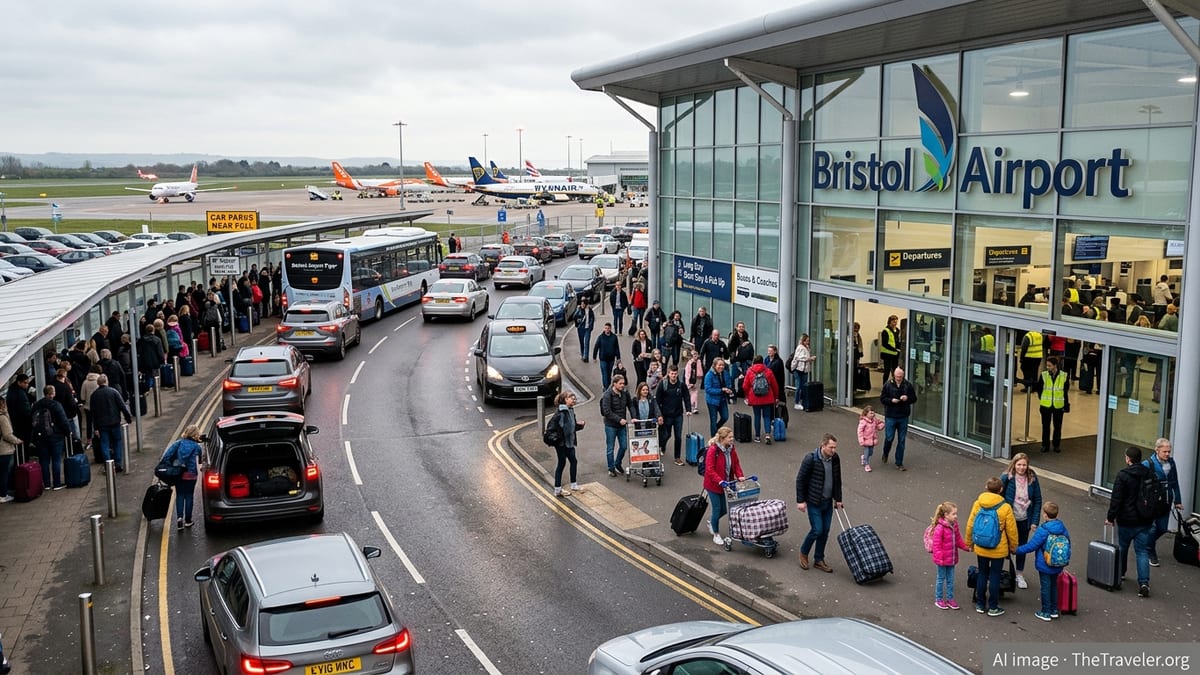
Record Passenger Volumes Test a Rapidly Growing Airport
The projected 725,000 travelers over the Easter period come against a backdrop of sustained growth at Bristol Airport. Publicly available aviation statistics show the airport handled more than 10 million passengers in 2024, cementing its position among the United Kingdom’s busiest regional hubs and pushing operations close to existing planning caps.
Easter traditionally brings a spike in demand as families head for Mediterranean beaches and city breaks across Europe. This year’s forecast suggests an exceptional concentration of departures and arrivals in a short window, with early morning and late afternoon peaks expected to be particularly intense. Industry reporting on the wider European market also highlights strong leisure demand around Easter 2026, reinforcing expectations of busy flights and high load factors on routes from Bristol.
The surge follows several years of incremental infrastructure changes at the airport, including expanded security lanes, upgraded parking areas and ongoing terminal enhancements. However, capacity assessments released through planning processes indicate that the site remains constrained by its compact footprint, short single runway and road-only surface access, leaving little margin when volumes spike sharply.
Travel coverage from previous seasons shows that busy bank holiday weekends at Bristol can already produce crowded check in halls, lengthy security lines and queues stretching into outdoor areas. With higher numbers now anticipated, transport analysts suggest that any minor disruption, such as an aircraft technical issue or localized weather, could quickly ripple through the tightly scheduled operation.
Security, Check In and Boarding: How Early Is Early Enough?
As airlines ramp up Easter schedules from Bristol, publicly available guidance continues to urge passengers to arrive well ahead of departure. Most carriers still advise at least two hours for short haul flights and three hours for long haul, while recent media coverage and passenger accounts from peak periods at the airport indicate that even earlier arrivals may be prudent at the busiest times of day.
Reports from frequent travelers through Bristol suggest that security processing times can vary widely depending on time and day. Early morning waves, often between 5 a.m. and 8 a.m., are commonly described as the most pressured, with queues forming quickly as multiple departures converge. During past Easter and summer peaks, some passengers have reported waiting close to an hour to clear security when arriving close to the airline’s minimum recommended time.
Check in and bag drop queues are another pinch point as charter and low cost operators funnel large volumes of holidaymakers through limited desk space. Industry commentary on recent European holiday seasons notes that staffing levels are generally more resilient than during the post-pandemic recovery, but remain finely balanced on peak days like Good Friday and Easter Monday.
To reduce stress, travel experts quoted in UK consumer and aviation coverage recommend checking in online as early as the airline allows, pre paying for cabin baggage where required, and keeping hand luggage streamlined to avoid delays at screening. Using mobile boarding passes, separating liquids in advance and wearing easily removable shoes are all small steps that can help move queues more quickly during a record breaking weekend.
Road Access, Parking Costs and Public Transport Pressures
The forecast Easter surge is also expected to strain access roads and parking capacity at Bristol Airport. The terminal sits outside the city on the A38, a single carriageway route that already experiences regular congestion at morning and evening peaks. Local reporting and public discussion over the winter highlighted rising frustration with traffic queues, higher short stay prices and increased charges in the drop off zone for 2026.
Parking has become a particular flashpoint. Commentators across regional media and community forums point to significant seasonal price rises for on site car parks, alongside stricter enforcement of time limits in express drop off areas. With Easter demand strong and many travelers still preferring to drive directly to the terminal, analysts expect car parks to be close to full on key days, raising the risk that late bookers may have to resort to more distant or off site options.
Public transport offers an alternative, but it too is likely to be under pressure. The dedicated airport bus from central Bristol and coach links from surrounding towns typically increase frequency during peak seasons, yet passengers have reported full vehicles and standing room only on busy mornings. Unlike some larger UK airports, Bristol does not currently benefit from a direct heavy rail link, limiting options for those seeking to avoid traffic and parking charges.
Travel planners quoted in regional transport studies suggest that passengers budget extra time for the journey to the airport, particularly those connecting from rail services at Bristol Temple Meads or Bristol Bus & Coach Station. Leaving earlier than usual, monitoring live traffic updates and considering backup options such as local taxi firms or pre booked ride services can help reduce the risk of missing flights when roads around the terminal become gridlocked.
Airline Schedules, Wider Disruptions and What Could Go Wrong
While Bristol Airport expects strong demand through the terminal, wider aviation developments across Europe add uncertainty to this year’s Easter travel picture. Recent industry reporting has highlighted potential labour disputes and fuel market pressures affecting several major carriers, including those with significant operations in the UK. Any industrial action, air traffic control restrictions or sudden schedule changes could quickly reverberate through regional airports such as Bristol.
Analysts following European airlines indicate that carriers have generally scheduled aggressive capacity into the spring to capture pent up leisure demand, particularly on sun routes to Spain, Portugal, Greece and Turkey. That strategy can leave limited slack in aircraft and crew availability. If one flight experiences a technical delay or crew shortage, aircraft rotations may be disrupted for the rest of the day, with knock on effects for passengers departing from Bristol during an already stretched Easter timetable.
Weather is another variable. Although late March and early April are less prone to severe winter storms, the South West of England can still experience low cloud, heavy rain and strong crosswinds, all of which can affect operations at an airport with a single relatively short runway. Reports from previous years describe occasional diversions to larger airports or delays when conditions fall outside airline operating limits, further complicating passenger flows through Bristol’s compact terminal.
Consumer advocates quoted in national travel coverage emphasise that passengers should keep contact details updated with airlines, monitor booking apps closely and review the latest conditions of carriage in case of disruption. Knowing in advance what compensation or rebooking options may apply if flights are delayed or cancelled can reduce confusion during a high pressure holiday weekend.
Practical Strategies for a Smoother Easter Getaway
Against this backdrop of record volumes and potential disruption, experienced travelers are adapting their Easter plans to build in resilience. Publicly available advice from travel organisations and insurance providers encourages passengers to treat busy holiday weekends as high risk periods and plan accordingly, particularly when travelling with children or making time sensitive connections.
Key recommendations include arriving earlier than the minimum suggested by airlines, especially for early morning departures or flights on Good Friday and Easter Monday. Booking airport parking well in advance, double checking baggage rules for low cost carriers, and preparing cabin bags to comply with current security liquid and electronics requirements can all reduce the chance of last minute problems at check in or screening.
Travel insurance with strong disruption cover is another recurring theme in expert commentary, reflecting memories of previous holiday weekends marked by cancellations and long delays across Europe. Policies that include provisions for missed departures, extended delays and additional accommodation can offer a financial safety net if the Easter rush at Bristol coincides with wider operational challenges in the airline or air traffic system.
For many passengers, however, the most valuable resource will be time. Allowing extra hours for the journey to the airport, being prepared to queue calmly at security, and keeping flexible expectations around departure and arrival times may be the simplest ways to navigate Bristol Airport’s record breaking Easter surge with less stress.