

More news on this day
Bristol is positioning itself at the forefront of sustainable air mobility, with hydrogen refuelling trials, electric aircraft ecosystems and emerging air taxi technology set to reshape how visitors arrive in and explore the West Country.
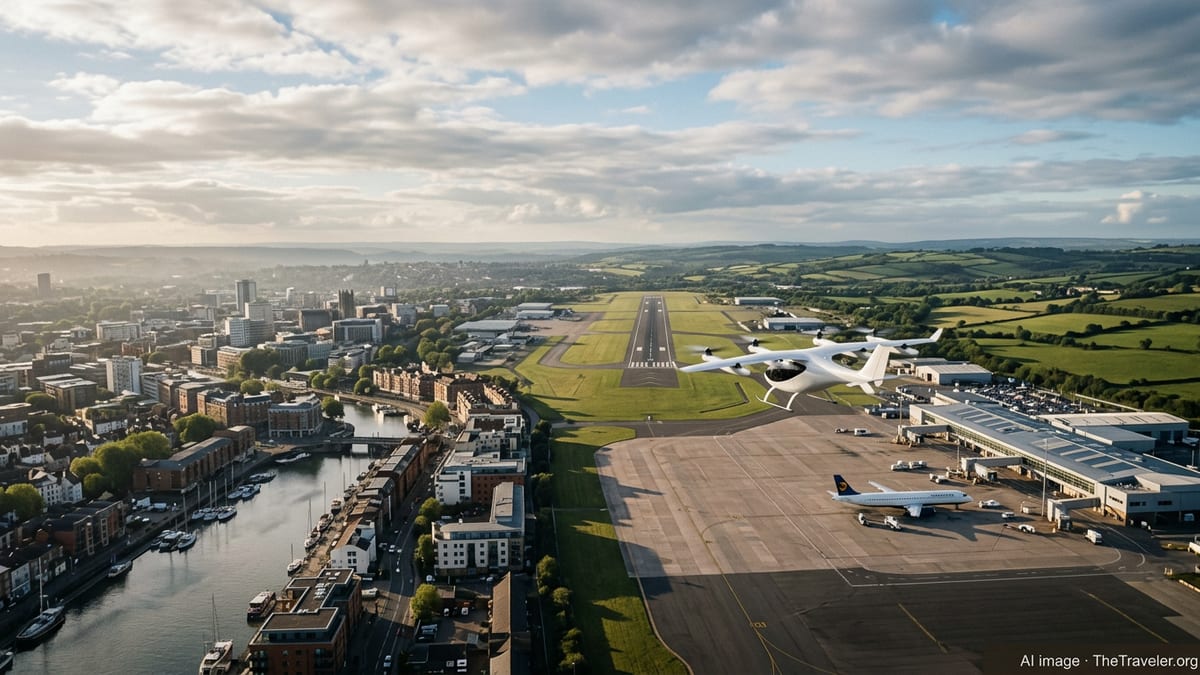
Bristol Airport Turns Into a Living Lab for Green Flight
Few regional airports in Europe are moving as aggressively as Bristol Airport to prepare for a lower-carbon aviation future, and the city’s tourism sector is watching closely. Through its Aviation Carbon Transition Programme, the airport has been channelling funding into technologies that cut emissions from both flights and ground transport, signalling a long-term shift in how travellers will access the region.
In January 2026, Bristol Airport and engineering firm Ultima Forma announced the successful design of a liquid hydrogen refuelling concept tailored to the airport’s operations. The study sets out how hydrogen, stored at ultra-low temperatures, could be delivered, handled and dispensed safely at scale for a new generation of zero carbon aircraft. Airport leadership has framed the work as a prerequisite for welcoming hydrogen-powered regional flights in the coming years, a move that could significantly reduce the carbon footprint of inbound tourism.
The airport has also hosted Project Acorn, a trial led by easyJet that used hydrogen to power baggage tractors in a live airside environment. Completed in 2024, the trial demonstrated that hydrogen can replace conventional fuels in busy ground operations while meeting stringent safety standards. Data and lessons from the project are feeding into emerging guidance for airports and regulators, laying groundwork for hydrogen-ready tourism gateways across the UK.
These efforts sit within a wider push to build a hydrogen ecosystem in South West England. Bristol Airport is a founding member of the Hydrogen in Aviation alliance and part of the Hydrogen South West consortium, which links local ports, manufacturers and energy providers. For the travel industry, this clustering of expertise increases the likelihood that the region will be among the first in Europe to offer genuinely low-carbon air access for visitors.
From Flying Taxis to Electric Shuttles: Rethinking Visitor Journeys
While much attention focuses on long-haul emissions, Bristol’s innovators are targeting the shorter hops that shape many visitor itineraries. The region has become a hub for advanced air mobility, driven in part by Bristol-based Vertical Aerospace and its family of electric vertical take-off and landing aircraft. Test flights of the company’s prototype flying taxi have already demonstrated cross-country capability in open airspace, a milestone for electric point-to-point travel within the UK.
Vertical Aerospace and other manufacturers are pitching their aircraft as quiet, zero-emission alternatives for routes that currently clog roads and railways. Short journeys between Bristol, Bath, Cardiff and regional airports could eventually be flown in minutes rather than an hour or more on the ground, with per-passenger costs that analysts suggest could become competitive with premium rail or ride-hailing services over time. For tourists, that could mean day trips that were once impractical become realistic options.
National policy is helping to accelerate these concepts. The UK government has tasked the Civil Aviation Authority with clearing a path for commercial air taxi and drone services, with ministers publicly targeting the late 2020s for the first regular passenger operations. Bristol’s existing role in regulatory testbeds, including the Future Flight Challenge, positions the city as an early candidate for pilot routes that connect key visitor gateways, cultural sites and business districts.
Local tourism boards are already exploring how these services might mesh with destination strategies. Electric air shuttles linking Bristol Airport to the harbourside, the creative quarter around Stokes Croft or nearby UNESCO World Heritage attractions could shift visitor patterns, distributing footfall more evenly and nudging travellers towards lower-impact, car-free itineraries.
Hydrogen Hubs and Net-Zero Branding for the West Country
Bristol’s sustainable air mobility push is also about narrative. As airlines and destinations race to claim net-zero credentials, the city’s emerging hydrogen and electric infrastructure offers a tangible story to climate-conscious travellers choosing between urban breaks. Partnerships between the airport, Airbus, easyJet and energy providers under the Hydrogen South West banner are exploring how hydrogen can power not only planes, but also heavy vehicles and logistics operations linked to tourism.
Studies now under way examine the feasibility of a hydrogen hub stretching from Bristol Port to the airport and surrounding industrial sites. In future, hydrogen could arrive by ship, fuel port equipment, be piped to the airport for aircraft and ground vehicles, and potentially support local bus or coach fleets serving visitor hotspots. For tour operators and conference organisers, the ability to market entire travel chains powered by low-carbon energy could become a valuable differentiator.
The city’s tourism leaders see alignment with Bristol’s existing image as a creative, climate-aware urban centre. The same visitors who come for harbourside cultural festivals, street art tours and independent food markets are often attuned to the environmental impact of their trip. Offering flight options that are measurably cleaner, or at least paired with innovative decarbonisation projects, may help Bristol retain and grow this audience as travellers scrutinise aviation more closely.
There is also a potential economic uplift. Analyses commissioned by industry groups suggest that zero-emission aviation and related hydrogen projects could support thousands of skilled jobs and generate billions of pounds in economic value nationally by the 2030s. For the West Country, anchoring such activity around Bristol could deepen the city’s role as both a tech hub and a tourism gateway.
Opportunities and Obstacles on the Path to Tourist Adoption
Despite the momentum, sustainable air mobility around Bristol faces significant hurdles before it becomes part of everyday travel planning. Many of the aircraft being touted for short-haul tourism routes are still in prototype or early testing phases, with certification targeted for the latter half of this decade. Building vertiports, hydrogen storage facilities and upgraded grid connections will require sustained investment and community buy-in.
Regulation remains another critical piece. The Civil Aviation Authority and local authorities need to define standards for noise, safety, flight paths and airspace management in and around cities. Digital air traffic systems capable of managing frequent, low-altitude flights will have to be rolled out, and local residents will expect reassurances on issues ranging from visual impact to privacy.
There are also questions about equity. Early air taxi services are likely to be priced at a premium, raising concerns that only business travellers or high-end tourists will benefit from quieter, cleaner transport. Policymakers and transport planners in the Bristol region are already discussing how to ensure new services complement, rather than undermine, investments in rail, bus and active travel that many residents rely on.
Still, the direction of travel is clear. With real-world hydrogen trials under its belt, an active role in national innovation programmes and local manufacturers advancing electric aircraft, Bristol is better prepared than most cities to integrate sustainable air mobility into its tourism offer. The coming years will determine whether the technology can move from demonstration flights to everyday booking options on travel sites, but for now the city has firmly claimed a place on the map of aviation’s next chapter.