

More news on this day
British Airways is sharpening its long-haul focus with fresh capacity to Australia and Sri Lanka, underscoring a wider push to rebuild and expand its global network out of London after the pandemic years.
Get the latest news straight to your inbox!
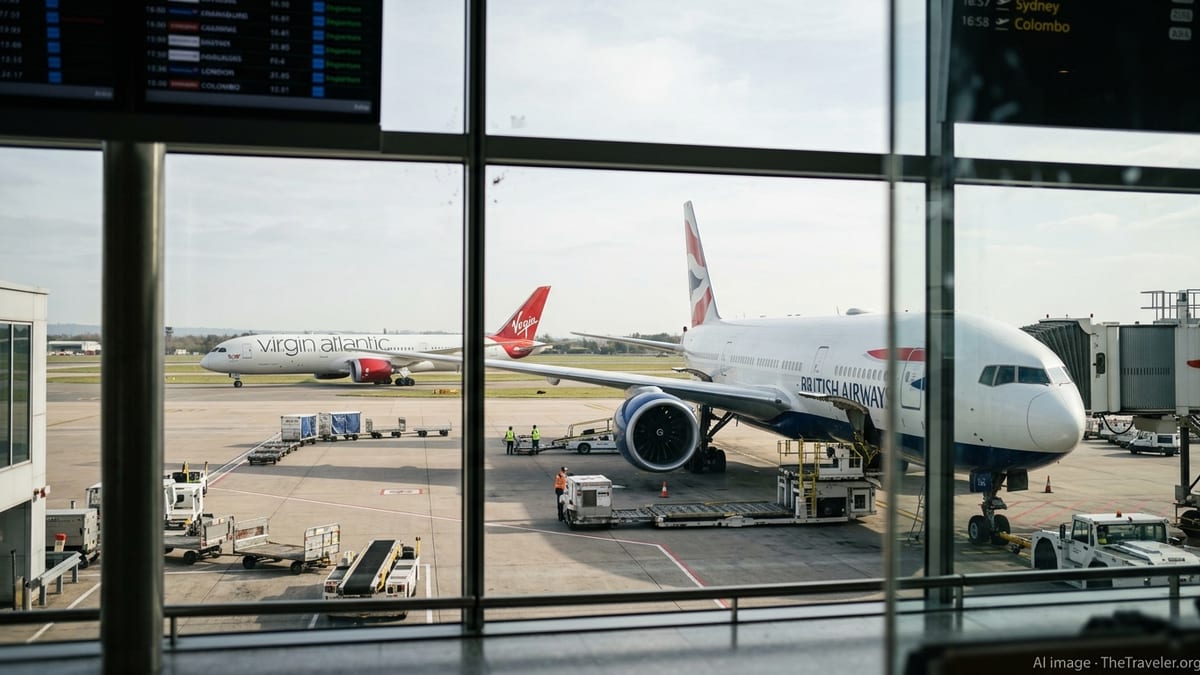
Network Strategy Pivots Back to the Kangaroo Route
Australia has re-emerged as a central pillar of British Airways’ long-haul strategy, with the carrier reinforcing its long-running “Kangaroo Route” between London and Sydney. Publicly available information shows that British Airways operates a daily service from London Heathrow to Sydney via Singapore, marketed as one of its flagship intercontinental links and among the longest journeys in its schedule at just over 24 hours of total travel time.
The airline’s Australia schedule reflects a conscious decision to concentrate on a single, high-profile route supported by strong demand from business, leisure and visiting-friends-and-relatives traffic. Industry reports indicate that Sydney remains the sole Australian gateway for British Airways, with connections onward to other cities in the country and wider region left to partners and local carriers.
The renewed emphasis on Australia forms part of a broader rebuild of British Airways’ long-haul network following the severe disruptions of 2020 and 2021. Since restoring the Sydney link in 2022, the airline has steadily upgraded aircraft and product on the route, positioning it as a showcase for its premium cabins and new-generation widebody fleet.
Product Upgrades on the London–Singapore–Sydney Corridor
British Airways has used its Australia service as a platform for cabin and aircraft improvements across the London–Singapore–Sydney corridor. Trade and aviation reports indicate that the airline has deployed modern Boeing 787-9 and 777-300ER aircraft on the route in recent seasons, both featuring its latest long-haul interiors and four-cabin configuration on selected services.
The configuration and scheduling are designed to appeal to a mix of premium and economy travelers. The long overnight sector between London Heathrow and Singapore Changi is tailored to business traffic with lie-flat seating and enhanced entertainment, while the daylight hop between Singapore and Sydney caters more to regional leisure demand and connecting flows from across Europe.
According to published coverage, British Airways has also aligned its lounge, transfer and schedule offering at Heathrow and Singapore to facilitate smoother one-stop journeys between the United Kingdom and Australia. This includes connectivity to European feeder flights at Heathrow and partner services feeding into Sydney and other Australian cities, giving the Sydney route a network role that extends well beyond point-to-point traffic.
Sri Lanka Returns to the Spotlight as a South Asia Growth Market
Sri Lanka is emerging as another beneficiary of British Airways’ evolving long-haul blueprint, as the airline targets growing demand for travel between the United Kingdom, Europe and South Asia. While Sri Lanka has long been served by Gulf and Asian hub carriers, recent schedule data and routing information show an uptick in London–Colombo capacity across multiple airlines, with British Airways positioned to play a stronger role via one-stop itineraries.
Publicly available route maps for London Heathrow to Colombo highlight British Airways among the carriers offering options on this city pair, generally through connections and partnering arrangements rather than nonstop services. These flows are supported by tourism to Sri Lanka’s beach resorts and cultural sites, as well as a substantial Sri Lankan diaspora in the United Kingdom and Europe that drives year-round visiting-friends-and-relatives traffic.
Industry analysts point to Sri Lanka’s gradual tourism recovery and infrastructure investment, including runway and terminal upgrades at Bandaranaike International Airport near Colombo, as key enablers for renewed long-haul growth. As capacity returns, British Airways’ presence in the market positions the airline to capture both direct UK demand and connecting traffic from continental Europe seeking a single-ticket journey to Sri Lanka.
Competitive Dynamics Across Europe–Australia and Europe–Sri Lanka Routes
The expansion of British Airways’ long-haul offering to Australia and Sri Lanka is taking place in a competitive environment shaped by Gulf carriers, Asian network airlines and other European players. On the Kangaroo Route, British Airways competes with one-stop options via Doha, Dubai, Abu Dhabi, Singapore and other hubs, while also contending with Australian flag carrier services that connect Australia to Europe in partnership with alliance and codeshare partners.
On Europe–Sri Lanka routes, British Airways shares the market with a broad mix of full-service carriers routing via the Middle East, India and Southeast Asia. Published schedules show airlines such as Emirates, Qatar Airways, Turkish Airlines and others offering multiple daily options to Colombo from their hubs, giving travelers considerable choice in timing and price when flying between Sri Lanka and European points.
Within this landscape, British Airways’ strategy leans on the scale and connectivity of London Heathrow. The airline is able to feed its long-haul flights with passengers from across the United Kingdom and continental Europe, which helps sustain routes like Sydney and supports its ability to participate in traffic flows to Sri Lanka even where other carriers operate more nonstop or high-frequency services.
Implications for Travelers and Tourism Flows
For travelers, the latest British Airways long-haul deployments to Australia and Sri Lanka translate into more one-stop choices, particularly for passengers originating in the United Kingdom or connecting through Heathrow from mainland Europe and North America. The combination of modern widebody aircraft, refreshed cabin products and coordinated schedules makes the Sydney and Sri Lanka links competitive with alternatives that require a change of airline or an additional stop.
Tourism bodies in both Australia and Sri Lanka stand to benefit from the renewed focus. In Australia, British Airways’ London–Sydney service supports inbound tourism from the United Kingdom and Europe and reinforces Sydney’s role as a primary gateway to the wider country. In Sri Lanka, incremental capacity and visibility in airline distribution systems help underpin the island’s efforts to rebuild its visitor economy and attract higher-spending long-haul tourists.
For British Airways, the strengthening of its presence in both markets reflects a calculated bet on resilient leisure and diaspora demand, even as corporate travel patterns continue to evolve. By knitting Australia and Sri Lanka more firmly into its global network, the airline is signaling confidence that long-haul travel between Europe and the Asia–Pacific region will remain a cornerstone of its business in the years ahead.