

More news on this day
British Airways is set to transform the premium long-haul experience at London Gatwick as it begins deploying brand-new Boeing 787-10 aircraft fitted with its latest-generation Club Suite cabin, bringing the airline’s flagship business class product to the South London hub for the first time.
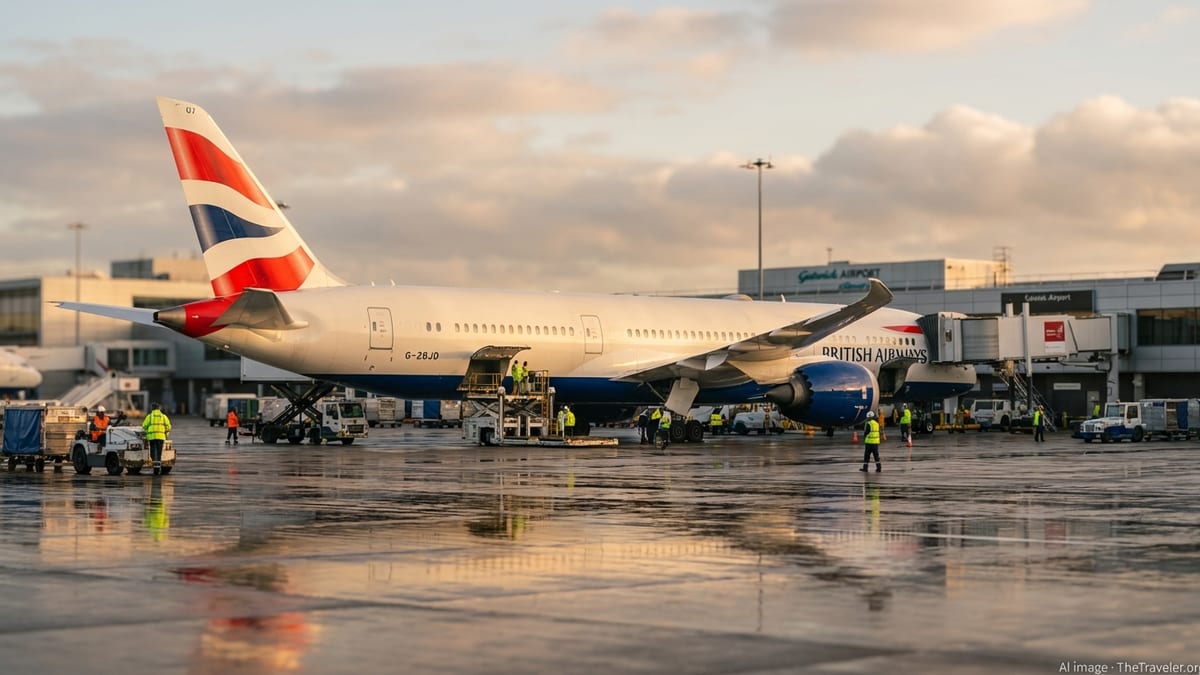
Flagship Club Suite Finally Reaches Gatwick
The move to base Boeing 787-10s at Gatwick marks a strategic shift for British Airways, which has historically reserved its most advanced cabins for services from London Heathrow. Until now, Gatwick’s long-haul network has relied on refurbished Boeing 777-200ER aircraft offering the older Club World business class seats, leaving the airport’s frequent flyers watching Heathrow customers enjoy the newest product.
The incoming 787-10s will change that equation. Each aircraft is configured with the Club Suite, a fully flat business class seat with a sliding privacy door, direct aisle access for every passenger and a more spacious layout than the previous eight-abreast Club World cabin. The product is already established on selected Heathrow services across the Atlantic and to Asia, and its arrival at Gatwick brings a step-change in privacy, comfort and onboard technology for the airport’s long-haul passengers.
This will be the first time that Gatwick-based British Airways aircraft offer the Club Suite as standard rather than on an occasional basis when Heathrow airframes are substituted. For business travellers and leisure premium customers in the airport’s southern catchment, it removes a key incentive to connect via Heathrow in order to access the carrier’s newest cabins.
Cabin Layouts and Passenger Experience Upgrades
The 787-10s joining the Gatwick fleet are expected to follow British Airways’ latest four-cabin long-haul template, with Club Suite at the front of the aircraft complemented by World Traveller Plus premium economy and a sizable World Traveller economy section. While Heathrow-based 787-10s are fitted with a small First cabin, industry analysts expect Gatwick deployments to be focused on business, premium economy and leisure travel rather than ultra-premium First Class.
Club Suite on the 787-10 is built around a modern reverse-herringbone layout, replacing the dense, mixed forward and rear-facing “yin-yang” seating still found on Gatwick’s 777-200ERs. Each suite features higher walls, a closing door, increased personal storage and a larger high-definition entertainment screen, designed to deliver a more private and restful environment on overnight sectors and a more productive space on daytime flights.
Beyond the seat itself, the 787-10 brings quieter cabin acoustics, larger dimmable windows and a more favorable cabin pressurization and humidity profile compared with older widebodies. For customers in World Traveller Plus and World Traveller, the aircraft’s newer-generation airframe and cabin design should translate into a calmer, more comfortable journey even without moving up to the business cabin.
British Airways has also been gradually enhancing its soft product in premium cabins, with upgraded bedding, amenity kits and refined catering options. The deployment of the 787-10 at Gatwick provides a new hardware platform on which these service improvements can be fully showcased.
Technology, Connectivity and Future-Proofing
The Gatwick-based 787-10s are expected to reflect the latest iteration of the Club Suite, incorporating hardware refinements that have emerged since the product was first introduced at Heathrow. These include higher-resolution entertainment screens, improved device charging options and Bluetooth audio connectivity, features that better align the onboard experience with passengers’ expectations of a modern, connected cabin.
Industry observers note that by the time the new aircraft are fully embedded at Gatwick later this decade, the original Club Suite design will be approaching a decade in service. British Airways has therefore been working with seat manufacturers on incremental updates aimed at keeping the product competitive, rather than waiting for a wholesale replacement. Gatwick’s aircraft stand to benefit from those mid-life enhancements from day one.
The arrival of the 787-10 also dovetails with the airline’s broader digital and connectivity strategy, which includes a push toward high-speed onboard Wi-Fi across the long-haul fleet. As more business travellers expect to work gate-to-gate, the combination of a private suite, multiple charging points and robust connectivity positions Gatwick’s services as a more compelling choice for premium customers flying to sun, leisure and visiting-friends-and-relatives destinations traditionally served from the airport.
Routes, Market Position and Competitive Pressure
While British Airways has not yet publicly detailed the full route pattern for the Gatwick-based 787-10 fleet, the aircraft are widely expected to serve a mix of high-demand leisure and VFR markets where the airline faces growing competition from low-cost long-haul and value-focused rivals. Deploying its most advanced cabin on these routes signals an intent to defend market share among higher-yield passengers who might otherwise gravitate toward competitors at Gatwick or choose Heathrow for a more premium experience.
The move also responds to increasing pressure on the UK long-haul market from new entrants that are flying fuel-efficient aircraft with upgraded cabins and aggressive pricing. By placing the 787-10 at Gatwick, British Airways can leverage the type’s lower fuel burn per seat and modern cabin to remain price-competitive while still offering a distinct product advantage in business and premium economy.
For Gatwick Airport, the upgauged product strengthens its credentials as a full-service long-haul hub, complementing growth from other carriers and giving the airport’s catchment area a more compelling reason to stay local rather than travel across London to Heathrow. Airport executives have long argued that improving the quality of long-haul service is as important as increasing the number of destinations, and British Airways’ 787-10 deployment directly supports that goal.
What It Means for Gatwick-Based Travellers
For passengers, the practical impact of the change will be most visible in the consistency of the onboard experience. Historically, Gatwick customers booking Club World faced a degree of uncertainty as to whether they would experience the older layout or, on rare occasions, a substituted aircraft equipped with Club Suite. With the 787-10, British Airways aims to provide a clearly defined, modern product that can be marketed with confidence across key routes.
Frequent flyers and members of the airline’s Executive Club loyalty program based in the South of England stand to benefit most. They will gain access to the same flagship business class cabin that has become a cornerstone of the Heathrow network, without the extra ground travel, congestion and potential delays associated with connecting across the city.
As the first 787-10s transition into regular service from Gatwick, travel agents and corporate travel buyers are expected to highlight the aircraft type more prominently when advising clients. For British Airways, that visibility is part of a broader effort to align its Gatwick proposition with the rest of its global brand while still serving the airport’s strong leisure and holiday market. The arrival of the 787-10 with Club Suite suggests that, for long-haul travellers at Gatwick, the days of settling for a second-tier product are coming to an end.