

More news on this day
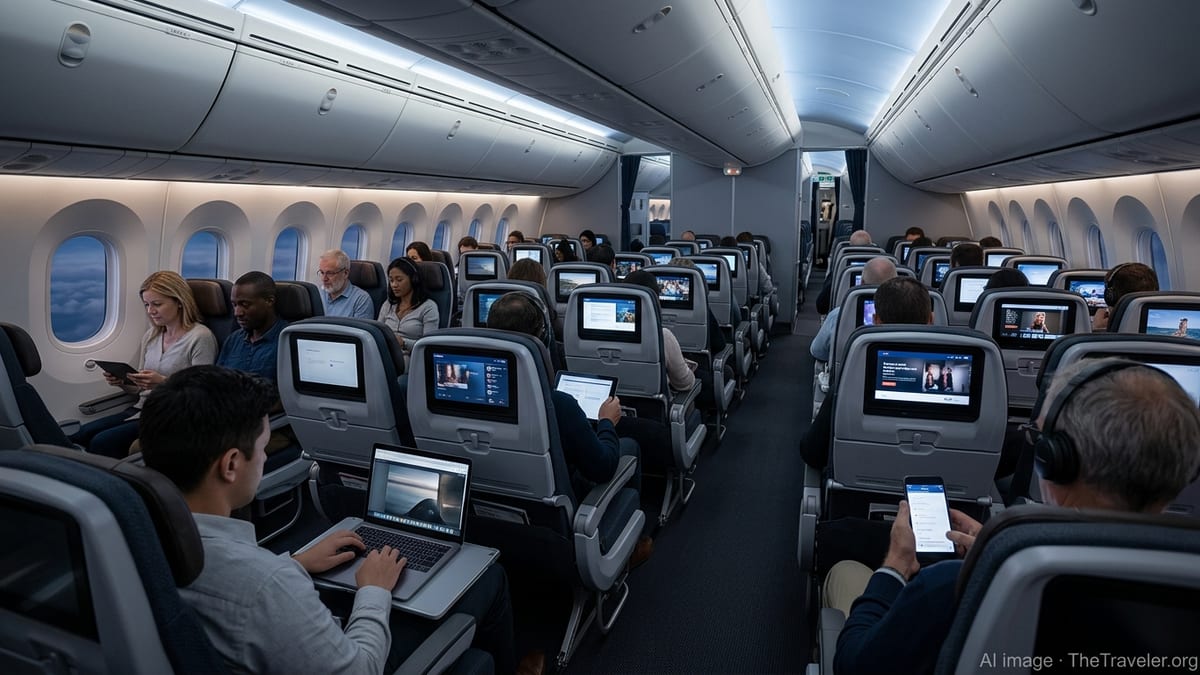
British Airways is beginning to equip its Boeing 787 long haul fleet with Starlink-powered Wi-Fi and is making high-speed connectivity free of charge on selected international routes, marking a significant shift in how the United Kingdom flag carrier approaches inflight internet access.
Get the latest news straight to your inbox!
Part of IAG’s Wider Starlink Connectivity Push
The move on British Airways 787s follows a wider rollout plan by parent company International Airlines Group, which announced in November 2025 that more than 500 aircraft across Aer Lingus, British Airways, Iberia, LEVEL and Vueling would receive Starlink high-speed connectivity from early 2026. Publicly available information shows that the programme is designed to cover both European short haul flying and the group’s transatlantic and other long haul operations.
According to published coverage, the IAG rollout aims to provide onboard download and upload speeds comparable to, or better than, what many passengers experience at home. This is intended to support streaming, cloud-based work and more bandwidth-intensive applications that have often struggled on earlier-generation inflight connections.
Starlink, operated by SpaceX, uses a large constellation of low Earth orbit satellites to reduce latency and increase available bandwidth compared with traditional geostationary satellite systems. Aviation analysts note that this architecture is increasingly being adopted by global airlines that want to improve the reliability and speed of their Wi-Fi offerings on long haul routes.
Targeting High-Demand International 787 Routes
Initial British Airways deployments are concentrated on key international Boeing 787 routes where demand for connectivity is strongest, including transatlantic and selected services to the Middle East, Asia and Africa. Industry tracking of aircraft modifications indicates that multiple 787-9 aircraft are among the first to be fitted with the new hardware, with coverage gradually expanding as more frames complete installation.
These routes are strategically important for the airline’s premium and corporate travel segments, where reliable inflight connectivity has become an expectation rather than an optional extra. Travel industry observers suggest that focusing early Starlink installations on 787-operated long haul services allows British Airways to quickly showcase the new experience on some of its most competitive city pairs.
Some 787 variants in the British Airways fleet previously lacked any Wi-Fi service or relied on earlier systems that passengers often described as slow or inconsistent. The addition of Starlink equipment is expected to standardise the connectivity experience across more of the airline’s Dreamliner network and reduce the variability seen in recent years.
Free High-Speed Access and Evolving Pricing Models
One of the most notable aspects of the British Airways rollout is the decision to offer free high-speed Wi-Fi on selected long haul 787 routes, rather than restricting complimentary access to basic messaging tiers. According to recent reports and passenger accounts, travellers on certain Dreamliner flights are now able to stream video, browse the web and work online without additional charges.
This approach aligns British Airways with a broader industry trend in which major carriers are shifting towards free or bundled connectivity, particularly on long haul services. United States and Middle East competitors have already signalled similar strategies around high-speed satellite connectivity, using free Wi-Fi as a differentiator in crowded premium markets.
While British Airways has historically relied on a paid model for most inflight internet access, the new Starlink-equipped aircraft are being used to test more generous access policies. Aviation analysts expect that pricing and access rules may continue to evolve as the airline assesses usage patterns, network performance and customer feedback on different routes and in different cabins.
Passenger Experience: From Messaging to Full Connectivity
For passengers, the shift to Starlink on British Airways 787 flights represents a substantial upgrade from earlier systems that were often sufficient for messaging but struggled with richer media and business applications. According to publicly available accounts from early users on comparable Starlink-equipped airlines, connection speeds have been fast enough to support video calls, cloud document editing and real-time collaboration tools.
On British Airways services, the new Wi-Fi portal on Starlink-enabled aircraft typically allows travellers to connect their devices shortly after takeoff and remain online for most of the flight, subject to regulatory restrictions over certain airspace. Reports indicate that multiple devices can be used per passenger in many cases, giving families and business travellers more flexibility in how they stay connected.
Travel commentators note that consistency will remain a key test of the new system. Weather conditions, satellite handovers and regional regulatory limitations can still affect performance, and passengers are being advised to treat inflight connectivity as a strong enhancement rather than an absolute guarantee for time-critical online tasks.
Raising the Bar in the Transatlantic Wi-Fi Race
The arrival of Starlink on British Airways 787s also intensifies competition on some of the world’s busiest long haul corridors. Several major transatlantic and global carriers are in the process of upgrading their own satellite connectivity to next-generation systems that promise higher speeds and lower latency, with free access increasingly used as a loyalty incentive.
Industry analysts suggest that British Airways, as the United Kingdom’s primary long haul carrier, is under particular pressure to match or exceed the connectivity standards being set by rivals in North America and the Gulf. By focusing on its Boeing 787 fleet and offering free high-speed access on selected routes, the airline is seeking to position itself more competitively with both business and leisure travellers who place a high value on staying online.
As more aircraft are equipped and additional routes come online through 2026, the British Airways and IAG Starlink rollout is expected to serve as a barometer for how quickly high-speed, low-latency Wi-Fi can become the norm rather than the exception on long haul international travel from the United Kingdom.