

More news on this day
British Airways is expanding its long-haul network with new London to Melbourne flights, a move that strengthens UK–Australia connectivity and promises fresh momentum for trade, tourism and investment on the storied Kangaroo Route.
Get the latest news straight to your inbox!
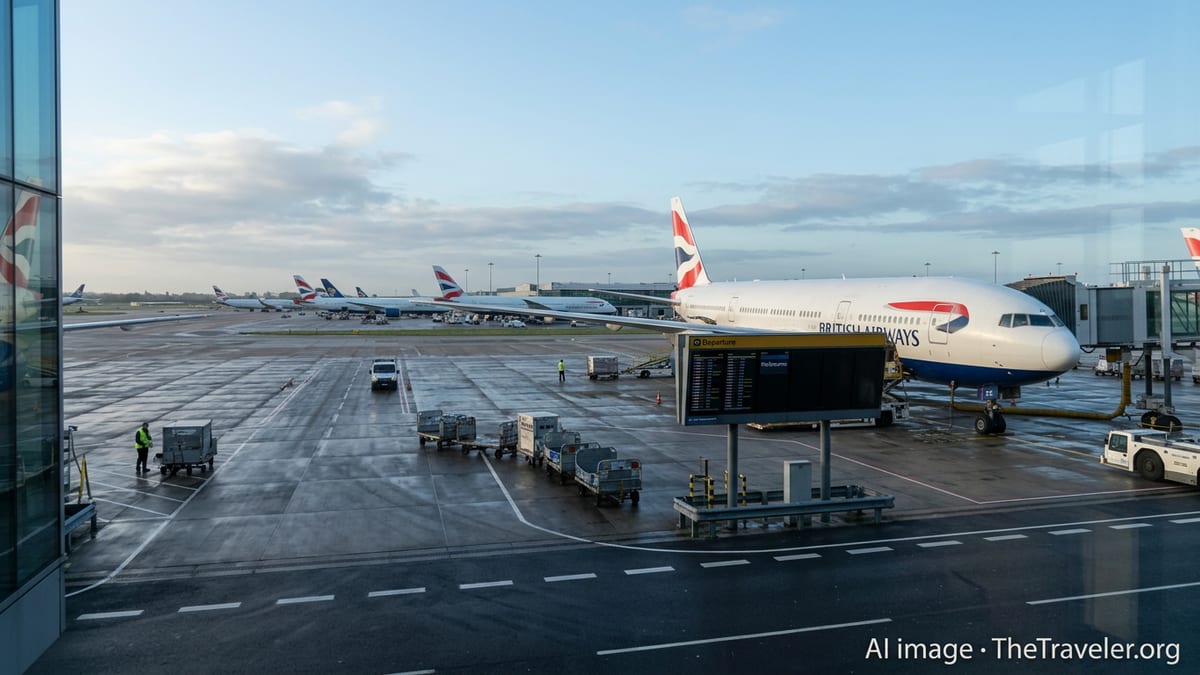
A New Chapter on the Kangaroo Route
The new London to Melbourne service marks a significant expansion of British Airways’ presence in Australia, complementing its established London–Sydney operation via Singapore. Publicly available information on global schedules shows growing interest from European and Middle Eastern carriers in serving Melbourne, underlining the city’s role as a key gateway for southern Australia and a hub for culture, sport and business travel.
The route is expected to offer a one-carrier option between the UK and Victoria, reducing the need for complex itineraries that combine multiple airlines or fragmented tickets. For many passengers, a through-ticket with a familiar European brand is likely to be particularly attractive at peak periods such as the northern winter and the Australian summer holiday season.
The launch also comes at a time when airlines are reassessing long-haul capacity between Europe and the Asia–Pacific region. Monitoring of airline schedules and recent route announcements indicates that demand on UK–Australia flows has recovered strongly, supported by visiting‑friends‑and‑relatives traffic, international students and renewed corporate travel.
Industry observers note that the added London–Melbourne capacity will place British Airways alongside a widening field of competitors on Europe–Australia links, including European, Asian and Gulf carriers that already feed substantial traffic into Melbourne from London and other UK cities.
Route Details, Schedules and Connections
While exact timetables are being refined in industry systems, the new British Airways service is expected to align with typical Kangaroo Route journey times of around 23 hours between London and Melbourne, including a technical or transit stop. Information published by British Airways on travel times to Melbourne indicates that this remains the benchmark journey duration for most one‑stop itineraries between the two cities.
London Heathrow is anticipated to be the primary UK gateway for the service, providing straightforward connectivity from British and European feeder flights. Heathrow’s role as British Airways’ main hub allows same‑day connections from cities across the UK and continental Europe, making Melbourne more accessible to regional travellers who previously relied on alternative carriers or multi‑stop routings.
On arrival in Melbourne, passengers are positioned to connect to a dense domestic network across Australia. Published schedules show frequent services from Melbourne to major centres such as Sydney, Brisbane, Adelaide and Perth, as well as regional destinations in Victoria and beyond. This enhances the value of the new link not only for Victoria itself but for wider Australian tourism dispersal.
Travel industry analysis suggests that schedules are likely to be timed to capture both business and leisure demand, with overnight flying on at least one sector to maximise rest and productivity. The pattern is expected to complement, rather than duplicate, existing London–Sydney options, giving travellers more flexibility on timings and destinations at the Australian end.
Economic and Trade Implications for the UK and Victoria
The new London–Melbourne flights are expected to bring notable benefits for goods and services trade between the UK and Australia. Aviation and logistics data consistently show that additional long‑haul capacity tends to expand air freight opportunities, particularly in high‑value, time‑sensitive sectors such as pharmaceuticals, premium food and beverage products, and specialised manufacturing components.
Melbourne is a major export hub for Victoria’s agricultural and food sectors, including meat, dairy, wine and fresh produce. Additional belly‑hold cargo space on long‑haul passenger aircraft typically provides exporters with more options for reaching European markets quickly, especially during seasonal peaks. Analysts note that this can support premium pricing and reduce reliance on longer sea freight journeys.
On the services side, closer air links often support deeper ties in finance, professional services, education and technology. London’s status as a global financial centre and Melbourne’s growing reputation in sectors such as fintech, biotech and advanced manufacturing provide a platform for increased business travel, cross‑border investment and collaboration.
Public policy and tourism strategy documents from both countries have highlighted the role of air connectivity in regional development and job creation. Additional international flights into Melbourne are routinely associated with higher visitor spending in accommodation, hospitality, events and regional tourism, supporting employment not only in the city but in destinations across Victoria.
Tourism, Students and the Visiting‑Friends‑and‑Relatives Market
The UK remains one of Australia’s most important long‑haul tourism and migration markets, and Melbourne is a key entry point for British visitors. Tourism research consistently points to strong visiting‑friends‑and‑relatives traffic driven by long‑standing migration links, complemented by a rising number of UK leisure travellers attracted by Melbourne’s cultural festivals, sporting events and food scene.
The new direct link from London is likely to stimulate additional demand by making the journey feel simpler and more predictable. For travellers planning trips around major events such as the Australian Open tennis, the Formula 1 Australian Grand Prix or international cricket fixtures, a one‑carrier option to Melbourne from London is expected to be particularly appealing.
Education is another important driver. Melbourne’s universities and colleges host large cohorts of international students, including many from the UK and Europe. Easier air access can influence study‑abroad decisions, facilitate regular visits by family members and support academic exchange between institutions in Victoria and the United Kingdom.
Travel trade commentary indicates that tour operators and travel agencies in both markets are likely to build new packages around the British Airways service, combining Melbourne with other Australian cities or with stopover destinations in Asia if the routing includes an intermediate hub. This packaging helps distribute the benefits of the route across a wider range of destinations and tourism businesses.
What Travellers Need to Know Before Booking
For UK‑based travellers, the new London–Melbourne option provides an additional choice alongside existing routings via Middle Eastern and Asian hubs. Industry guidance suggests that passengers should pay close attention to total journey time, connection durations, fare classes and frequent‑flyer earning when comparing British Airways with competitors.
British Airways typically offers a full‑service product on long‑haul routes, with multiple cabin classes, checked baggage allowances and in‑flight entertainment included in the fare. Travellers can expect a consistent experience across the long‑haul sectors, and those enrolled in the airline’s loyalty programme or partner schemes may find added value in tier points and mileage accrual on a through itinerary between the UK and Australia.
Prospective passengers are advised to review visa and entry requirements carefully. Publicly available government guidance notes that British passport holders require a valid visa to travel to Australia, and conditions can vary depending on the purpose and length of stay. Travel insurance, health documentation where applicable and up‑to‑date passport validity should also be checked well in advance.
As airlines continue to adjust schedules and capacity in response to demand, travellers may also wish to monitor timetable updates and fare releases closely. Industry reports indicate that introductory pricing and promotional offers are often used to launch new long‑haul routes, creating opportunities for early bookers on both leisure and corporate travel budgets.