

More news on this day
British Airways is preparing a major long-haul push for winter 2026, with published schedules and industry reports pointing to new links to Melbourne and Colombo alongside a denser transatlantic network that strengthens U.S. connectivity through London.
Get the latest news straight to your inbox!
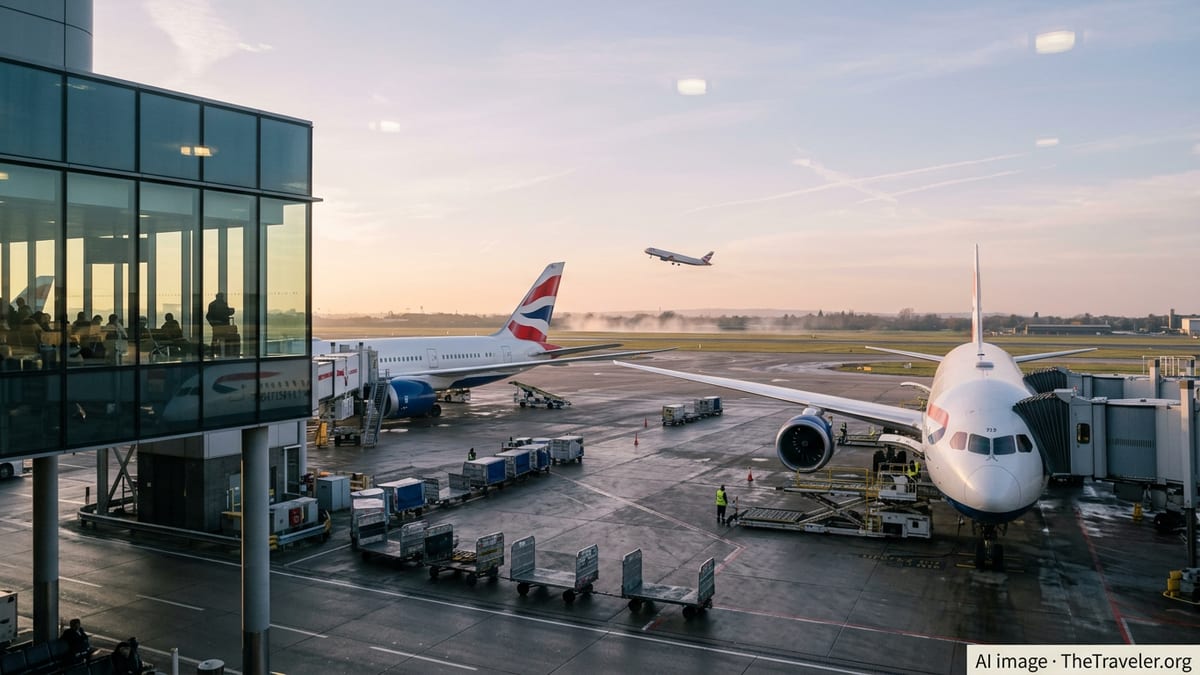
New Melbourne Services Extend the Kangaroo Corridor
Publicly available timetable data for the 2026 winter season indicates that British Airways plans to add Melbourne to its route map, complementing its longstanding Sydney operation via Singapore and widening options on the historic corridor between the United Kingdom and Australia. The move would give travelers an additional one-stop path between London Heathrow and Australia under the British Airways brand, in competition with Gulf and Asian hub carriers that already serve Melbourne heavily.
Industry analysis of 2026 schedule filings suggests that Melbourne flights are designed to slot into British Airways’ existing bank of departures from London, allowing same-day connections from a wide range of European cities and several North American gateways. This approach mirrors the way the airline structures its Sydney service, with late evening departures from Heathrow feeding overnight sectors toward Asia and on to Australia.
Travel trade coverage notes that British Airways has been gradually rebuilding its Australasian presence, including renewed focus on partnerships through Singapore. By winter 2026, the addition of Melbourne would place the carrier among a small group of European airlines with a direct one-stop presence in multiple Australian cities, reinforcing London’s role as a connecting point for traffic between Europe and the South Pacific.
For Australian travelers, the expanded footprint promises more choice in both direction and timing. A second British Airways gateway in Australia increases the likelihood of onward same-carrier connections within the United Kingdom and Europe, which can be particularly attractive for travelers looking to avoid multiple airlines or separate tickets on a long intercontinental journey.
Colombo Returns as a South Asian Gateway
Published route information for late 2026 shows that British Airways intends to restore nonstop service to Colombo, with flights planned from London Gatwick starting in October. The Sri Lankan capital previously disappeared from the airline’s network, and its return signals renewed confidence in South Asian leisure and visiting-friends-and-relatives demand during the northern winter.
Travel industry reports indicate that the Colombo flights are scheduled a few times per week, timed to capture both outbound British holidaymakers heading for Sri Lanka’s peak season and inbound passengers connecting from regional points. Positioning the service at Gatwick instead of Heathrow reflects British Airways’ pattern of using its second London hub for more leisure-focused and seasonal long-haul routes.
Colombo’s reintroduction also complements British Airways’ broader South and Southeast Asia strategy. In recent seasons the airline has rebuilt links to destinations such as Bangkok and Kuala Lumpur, sometimes in partnership with regional carriers that provide onward connectivity. The planned Colombo flights fit into this pattern by tapping a market where tour operators and independent travelers alike have been looking for additional nonstop options from the United Kingdom.
For Sri Lanka’s tourism industry, the Gatwick service increases seat capacity from one of its most important source markets at a time of ongoing recovery. The winter 2026 timing aligns with key holiday periods in Europe, potentially drawing more visitors to coastal resorts and cultural attractions inland.
Transatlantic Network: More Frequencies and Concentrated Capacity
Across the Atlantic, British Airways has already filed a series of changes for the 2025 to 2026 period that point to a busier U.S. schedule heading into winter 2026. According to route analysis published by specialist aviation outlets, the airline is emphasizing high-volume markets such as New York, Miami, Dallas and selected West Coast cities while trimming a small number of secondary seasonal routes.
Earlier schedule filings for winter 2025 and the transition into 2026 showed a consolidation of New York operations at London Heathrow, accompanied by an increase in daily frequencies to John F. Kennedy International Airport. Reports also describe more capacity on key sun destinations and tech-focused cities in the southern United States, aligning with strong corporate travel and leisure demand.
Further analysis of summer 2026 plans, already partially visible in public schedules, indicates that several U.S. routes will receive additional weekly services compared with previous years. While these increases are focused on the peak northern summer, they contribute to a broader fleet and crew plan that keeps more long-haul aircraft in transatlantic service year-round, setting the stage for a robust winter 2026 offering as well.
For U.S.-based travelers, the effect of these adjustments is a denser web of connection opportunities to and through London. More frequencies mean additional departure times, which can improve same-day links from interior U.S. cities operated by partner airlines and smooth onward connections to destinations such as Melbourne, Colombo and other points across Europe, Africa and Asia.
Strategic Focus on Long-Haul Hubs and Seasonal Demand
Analysts who track British Airways’ schedule changes describe the winter 2026 developments as part of a longer-term strategy that concentrates long-haul capacity on a few powerful hubs and proven seasonal flows. By reinforcing London Heathrow’s role as the primary gateway for North America and Australia and using Gatwick as a base for leisure-oriented routes like Colombo, the airline appears to be prioritizing markets where it can sustain strong year-round or peak-season demand.
Industry coverage of recent schedule adjustments highlights that some shorter-haul and secondary long-haul routes have been reduced or withdrawn to free up aircraft for these flagship services. This pattern has been visible in previous seasons, with transatlantic flights and key Asia-Pacific connections often receiving added capacity at the expense of thinner routes. Winter 2026’s planned network continues that approach, supported by ongoing cabin upgrades and fleet refurbishments that are gradually rolling through the widebody fleet.
The emphasis on winter 2026 also reflects how far ahead long-haul planning occurs. Timetables for that season are already appearing in global distribution systems, allowing travel advisors and corporate buyers to build longer-range itineraries, even though individual flight times and aircraft types may still be fine-tuned. Observers note that British Airways, like many network carriers, regularly adjusts these schedules as demand patterns become clearer closer to departure.
For travelers, the prospective Melbourne launch, the return of Colombo, and the thicker U.S. schedule collectively suggest that winter 2026 will offer more one-stop options through London than any time since before the pandemic. While details may shift as the season approaches, the broad contour of British Airways’ strategy points to a renewed focus on connecting major population centers across three continents via its twin London hubs.