

More news on this day
British Airways is sharpening its focus on comfort in the back of the plane, quietly layering premium-style amenities onto its economy cabins as global leisure travel continues to surge and competition for value-conscious passengers intensifies.
Get the latest news straight to your inbox!
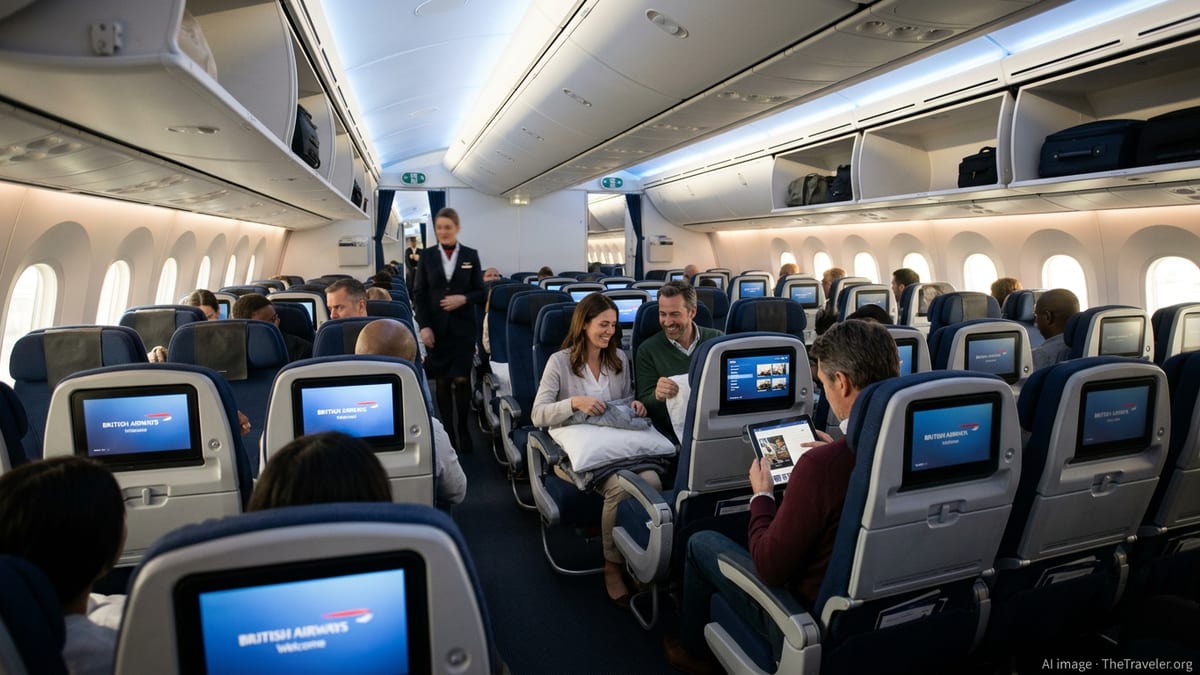
Economy Cabins Step Up in a Premium-Hungry Market
The push to elevate the experience for economy passengers comes as British Airways rides a strong wave of leisure travel and robust profitability. Recent results from parent company IAG highlight record earnings through 2025, supported in part by resilient demand for higher-yield travel even as some mainstream economy markets show signs of softness. Against that backdrop, the flag carrier is seeking to differentiate its offering by making long-haul economy feel less like a compromise and more like an attainable treat.
For many travelers, the line between economy and premium cabins has become less rigid. British Airways has invested heavily in its overall product, with a multibillion-pound program spanning new seats, upgraded cabin interiors, and enhanced digital services. While much of the attention has focused on business and premium economy, many of the benefits are filtering into standard economy through better in-flight entertainment, connectivity, and more curated food and beverage choices.
Industry analysts note that as airlines emerge from the pandemic recovery phase, they are shifting from simply reinstating capacity to fine-tuning the onboard experience. British Airways is among the carriers trying to position economy as a more aspirational product, appealing to travelers who are willing to pay a little extra for comfort but may not stretch to a dedicated premium-cabin fare.
Enhanced Comfort and Amenities in World Traveller
In long-haul World Traveller economy, British Airways has steadily refreshed soft products such as bedding, amenity kits on selected routes, and upgraded catering options. Published coverage indicates that the airline has focused on improving sleep and rest on overnight services by offering more supportive pillows, thicker blankets, and carefully timed meal services designed to maximize quiet hours in the cabin.
The airline has also invested in in-flight entertainment as an entry point to a more premium feel. Larger personal screens, expanded film and television libraries, and improved user interfaces are gradually being rolled out across the long-haul fleet, narrowing the perceived gap between economy and higher cabins. For passengers on older aircraft, refreshed content and more intuitive controls are helping modernize the experience without a full hardware overhaul.
Seat design remains a constraint on many legacy widebodies, but British Airways has been using cabin refurbishments to introduce slimmer, more ergonomic seats on selected routes. While seat pitch in economy remains broadly consistent with global norms, the carrier is experimenting with details such as improved headrests and additional storage pockets to give flyers a sense of upgraded space and organization.
Short-Haul Economy Adds Choice and Personalization
On short-haul routes within Europe, British Airways has leaned into a hybrid model that blends traditional full-service elements with buy-on-board flexibility in its Euro Traveller economy cabin. The airline’s Gatwick-based BA Euroflyer subsidiary, for example, has expanded purchase options and seasonal menus, allowing passengers to trade up from a basic snack to more substantial meals and premium-brand drinks that would previously have been confined to higher fare classes.
This approach is designed to give economy customers more control over how indulgent their flight feels. Travelers prioritizing value can stick to a simple fare, while those marking a special trip can effectively build a bespoke, more luxurious experience by adding food, drinks, and seat selection. The strategy aligns with a broader industry trend in which airlines unbundle and repackage services, but British Airways is positioning the add-ons as part of a curated, quality-led offering rather than a purely low-cost model.
Reports indicate that the carrier is also using its short-haul network as a testing ground for refreshed interiors and service routines that may later appear on long-haul operations. Small touches, such as modernized cabin lighting and streamlined service trolleys, are intended to make even a brief hop across Europe feel closer to a city-break getaway than a functional commute.
Connectivity and Digital Services Bring a Premium Feel to the Back Row
Digital upgrades are a central plank of British Airways’ strategy to make economy travel feel more seamless and premium. The airline has been rolling out onboard Wi-Fi across its fleet, giving passengers in all cabins the option to stay online for messaging, browsing, or streaming, depending on the package purchased. Publicly available information shows that some messaging options are being positioned as low-cost or complimentary for members of the airline’s loyalty program, a move aimed at making connectivity feel like a standard part of the journey rather than a rare luxury.
At the same time, improvements to the airline’s website and mobile app are designed to give economy passengers more pre-flight control, from advance seat selection to managing special meals and tracking baggage. By smoothing out points of friction before travelers even reach the airport, British Airways is effectively shifting some of the premium experience into the digital realm, where expectations for convenience and personalization are increasingly high.
On board, the combination of connectivity and entertainment upgrades allows economy travelers to curate their own experience more flexibly, whether that means turning the cabin into a mobile office or leaning into relaxation with streaming, playlists, and meditation content. For cost-conscious leisure travelers, this control can make a standard economy seat feel considerably closer to a premium product without the associated price tag.
Riding the Wave of Global Leisure Travel
The renewed focus on elevating economy comes as global travel demand remains strong, particularly for leisure trips and visits to friends and relatives. IAG’s recent financial updates point to continued strength on key long-haul leisure corridors, even as some segments of short-haul business travel remain below pre-pandemic levels. British Airways, with its extensive North Atlantic network and growing reach into leisure-heavy destinations, is seeking to capture this demand by ensuring that even its most affordable cabins feel trip-worthy.
Published financial commentary indicates that the group’s record operating margins have been supported by strong performance in premium cabins, but management has also emphasized the importance of providing consistent quality across all classes. In practical terms, that means using investment in high-yield segments to lift standards in economy, rather than allowing a widening gulf between the front and back of the aircraft.
For travelers, the result is an economy product that increasingly blurs traditional boundaries. While British Airways still reserves its most exclusive services for premium economy, business, and first class, its evolving approach to amenities, food and beverage, and digital tools is turning many everyday flights into something closer to a mini-getaway. As airlines compete for loyalty in a crowded market, the experience in standard economy may prove to be one of British Airways’ most important differentiators.